Multi-stage enamelled dial
US20100214882A1
2010-08-26
12/710,676
2010-02-23
✅ Patent granted
US 7,951,444 B2
2011-05-31
-
-
Donald Loney
2030-02-23
Abstract:
The dial with an enamel coating (2) includes a base plate (1) made of ceramic material with portions in relief (4, 8) obtained by partial or through shaping or machining, formed by an insert (10) also having an enamel coating (12) and whose thickness defines a recess (4) or an embossment (8).
Inventors:
- Rudolf Dinger 15 🇨🇭 Saint-Aubin, Switzerland
- Steve Bourban 3 🇨🇭 Ecublens, Switzerland
- Nicolas Blanckaert 4 🇨🇭 Neuchatel, Switzerland
Assignee:
- ASULAB S.A. 79 🇨🇭 Marin, Switzerland
Interested in similar patents?
Get notified when new applications in this technology area are published.
Classification:
G04B19/10 » CPC main
Indicating the time by visual means; Dials Ornamental shape of the graduations or the surface of the dial; Attachment of the graduations to the dial
A63F13/56 » CPC further
Video games, i.e. games using an electronically generated display having two or more dimensions; Controlling game characters or game objects based on the game progress Computing the motion of game characters with respect to other game characters, game objects or elements of the game scene, e.g. for simulating the behaviour of a group of virtual soldiers or for path finding
A63F13/822 » CPC further
Video games, i.e. games using an electronically generated display having two or more dimensions; Special adaptations for executing a specific game genre or game mode Strategy games; Role-playing games
C04B37/001 » CPC further
Joining burned ceramic articles with other burned ceramic articles or other articles by heating directly with other burned ceramic articles
C04B37/008 » CPC further
Joining burned ceramic articles with other burned ceramic articles or other articles by heating by means of an interlayer consisting of an organic adhesive, e.g. phenol resin or pitch
C04B37/028 » CPC further
Joining burned ceramic articles with other burned ceramic articles or other articles by heating with metallic articles by means of an interlayer consisting of an organic adhesive, e.g. phenol resin or pitch
G04B19/103 » CPC further
Indicating the time by visual means; Dials; Ornamental shape of the graduations or the surface of the dial; Attachment of the graduations to the dial attached or inlaid numbers
G04B19/12 » CPC further
Indicating the time by visual means; Dials Selection of materials for dials or graduations markings
G04D3/0048 » CPC further
Watchmakers' or watch-repairers' machines or tools for working materials for mechanical working other than with a lathe for components of the time-indicating mechanisms for dials
A63F13/537 » CPC further
Video games, i.e. games using an electronically generated display having two or more dimensions; Controlling the output signals based on the game progress involving additional visual information provided to the game scene, e.g. by overlay to simulate a head-up display [HUD] or displaying a laser sight in a shooting game using indicators, e.g. showing the condition of a game character on screen
A63F2300/50 » CPC further
Features of games using an electronically generated display having two or more dimensions, e.g. on a television screen, showing representations related to the game characterized by details of game servers
A63F2300/807 » CPC further
Features of games using an electronically generated display having two or more dimensions, e.g. on a television screen, showing representations related to the game specially adapted for executing a specific type of game Role playing or strategy games
C04B2237/32 » CPC further
Aspects relating to ceramic laminates or to joining of ceramic articles with other articles by heating; Composition of layers of ceramic laminates or of ceramic or metallic articles to be joined by heating, e.g. Si substrates Ceramic
C04B2237/407 » CPC further
Aspects relating to ceramic laminates or to joining of ceramic articles with other articles by heating; Composition of layers of ceramic laminates or of ceramic or metallic articles to be joined by heating, e.g. Si substrates; Metallic Copper
C04B2237/408 » CPC further
Aspects relating to ceramic laminates or to joining of ceramic articles with other articles by heating; Composition of layers of ceramic laminates or of ceramic or metallic articles to be joined by heating, e.g. Si substrates; Metallic Noble metals, e.g. palladium, platina or silver
C04B2237/62 » CPC further
Aspects relating to ceramic laminates or to joining of ceramic articles with other articles by heating; Processing aspects relating to ceramic laminates or to the joining of ceramic articles with other articles by heating Forming laminates or joined articles comprising holes, channels or other types of openings
C04B2237/84 » CPC further
Aspects relating to ceramic laminates or to joining of ceramic articles with other articles by heating; Processing aspects relating to ceramic laminates or to the joining of ceramic articles with other articles by heating Joining of a first substrate with a second substrate at least partially inside the first substrate, where the bonding area is at the inside of the first substrate, e.g. one tube inside another tube
C04B2237/86 » CPC further
Aspects relating to ceramic laminates or to joining of ceramic articles with other articles by heating; Processing aspects relating to ceramic laminates or to the joining of ceramic articles with other articles by heating Joining of two substrates at their largest surfaces, one surface being complete joined and covered, the other surface not, e.g. a small plate joined at it's largest surface on top of a larger plate
Y10T428/22 » CPC further
Stock material or miscellaneous articles Nonparticulate element embedded or inlaid in substrate and visible
Y10T428/24331 » CPC further
Stock material or miscellaneous articles; Structurally defined web or sheet [e.g., overall dimension, etc.] including aperture; Composite web or sheet including nonapertured component
Y10T428/24612 » CPC further
Stock material or miscellaneous articles; Structurally defined web or sheet [e.g., overall dimension, etc.] including variation in thickness Composite web or sheet
Y10T428/24926 » CPC further
Stock material or miscellaneous articles; Structurally defined web or sheet [e.g., overall dimension, etc.]; Discontinuous or differential coating, impregnation or bond [e.g., artwork, printing, retouched photograph, etc.] including ceramic, glass, porcelain or quartz layer
Y10T428/2495 » CPC further
Stock material or miscellaneous articles; Structurally defined web or sheet [e.g., overall dimension, etc.] including components having same physical characteristic in differing degree Thickness [relative or absolute]
G04B19/06 IPC
Indicating the time by visual means Dials
B32B3/00 IPC
Layered products comprising a layer with external or internal discontinuities or unevennesses, or a layer of non-planar form ; Layered products having particular features of form
A44C11/00 IPC
Watch chains; Ornamental chains
B32B18/00 IPC
Layered products essentially comprising ceramics, e.g. refractory products
B44C1/26 IPC
Processes, not specifically provided for elsewhere, for producing decorative surface effects Inlaying with ornamental structures, e.g. niello work, tarsia work
Description
This application a divisional application of U.S. patent application Ser. No. 11/231,764 filed Sep. 22, 2005, which claims priority from European Patent Application No. 04022605.2 filed Sep. 22, 2004. The entire disclosures of the above patent applications are hereby incorporated by reference.
FIELD OF THE INVENTION
The present invention concerns a multi-stage enamelled dial, i.e. a dial whose base plate has one or more recesses, or conversely bumps, the surface of said plate being covered with layers of enamel. This type of dial is used particularly in a timepiece wherein the recesses delimit for example secondary dials, such as those of the small second, or chronograph counters. This multi-stage design can also have a purely aesthetic purpose.
BACKGROUND OF THE INVENTION
The usual manner of making multi-stage enamelled dials consists in taking a metal plate of very small thickness, generally made of copper, a copper alloy or silver, forming a layer of enamel at the surface of the substrate by successive deposition and firing operations, said layer having a thickness generally comprised between 600 and 800 μm, and a layer of counter enamelling of smaller thickness on the back side of the plate. The counter enamelling has an essentially technical function countering the stresses that are created in the metal plate during successive firing operations. An aperture of the desired dimensions for the secondary dial is then cut, then the surface of an enamelled disc, produced in the same way, is machined and cut to the dimensions of the aperture possibly reducing the thickness of the enamel, and finally the disc is welded in the aperture, which produces a quite visible mark on the back of the dial and can damage the secondary dial. The method that has just been briefly described is very difficult to implement, has a significant discard rate and finally leads to a finished product with a very high cost.
In order to give an enamelled on metal dial more relief without having the drawbacks of the aforecited prior art, taking a thicker plate has also been proposed and machining hollows therein that are then covered with a sufficiently thick layer of enamel to conceal the metallic appearance of the bottom. The enamelled dial thereby obtained is significantly thicker, which causes an increase in the dimensions of the case, which then no longer answers current requirements for wristwatches.
Deforming a metal base plate has also been proposed, for example by stamping, and then carrying out the enamelling. The parts that have been deformed have altered thermal behaviour, such that the firing operations usually cause cracks in the enamel layers that lead to the manufacture part being discarded.
SUMMARY OF THE INVENTION
It is thus an object of the present invention to overcome the drawbacks of the aforecited prior art by providing a multi-stage dial that does not require the back of the dial to be counter enamelled, or one part to be welded, in order to create, for example, a secondary dial in a hollow.
The invention therefore concerns a multi-stage enamelled dial comprising a base plate whose surface includes portions in relief forming recesses, or conversely, bumps, for decorative or technical purposes, for example for delimiting secondary dials in a timepiece, the entire surface of the dial and the portions in relief being covered with layers of enamel. The dial is characterized in that the base plate is made of ceramic material and in that the portions in relief are made by pre-shaping said base plate prior to enamelling or by machining the enamel layer, through the latter, or even through the base plate. This multi-stage enamelled dial can in fact be obtained in several different ways.
In a first embodiment, the portions in relief desired at the surface of the dial are formed during manufacture of the ceramic base plate for example by the CIM method (Ceramic Injection Molding) by using a suitable mold, then, by successive depositions and firing operations, the entire surface and portions in relief are enamelled to obtain directly a finished dial. Equally, the portions in relief can be formed by machining the plane surface of a ceramic base plate.
According to a second embodiment, the entire surface of the base plate is first enamelled, then a machining operation is performed by spot facing or etching through the entire thickness of the enamel layer and partially through the base plate, then the bottom of the recess thereby obtained is enamelled. According to a variant, the enamel coating formed is sufficiently thick for the recess to be machined without reaching the bottom plate.
According to a third embodiment, the entire surface of the base plate is first of all coated with enamel, then a through passage is machined through the enamel coating and the base plate. A ceramic insert, with the same dimensions as the through passage and whose visible surface comprises an enamel coating that may be identical to or different from that coating the entire surface, is prepared separately. The insert is then inserted in the through passage and maintained in place if necessary, by bonding. Depending upon the total thickness of the insert with its enamelling, it is thus possible to have an enamelled dial having a recess, or conversely a bump.
As can be seen, a multi-stage enamelled dial made with a ceramic base plate does not require welding, or counter-enamelling, given that the thermal expansion coefficient of ceramic and enamel are very close, which thus does not therefore induce deformations that then have to be compensated for.
However, it is possible to conceal the joint between the base plate and the insert by gluing an additional plate at this location having the same contour as the dial, which thus also contributes to keeping the insert in place.
Depending upon the aesthetic appearance desired for the finished product incorporating said dial, this additional plate can be made of ceramic material, like the base plate, or of metal, in the knowledge that its technical function is quite limited.
According to a variant of the foregoing, when the additional plate is made of ceramic material, it may be integral with the insert. According to yet another variant, the additional plate can be provided with a foot for securing the dial, and the periphery of said additional plate can be arranged to enable it to be embedded in the bottom of the base plate.
BRIEF DESCRIPTION OF THE DRAWINGS
Other features and advantages of the present invention will appear in the following description of several embodiments of the invention, given by way of non-limiting illustration, with reference to the annexed drawings, in which:
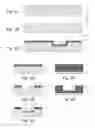
FIGS. 1A, 1B and 1C show in cross-section the steps leading to a first embodiment of the invention;
FIGS. 2A, 2B and 2C show a second embodiment;
FIGS. 3A and 3B show a variant of the second embodiment;
FIGS. 4A, 4B and 4C show a third embodiment; and
FIGS. 5, 6 and 7 correspond to variants of the third embodiment.
DETAILED DESCRIPTION OF THE INVENTION
For better comprehension of the drawings, it should be observed first of all that the thicknesses have not all been shown on the same scale, and that only one part of the dial comprising a portion in relief has been shown.
FIGS. 1A to 1C show a first embodiment wherein the dial is made from a ceramic base plate 1 having two parallel and plane faces 3, 5 (FIG. 1A) and wherein a recess 4 (FIG. 1B) is machined by spot facing or etching. The enamel coating is then made by successive deposition and firing operations (FIG. 1C). Base plate 1 can be cut from a large ceramic plate having a thickness comprised between 0.4 mm and 0.9 mm, such values allowing satisfactory mechanical properties to be obtained for the dial. It is also possible to make base plate 1 by direct pre-shaping to the desired dimensions for example by CIM or by pressing. In such case, recess 4 can be formed at the same time. It is clear that in the same way, by machining, pressing or CIM, one could form a portion in relief corresponding to a bump prior to the enamelling step, and possibly carry out final machining, for example to improve the aspect ratio as regards the portion in relief.
Given that the ceramic material, for example alumina-based, has a light colour and that it is also possible to incorporate colouring agents therein, the number of enamel layers necessary to have the desired final colour may be smaller, the enamel coating then having a thickness comprised between 0.1 mm and 0.4 mm. Since the thermal expansion coefficients of ceramics and enamel are very close, no tension is generated during firing operations liable to deform base plate 1, such that no counter-enamelling is necessary.
FIGS. 2A to 2C show a second embodiment. One starts with a base plate 1 at the surface of which a first enamel coating 2 has already been formed. A recess 4, which passes right through first enamel coating 2 and partially through ceramic base plate 1, is then machined. A second enamel coating 12 is then made in the bottom of recess 4, for example by damping. It is thus possible to give the recess a different colour from that of the dial surface. Evidently, one can then continue as described in the first embodiment, by effecting this second enamel coating over the entire surface of the dial and the portions in relief with an identical or different colour enamel to that of the first coating. According to a variant shown in FIGS. 3A and 3B, enamel coating 2 is sufficiently thick, for example 0.4 mm, that said enamel coating can be machined without reaching ceramic base plate 1. In order to obtain a high level surface state, it is desirable for additional firing to be effected, in order to obtain a polished finish.
FIGS. 4A to 4C concern an embodiment that differs from those previously described in that the base plate 1 and its enamel coating 2 are machined so as to create a through passage 9. An insert 10 is made separately with a ceramic base 11 matching the contour 13 of through passage 9 and comprising a second enamel coating 12 that is identical to or different from first enamel coating 2. Insert 10 is positioned in passage 9 while being held therein by bonding. In the finished product shown in FIG. 4C, the thickness of base 10 of insert 10 is smaller than that of base plate 1, such that the portion in relief thereby made forms a recess 6. For the same reasons as mentioned previously, the bottom of the base plate does not technically require any counter-enamelling.
However, for aesthetical reasons aimed, for example at concealing the contour 13 of the join between base plate 1 and insert 10, it is possible to place an adhesive 15 on the bottom of the dial in order to glue an additional concealing plate 14. Depending upon the aesthetical effect sought as regards the timepiece, the material forming this additional plate can be ceramic, like the base plate, or metal, for example, copper, silver, gold or platinum or alloys of these materials.
FIG. 6 shows alternative embodiments of the multi-stage dial described hereinbefore. It is seen first of all that the visible surfaces of the dial have a curved shape, which is very easy to accomplish by using the ceramic material for the base plate, and this example for the insert, without creating any particular tension during enamelling, i.e. still without requiring any counter-enamelling. It can also be seen that the thickness of insert 10 is greater than the height of through passage 9, such that the portion in relief formed is a bump 8. It can be seen finally that the insert can be integral with an additional concealing plate 14 which will then evidently be made of ceramic material.
FIG. 7 shows that, at the same time as insert 10 and additional plate 14, a foot 18 can be made, which will allow the dial to be positioned, the additional plate being shown in this example set in the bottom face 5 of the base plate. Foot 18 can evidently occupy a non-central position in order to allow passage of an arbour when recess 6 is a secondary dial.
It is clear that the embodiments that have just been described, and which correspond to the finished products shown in FIGS. 1C, 2C, 3B, 4C, 5, 6 and 7, can be changed. By way of non-limiting example, it is possible, without departing from the scope of the invention, to combine the teaching of FIGS. 1C, 6 and 7 to obtain an enamelled ceramic dial comprising a secondary dial in a hollow having a convex surface and whose base plate comprises a foot.
Claims
1-5. (canceled)
6. Multi-stage enamelled dial according to claim 11, wherein the thickness of the insert with its enamel coating is less than the thickness of the base plate and forms a recess in the dial.
7. Multi-stage enamelled dial according to claim 11, wherein the thickness of the insert with its enamel coating is greater than the thickness of the base plate and forms a bump on the dial
8. Multi-stage enamelled dial according to claim 11, wherein an additional plate is fixed to the back face of the dial and has the same contour as the base plate.
9. Multi-stage enamelled dial according to claim 8, wherein the material forming the additional plate is selected from among ceramics and metals.
10. Multi-stage enamelled dial according to claim 11, wherein the insert comprises on its bottom an additional plate integral with said insert, having a contour comprised between that of the dial and that of the through passage of the insert, and bonded onto the bottom of the base plate or in a housing formed in the base plate.
11. Multi-stage enamelled dial of a time piece comprising a base plate whose surface includes one or more portions in relief corresponding to recesses or bumps, wherein the base plate is made of ceramic material, wherein the surface of the base plate, except for the one or more portions in relief and walls thereof, includes a first enamel coating, and the one or more portions in relief include a second enamel coating, and wherein the one or more portions in relief are made by a ceramic insert positioned in a through passage machined through the first enamel coating and the base plate.
12. Multi-stage enamelled dial according to claim 11, wherein the first and the second coatings are identical.
13. Multi-stage enamelled dial according to claim 11, wherein the first and the second coatings are different.
14. Multi-stage enamelled dial according to claim 11, wherein the surface of the base plate is visible and has a curved shape.
15. Multi-stage enamelled dial according to claim 11, wherein the base plate comprises a foot that allows the dial to be positioned.
Images & Drawings included:


Sources:
- United States Patent and Trademark Office - verify current appl. status at the USPTO↗
Similar patent applications:
- » 20060062971
Multi-stage enamelled dial
Recent applications in this class:
- » 20250021051 2025-01-16
TIMEPIECE DIAL AND TIMEPIECE - » 20230251605 2023-08-10
EXTERNAL PART COMPONENT OF A WATCH OR OF A FASHION OR JEWELLERY ITEM AND METHOD FOR MANUFACTURING SUCH AN EXTERNAL PART COMPONENT - » 20230195035 2023-06-22
PROCESS FOR MANUFACTURING A DIAL - » 20220137563 2022-05-05
SUSPENDED CLOCK - » 20200387111 2020-12-10
TIMEPIECE - » 20200272104 2020-08-27
Timepiece - » 20200264563 2020-08-20
Watch with geometric codes - » 20190265649 2019-08-29
Timepiece - » 20180173162 2018-06-21
Watch dial with three-dimensional decoration, and assembly tools - » 20170255166 2017-09-07
Method of manufacturing decorative member, decorative member, and timepiece
Recent applications for this Assignee:
- » 20100064779 2010-03-18
Method of checking the hermeticity of a closed cavity of a micrometric component and micrometric component for the implementation of the same - » 20100024525 2010-02-04
Method of checking the hermeticity of a closed cavity of a micrometric component and micrometric component for the implementation of the same - » 20090153221 2009-06-18
POLYPHONIC SOUND GENERATING METHOD - » 20090109801 2009-04-30
Timepiece including optical guide which performs the function of a crystal - » 20090109651 2009-04-30
Electronic device including optical guide provided with at least two groups of interlaced optical extractors - » 20090109650 2009-04-30
Electronic device including optical guide provided with sequentially illuminated optical extractors - » 20080309451 2008-12-18
Portable electronic device for controlling and managing functions and/or data of a vehicle - » 20080218838 2008-09-11
Method for producing a device defining a volume for retaining a fluid or a sensitive material - » 20080145959 2008-06-19
Method of substrate with transparent electrodes and devices incorporating it - » 20080101162 2008-05-01
Device and method for securing a pallet-stone to an escapement pallet of a timepiece movement