Composite articles made by process for joining brass part and silicon carbide ceramic part
US20120148867A1
2012-06-14
13/172,271
2011-06-29
✅ Patent granted
US 8,372,522 B2
2013-02-12
-
-
Michael La Villa
Altis Law Group, Inc.
2031-06-29
Abstract:
A process for joining a brass part and a silicon carbide ceramic part comprising: providing a brass part, a SiC ceramic part, a Ti foil and a Ni foil; placing the SiC ceramic part, the Ti foil, the Ni foil, and the brass part into a mold, the Ti foil and the Ni foil located between the SiC ceramic part and the brass part, the Ti foil abutting against the SiC ceramic part, the Ni foil abutting against the brass part and the Ti foil; placing the mold into a chamber of an hot press sintering device, heating the chamber and pressing the brass part, the SiC ceramic part, the Ti foil, and the Ni foil at least until the brass part, the SiC ceramic part, the Ti foil and the Ni foil form a integral composite article.
Inventors:
- Hsin-Pei CHANG 200 🇹🇼 Tu-Cheng, Taiwan
- WEN-FENG HU 17 🇨🇳 Shenzhen City, China
- WEN-RONG CHEN 195 🇹🇼 Tu-Cheng, Taiwan
- CHENG-SHI CHEN 213 🇹🇼 Tu-Cheng, Taiwan
- HUANN-WU CHIANG 185 🇹🇼 Tu-Cheng, Taiwan
- HSIN-PEI CHANG 86 🇹🇼 New Taipei, Taiwan
- CHENG-SHI CHEN 92 🇹🇼 New Taipei, Taiwan
- WEN-RONG CHEN 86 🇹🇼 New Taipei, Taiwan
- HUANN-WU CHIANG 89 🇹🇼 New Taipei, Taiwan
- WEN-FENG HU 16 🇨🇳 Shenzhen, China
Assignee:
- HON HAI PRECISION INDUSTRY CO., LTD. 12,833 🇹🇼 Tu-Cheng, Taiwan
- HONG FU JIN PRECISION INDUSTRY (SHENZHEN) CO., LTD. 4,225 🇨🇳 Shenzhen City, China
- HON HAI PRECISION INDUSTRY CO., LTD. 10,014 🇹🇼 New Taipei, Taiwan
- HONG FU JIN PRECISION INDUSTRY (ShenZhen) CO., LTD. 2,585 🇨🇳 Shenzhen, China
Applicant:
Interested in similar patents?
Get notified when new applications in this technology area are published.
Classification:
C04B37/026 » CPC main
Joining burned ceramic articles with other burned ceramic articles or other articles by heating with metallic articles characterised by the interlayer used consisting of metals or metal salts
B32B9/005 » CPC further
Layered products comprising a layer of a particular substance not covered by groups - comprising one layer of ceramic material, e.g. porcelain, ceramic tile
B32B9/041 » CPC further
Layered products comprising a layer of a particular substance not covered by groups - comprising such substance as the main or only constituent of a layer, next to another layer of a of metal
C04B2237/122 » CPC further
Aspects relating to ceramic laminates or to joining of ceramic articles with other articles by heating; Aspects relating to interlayers, e.g. used to join ceramic articles with other articles by heating; Metallic interlayers based on refractory metals
C04B2237/123 » CPC further
Aspects relating to ceramic laminates or to joining of ceramic articles with other articles by heating; Aspects relating to interlayers, e.g. used to join ceramic articles with other articles by heating; Metallic interlayers based on iron group metals, e.g. steel
C04B2237/365 » CPC further
Aspects relating to ceramic laminates or to joining of ceramic articles with other articles by heating; Composition of layers of ceramic laminates or of ceramic or metallic articles to be joined by heating, e.g. Si substrates; Ceramic; Non-oxidic Silicon carbide
C04B2237/407 » CPC further
Aspects relating to ceramic laminates or to joining of ceramic articles with other articles by heating; Composition of layers of ceramic laminates or of ceramic or metallic articles to be joined by heating, e.g. Si substrates; Metallic Copper
C04B2237/50 » CPC further
Aspects relating to ceramic laminates or to joining of ceramic articles with other articles by heating Processing aspects relating to ceramic laminates or to the joining of ceramic articles with other articles by heating
C04B2237/60 » CPC further
Aspects relating to ceramic laminates or to joining of ceramic articles with other articles by heating; Processing aspects relating to ceramic laminates or to the joining of ceramic articles with other articles by heating Forming at the joining interface or in the joining layer specific reaction phases or zones, e.g. diffusion of reactive species from the interlayer to the substrate or from a substrate to the joining interface, carbide forming at the joining interface
Y10T428/12458 » CPC further
Stock material or miscellaneous articles; All metal or with adjacent metals having composition, density, or hardness gradient
Y10T428/12576 » CPC further
Stock material or miscellaneous articles; All metal or with adjacent metals; Composite; i.e., plural, adjacent, spatially distinct metal components [e.g., layers, joint, etc.] with additional, spatially distinct nonmetal component Boride, carbide or nitride component
Y10T428/12583 » CPC further
Stock material or miscellaneous articles; All metal or with adjacent metals; Composite; i.e., plural, adjacent, spatially distinct metal components [e.g., layers, joint, etc.] with additional, spatially distinct nonmetal component Component contains compound of adjacent metal
Y10T428/12806 » CPC further
Stock material or miscellaneous articles; All metal or with adjacent metals; Composite; i.e., plural, adjacent, spatially distinct metal components [e.g., layers, joint, etc.]; Transition metal-base component Refractory [Group IVB, VB, or VIB] metal-base component
Y10T428/12903 » CPC further
Stock material or miscellaneous articles; All metal or with adjacent metals; Composite; i.e., plural, adjacent, spatially distinct metal components [e.g., layers, joint, etc.]; Transition metal-base component; Group VIII or IB metal-base component Cu-base component
Y10T428/1291 » CPC further
Stock material or miscellaneous articles; All metal or with adjacent metals; Composite; i.e., plural, adjacent, spatially distinct metal components [e.g., layers, joint, etc.]; Transition metal-base component; Group VIII or IB metal-base component; Cu-base component Next to Co-, Cu-, or Ni-base component
Y10T428/12944 » CPC further
Stock material or miscellaneous articles; All metal or with adjacent metals; Composite; i.e., plural, adjacent, spatially distinct metal components [e.g., layers, joint, etc.]; Transition metal-base component; Group VIII or IB metal-base component Ni-base component
B23K31/02 IPC
Processes relevant to this subclass, specially adapted for particular articles or purposes, but not covered by only one of the preceding main groups relating to soldering or welding
B32B15/04 » CPC further
Layered products comprising a layer of metal comprising metal as the main or only constituent of a layer, next to another layer of a
B32B15/20 » CPC further
Layered products comprising a layer of metal comprising aluminium or copper
B32B18/00 IPC
Layered products essentially comprising ceramics, e.g. refractory products
Description
CROSS-REFERENCE TO RELATED APPLICATIONS
This application is one of the four related co-pending U.S. patent applications listed below. All listed applications have the same assignee. The disclosure of each of the listed applications is incorporated by reference into all the other listed applications.
| Attorney | ||
| Docket | ||
| No. | Title | Inventors |
| US 36181 | PROCESS FOR JOINING STAINLESS STEEL | HSIN-PEI |
| PART AND ZIRCONIA CERAMIC PART AND | CHANG | |
| COMPOSITE ARTICLES MADE BY SAME | et al. | |
| US 36184 | PROCESS FOR JOINING BRASS PART AND | HSIN-PEI |
| SILICON CARBIDE CERAMIC PART AND | CHANG | |
| COMPOSITE ARTICLES MADE BY SAME | et al. | |
| US 36185 | PROCESS FOR JOINING BRONZE PART AND | HSIN-PEI |
| SILICON CARBIDE CERAMIC PART AND | CHANG | |
| COMPOSITE ARTICLES MADE BY SAME | et al. | |
| US 36186 | PROCESS FOR JOINING BRASS PART AND | HSIN-PEI |
| SILICON CARBIDE CERAMIC PART AND | CHANG | |
| COMPOSITE ARTICLES MADE BY SAME | et al. | |
BACKGROUND
1. Technical Field
The present disclosure relates to a process for joining a metal part and a ceramic part, especially to a process for joining a brass part and a silicon carbide ceramic part, and a composite article made by the process.
2. Description of the Related Art
It is desirable to join brass parts and silicon ceramic parts. A typical process for joining brass and silicon ceramic is by positioning physically separate nickel foil or molybdenum foil as intermediate layer between brass and silicon ceramic. However, the foil retains its separate nature through manufacturing and in the final product and does not chemically chemically interact with the brass or silicon ceramic. Furthermore, in case of using physically separate nickel foil, due to great difference between the coefficients of heat expansion of the silicon ceramic and the nickel foil, the ceramic/nickel interface has large thermal stress, thus, the bond between the brass and the silicon ceramic via nickel foil is not as stable as desired. In case of using physically separate molybdenum foil, due to having a relatively low reaction activity, it is difficult for silicon ceramic and molybdenum foil to inter-diffuse into each other, enhancing the difficulty of bonding the various separate intermediate layers.
Therefore, there is room for improvement within the art.
BRIEF DESCRIPTION OF THE DRAWINGS
Many aspects of the embodiments can be better understood with reference to the following drawings. The components in the drawings are not necessarily drawn to scale, the emphasis instead being placed upon clearly illustrating the principles of the exemplary process for joining brass part and silicon carbide ceramic part, and composite article made by the process. Moreover, in the drawings like reference numerals designate corresponding parts throughout the several views. Wherever possible, the same reference numbers are used throughout the drawings to refer to the same or like elements of an embodiment.
FIG. 1 is a schematic cross-sectional view of an example of a hot press sintering device for implementing the present process.
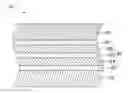
FIG. 2 is a cross-sectional view of an exemplary embodiment of the present article made by the present process.
DETAILED DESCRIPTION
Referring to FIG. 1, an exemplary process for joining a brass part and a silicon carbide ceramic part, may includes the following steps:
A silicon carbide (SiC) ceramic part 20, a titanium (Ti) foil 40, an nickel (Ni) foil 50 and a brass part 30 are provided. The Ti foil 40 and the Ni foil 50 are used as a joining medium between the SiC ceramic part 20 and the brass part 30. Each of the Ti foil 40 and the Ni foil 50 has a thickness in a range from about 0.1 millimeter (mm) to about 0.3 mm.
The SiC ceramic part 20, the brass part 30, the Ti foil 40 and the Ni foil 50 are pretreated. The pretreatment may include the step of polishing the surfaces of The SiC ceramic part 20, the brass part 30, the Ti foil 40 and the Ni foil 50 by silicon carbide (SiC) sandpaper to produce smooth surfaces. Then, the SiC ceramic part 20, the brass part 30, the Ti foil 40 and the Ni foil 50 are cleaned by placing them into an organic solution to remove grease from their surfaces. The organic solution can be ethanol, and/or other organic solvents. Then, the SiC ceramic part 20, the brass part 30, the Ti foil 40 and the Ni foil 50 are rinsed with water and dried.
A clamping mold 70 is used to hold the SiC ceramic part 20, the brass part 30, the Ti foil 40 and the Ni foil 50. The clamping mold 70 includes a pressing board 72, a corresponding supporting board 74 and a receiving board 76. The receiving board 76 defines a cavity 762 running through the upper/bottom surface to receive the SiC ceramic part 20, the brass part 30, the Ti foil 40 and the Ni foil 50. The pressing board 72 and the corresponding supporting board 74 extend towards the cavity 762 from opposing directions and can be moved relative to the cavity 762 by a driving system such as hydraulic pressure system. The SiC ceramic part 20, the Ti foil 40, the Ni foil 50 and the brass part 30 are placed into the cavity 762 and clamped by the pressing board 72 and the corresponding supporting board 74. The Ti foil 40 and the Ni foil 50 are inserted between the SiC ceramic part 20 and the brass part 30. The Ti foil 40 abuts against the SiC ceramic part 20, and the Ni foil 50 abuts against the brass part 30. The pressing board 72 and the corresponding supporting board 74 from two opposite sides, brings the surfaces of the parts to be joined into tight contact, for compressing the SiC ceramic part 20, the Ti foil 40, the Ni foil 50 and the brass part 30.
A hot press sintering device 100 including a chamber 101 is provided. The clamping mold 70 is placed into the chamber 101. The vacuum level inside the chamber 101 is set to about 10−3 Pa to about 9×10⁻³ Pa. Argon (Ar) is fed into the chamber 101 to maintain the chamber 101 pressure in a range of about 0.3 Mpa-0.6 MPa. The pressing board 72 and the corresponding supporting board 74 press toward each other at about 10 MPa to firmly clamp the SiC ceramic part 20 and the brass part 30. Then, the chamber 101 is heated at a rate of about 10 degrees Celsius per minute (° C./min)-50° C./min. When the temperature of the chamber 101 reaches to about 300° C., the clamping pressure applied by the boards 72,74 steadily increases, until the temperature of the chamber 101 reaches to about 650° C.-900° C., and the clamping pressure reaches to about 10 MPa-40 MPa. The pressure and heat are maintained in their respective peak ranges for about 30 min-70 min, so that the Ti foil 40 and the Ni foil 50 will chemically interact with each other, and the Ti foil 40 chemically interacts with the SiC ceramic part 20, and the Ni foil 50 chemically interacts with the brass part 30. Accordingly, the SiC ceramic part 20 and the brass part 30 are connected by the Ti foil 40 and the Ni foil 50 to form a composite article 10. The composite article 10 is removed after the chamber 101 is cooled.
Referring to FIG. 2, in the process of making the composite article 10, the Ti foil 40 and the Ni foil 50 act as intermediate layers to form a connecting layer 80 that connects the SiC ceramic part 20 and the brass part 30. The heat expansion rate of SiC ceramic part 20 is approximately equal to that of the Ti foil 40, thus the SiC ceramic part 20 can substantially connect with the Ti foil 40. The heat expansion rate of the brass part 30 is approximately equal to that of the Ni foil 50, thus the brass part 30 can substantially connect to the Ni foil 50. Furthermore, the combination of the Ti foil 40 and the Ni foil 50 to form the connecting layer 80 results in a connecting layer 80 having a rate of heat expansion that gradually changes from one end to the other. Therefore, the SiC ceramic part 20 is securely connected with the brass part 30 and more able to cope with temperature changes.
The composite article 10 manufactured by the present process includes the SiC ceramic part 20, the brass part 30 and a multi-layered connecting layer 80 connecting the SiC ceramic part 20 to the brass part 30. The connecting layer 80 is formed by placing the Ti foil 40 and the Ni foil 50 between the SiC ceramic part 20 and the brass part 30, and then heating and pressing the SiC ceramic part 20 and the brass part 30 as previously described. The various layers of the connecting layer 80 result from differing chemical interactions between the brass part 30, Ti foil 40, Ni foil 50, and SiC ceramic part 20. In particular, the connecting layer 80 includes:
a) a first transition layer 81: The first transition layer 81 mainly includes compounds comprising Ti element and C element, such as SiC, Ti2C, etc. The compounds result from chemical reactions between adjacent portions of the SiC ceramic part 20 and Ti foil 40;
b) a Ti layer 82: The Ti layer 82 results from portions of the Ti foil 40 that do not chemically react with either the SiC ceramic part 20 or the Ni foil 50;
c) a second transition layer 83: The second transition layer 83 is located between the Ti layer 82 and the Ni layer 84. The second transition layer 83 mainly includes chemical compounds comprising Ti element and Ni element, and Ni with Ti solid solutions. The compounds and solutions result from chemical reactions between adjacent portions to the Ti foil 40 and Ni foil 50;
d) an Ni layer 84: The Ni layer 84 results from portions of the Ni foil 50 that do not chemically react with either the Ti foil 40 or the brass part 30; and
e) a third transition layer 85: The third transition layer 85 is located between the Ni layer 84 and the brass layer 30 and connects the Ni layer 84 and the brass layer 30. The third transition layer 85 mainly includes chemical compounds comprising Ni element and Cu element, and Ni with Cu solid solutions. The compounds and solutions result from chemical reactions between adjacent portions to the Ni layer 84 and the brass layer 30.
The thermal expansion rate of the connecting layer 80 gradually changes from a value close to that of the SiC ceramic part 20 (in the area of first transition layer 81) to a value close to that of brass part 30 (in the area of the third transition layer 85). This results in a composite article 10 well suited to temperature changes due to the gradual, rather than abrupt, changes in its internal thermal expansion rates.
Furthermore, the connecting layer 80 of the composite article 10 has no cracks or apertures, and has a smooth surface. The composite article 10 has high hardness, high temperature resistance, corrosion resistance, abrasion resistance, shear strength in a range from about 50 MPa to about 80 MPa, and tension strength in a range from about 60 MPa to about 100 MPa.
It is to be understood that even though numerous characteristics and advantages of the present embodiments have been set forth in the foregoing description, together with details of assemblies and functions of various embodiments, the disclosure is illustrative only, and changes may be made in detail, especially in matters of shape, size, and arrangement of parts within the principles of the present invention to the full extent indicated by the broad general meaning of the terms in which the appended claims are expressed.
Claims
What is claimed is:1. A process for joining a brass part and a silicon carbide ceramic part comprising:
providing a brass part, a SiC ceramic part, a Ti foil and a Ni foil;
placing the SiC ceramic part, the Ti foil, the Ni foil, and the brass part into a mold, the Ti foil and the Ni foil located between the SiC ceramic part and the brass part, the Ti foil abutting against the SiC ceramic part, the Ni foil abutting against the brass part and the Ti foil;
placing the mold into a chamber of an hot press sintering device, heating the chamber and pressing the brass part, the SiC ceramic part, the Ti foil, and the Ni foil at least until the brass part, the SiC ceramic part, the Ti foil and the Ni foil form a integral composite article.
2. The process as claimed in claim 1, wherein before pressing, the vacuum level inside the chamber is set to about 10−3 Pa to about 9×10⁻³ Pa, argon is fed into the chamber to maintain the chamber with a pressure in a range from about 0.3 MPa to about 0.6 MPa, the pressing board and the corresponding supporting board press toward each other at about 10 MPa to the SiC ceramic part and the brass part.
3. The process as claimed in claim 1, wherein heating the chamber is heated at a rate of about 10-50° C./min, when the temperature of the chamber reaches to about 300° C., the clamping pressure applied by the pressing board and the corresponding supporting board steadily increases, until the temperature of the chamber reaches to about 650-900° C. and the clamping pressure reaches to about 10-40 MPa, maintaining the pressure and heat in their respective peak ranges for about 30-70 min.
4. The process as claimed in claim 1, wherein before formation of the integral composite article, each of the Ti foil and the Ni foil has a thickness in a range from about 0.1 mm to about 0.3 mm.
5. A composite article, comprising:
a SiC ceramic part,
a brass part, and
a connecting layer connected the SiC ceramic part to the brass part, wherein the connecting layer is formed by placing a Ti foil and a Ni foil between the SiC ceramic part and the brass part, then heating and pressing the SiC ceramic part, the brass part, the Ti foil and the Ni foil.
6. The composite article as claimed in claim 5, wherein the connecting layer orderly includes a first transition layer adjacent the SiC part, a Ti layer, a second transition layer, a Ni layer, and a third transition layer adjacent the brass part.
7. The composite article as claimed in claim 6, wherein the first transition layer located between the SiC ceramic part and the Ti layer mainly includes compounds comprising Ti element and C element.
8. The composite article as claimed in claim 7, wherein the compounds include SiC, Ti2C.
9. The composite article as claimed in claim 6, wherein the second transition located between the Ti layer and the Ni layer mainly includes compounds comprised Ti element and Ni element, and Ni—Ti alloy solid solutions.
10. The composite article as claimed in claim 6, wherein the third transition layer located between the Ni layer and the brass layer mainly includes Ni—Cu solid solutions.
11. A composite article, comprising:
a SiC ceramic part,
a brass part, and
a multi-layered connecting layer connected the SiC ceramic part to the brass part, wherein:
a first layer of the connecting layer is adjacent the SiC part and has a thermal expansion rate close to that of the SiC part;
a last layer of the connecting layers is adjacent to the brass part and has a thermal expansion rate close to that of the brass part; and
the thermal expansion rate of the connecting layers gradually changes from that of the first layer to that of the last layer.
12. The composite article as claimed in claim 11, wherein the layer of the multi-layered connecting layer comprises:
a first layer, adjacent the SiC part and comprising results of chemical reactions between SiC and Ti;
a second layer, adjacent the first layer and comprising Ti;
a third layer, adjacent the second layer and comprising results of chemical reactions between Ti and Ni;
a fourth layer, adjacent the third layer and comprising Ni; and
a last layer, adjacent the fourth layer and the brass part and comprising results of chemical reactions between Ni and brass.
Images & Drawings included:


Sources:
- United States Patent and Trademark Office - verify current appl. status at the USPTO↗
Similar patent applications:
Recent applications in this class:
- » 20250171369 2025-05-29
COPPER-CERAMIC BONDED SUBSTRATE AND METHOD FOR MANUFACTURING THE SAME - » 20250162951 2025-05-22
METAL-CERAMIC SUBSTRATE HAVING DOUBLE BRAZING LAYERS AND METHOD FOR MANUFACTURING THE SAME - » 20250034051 2025-01-30
COMPOSITE SUBSTRATE AND METHOD FOR MANUFACTURING SAME - » 20250034050 2025-01-30
METAL-CERAMIC SUBSTRATE, METHOD FOR THE PRODUCTION THEREOF, AND MODULE - » 20230303457 2023-09-28
JOINED BODY, HOLDING DEVICE, AND ELECTROSTATIC CHUCK - » 20230127611 2023-04-27
COPPER-GRAPHENE BONDED BODY AND METHOD FOR MANUFACTURING SAME, AND COPPER-GRAPHENE BONDED STRUCTURE - » 20220411339 2022-12-29
METHOD FOR PRODUCING A METAL-CERAMIC SUBSTRATE AND FURNACE - » 20210387923 2021-12-16
BONDED SUBSTRATE - » 20180297900 2018-10-18
Method of bonding a metallic component to a non-metallic component using a compliant material - » 20180093927 2018-04-05
Method for producing a metal-ceramic substrate
Recent applications for this Assignee:
- » 20250218287 2025-07-03
METHOD OF GENERATING AND PROMPTING TRAFFIC INFORMATION, AND ROADSIDE DEVICE THEREOF - » 20250178535 2025-06-05
METHOD FOR CONSTRUCTING 3D PANORAMIC VIEW MODEL, VEHICLE-MOUNTED DEVICE, AND STORAGE MEDIUM - » 20250074444 2025-03-06
METHOD FOR EARLY WARNING A BLIND AREA, ELECTRONIC DEVICE AND STORAGE MEDIUM - » 20240416754 2024-12-19
DISPLAY CONTROL DEVICE, DISPLAY EQUIPMENT, AND VEHICLE EMPLOYING DEVICE - » 20240411051 2024-12-12
Light-emitting device array and optical transceiver system having the same - » 20240324114 2024-09-26
DISPLAY CONTROL DEVICE AND VEHICLE EMPLOYING DEVICE - » 20240295957 2024-09-05
METHOD FOR CONTROLLING ELECTRONIC DEVICE, ELECTRONIC DEVICE AND COMPUTER STROAGE MEDIUM EMPLOYING METHOD - » 20240257357 2024-08-01
METHOD FOR DETECTING OBSTACLES, ELECTRONIC DEVICE, AND STORAGE MEDIUM - » 20240203133 2024-06-20
LANE LINE RECOGNITION METHOD, ELECTRONIC DEVICE AND STORAGE MEDIUM - » 20240194999 2024-06-13
Robot using limiting device for locking battery