Flexible arbitration scheme for multi endpoint atomic accesses in multicore systems
US20140143486A1
2014-05-22
14/061,470
2013-10-23
✅ Patent granted
US 9,213,656 B2
2015-12-15
-
-
Zachary K Huson
Robert D. Marshall, Jr. | Frank D. Cimino
2034-01-25
Abstract:
The MSMC (Multicore Shared Memory Controller) described is a module designed to manage traffic between multiple processor cores, other mastering peripherals or DMA, and the EMIF (External Memory InterFace) in a multicore SoC. The invention unifies all transaction sizes belonging to a slave previous to arbitrating the transactions in order to reduce the complexity of the arbitration process and to provide optimum bandwidth management among all masters. Two consecutive slots are assigned per cache line access to automatically guarantee the atomicity of all transactions within a single cache line. The need for synchronization among all the banks of a particular SRAM is eliminated, as synchronization is accomplished by assigning back to back slots.
Inventors:
- Kai Chirca 123 🇺🇸 Dallas, TX, United States
- Matthew D. Pierson 40 🇺🇸 Murphy, TX, United States
Assignee:
- TEXAS INSTRUMENTS INCORPORATED 18,931 🇺🇸 Dallas, TX, United States
Applicant:
Interested in similar patents?
Get notified when new applications in this technology area are published.
Classification:
G06F3/0658 » CPC main
Input arrangements for transferring data to be processed into a form capable of being handled by the computer; Output arrangements for transferring data from processing unit to output unit, e.g. interface arrangements; Digital input from, or digital output to, record carriers, e.g. RAID, emulated record carriers or networked record carriers; Interfaces specially adapted for storage systems making use of a particular technique; Vertical data movement, i.e. input-output transfer; data movement between one or more hosts and one or more storage devices Controller construction arrangements
G06F3/0619 » CPC further
Input arrangements for transferring data to be processed into a form capable of being handled by the computer; Output arrangements for transferring data from processing unit to output unit, e.g. interface arrangements; Digital input from, or digital output to, record carriers, e.g. RAID, emulated record carriers or networked record carriers; Interfaces specially adapted for storage systems specifically adapted to achieve a particular effect; Improving the reliability of storage systems in relation to data integrity, e.g. data losses, bit errors
G06F3/0683 » CPC further
Input arrangements for transferring data to be processed into a form capable of being handled by the computer; Output arrangements for transferring data from processing unit to output unit, e.g. interface arrangements; Digital input from, or digital output to, record carriers, e.g. RAID, emulated record carriers or networked record carriers; Interfaces specially adapted for storage systems adopting a particular infrastructure; In-line storage system Plurality of storage devices
G06F3/06 IPC
Input arrangements for transferring data to be processed into a form capable of being handled by the computer; Output arrangements for transferring data from processing unit to output unit, e.g. interface arrangements Digital input from, or digital output to, record carriers, e.g. RAID, emulated record carriers or networked record carriers
G06F13/1668 » CPC main
Interconnection of, or transfer of information or other signals between, memories, input/output devices or central processing units; Handling requests for interconnection or transfer for access to memory bus Details of memory controller
G06F11/1064 » CPC further
Error detection; Error correction; Monitoring; Responding to the occurrence of a fault, e.g. fault tolerance; Error detection or correction by redundancy in data representation, e.g. by using checking codes; Adding special bits or symbols to the coded information, e.g. parity check, casting out 9's or 11's in individual solid state devices in cache or content addressable memories
G06F13/1652 » CPC further
Interconnection of, or transfer of information or other signals between, memories, input/output devices or central processing units; Handling requests for interconnection or transfer for access to memory bus based on arbitration in a multiprocessor architecture
G06F13/00 IPC
Interconnection of, or transfer of information or other signals between, memories, input/output devices or central processing units
G06F13/16 IPC
Interconnection of, or transfer of information or other signals between, memories, input/output devices or central processing units; Handling requests for interconnection or transfer for access to memory bus
G06F11/10 IPC
Error detection; Error correction; Monitoring; Responding to the occurrence of a fault, e.g. fault tolerance; Error detection or correction by redundancy in data representation, e.g. by using checking codes Adding special bits or symbols to the coded information, e.g. parity check, casting out 9's or 11's
Description
CLAIM OF PRIORITY
This application claims priority under 35 U.S.C. 119(e)(1) to Provisional Application No. 61717831 filed 24 Oct. 2012.
TECHNICAL FIELD OF THE INVENTION
The technical field of this invention is multicore processing systems.
BACKGROUND OF THE INVENTION
In a multi-core coherent system, multiple cpu and system components share the same memory resources, such as on-chip and off-chip RAMs. Ideally, if all components had the same cache structure, and would access shared resource through cache transactions, all the accesses would be identical throughout the entire system, aligned with the cache block boundaries. But usually, some components have no caches, or, different components have different cache block sizes. For a heterogeneous system, accesses to the shared resources can have different attributes, types and sizes. On the other hand, the shared resources may also be in different format with respect to banking structures, access sizes, access latencies and physical locations on the chip.
To maintain data coherency, a coherence interconnect is usually added in between the master components and shared resources to arbitrate among multiple masters' requests and guarantee data consistency when data blocks are modified for each resource slave. With various accesses from different components to different slaves, the interconnect usually handles the accesses in a serial fashion to guarantee atomicity and to meet slaves access requests. This makes the interconnect the access bottleneck for a multi-core multi-slave coherence system.
To reduce CPU cache miss stall overhead, cache components could issue cache allocate accesses with the request that the lower level memory hierarchy must return the “critical line first” to un-stall the CPU, then the non-critical line to finish the line fill. In a shared memory system, to serve one CPU's “critical line first” request could potentially extend the other CPU's stall overhead and reduce the shared memory throughput if the memory access types and sizes are not considered. The problem therefore to solve is how to serve memory accesses from multiple system components to provide low overall CPU stall overhead and guarantee maximum memory throughput.
Due to the increased number of shared components and expended shareable memory space, to support data consistency while reducing memory access latency for all cores while maintaining maximum shared memory bandwidth and throughput is a challenge. Speculative memory access is one of the performance optimization method adopted in hardware design.
SUMMARY OF THE INVENTION
The invention described unifies all transaction sizes belonging to a slave previous to arbitrating the transactions in order to reduce the complexity of the arbitration process and to provide optimum bandwidth management among all masters.
Two consecutive slots are assigned per cache line access to automatically guarantee the atomicity of all transactions within a single cache line.
The need for synchronization among all the banks of a particular SRAM is eliminated, as synchronization is accomplished by assigning back to back slots.
BRIEF DESCRIPTION OF THE DRAWING
These and other aspects of this invention are illustrated in the drawing, in which:
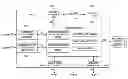
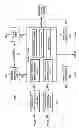
The FIGURE shows a high level block diagram of the Multicore Shared Memory Controller.
DETAILED DESCRIPTION OF PREFERRED EMBODIMENTS
The MSMC (Multicore Shared Memory Controller) is a module designed to manage traffic between multiple processor cores, other mastering peripherals or DMA, and the EMIF (External Memory InterFace)in a multicore SoC. The MSMC provides a shared on-chip memory that can be used either as a shared on-chip SRAM or as a cache for external memory traffic. The MSMC module is implemented to support a cluster of up to eight processor cores and be instantiated in up to four such clusters in a multiprocessor SoC. The MSMC includes a Memory Protection and Address eXtension unit (MPAX), which is used to convert 32-bit virtual addresses to 40-bit physical addresses, and performs protection checks on the MSMC system slave ports. The following features are supported in one implementation of the MSMC:
Configurable number of CPU cores,
One 256-bit wide EMIF master port,
One 256-bit wide System Master port,
Two 256-bit wide System Slave ports,
CPU/1 frequency operation in MSMC,
Level 2 or 3 SRAM shared among connected processor cores and DMA,
Write transaction merge support for SRAM accesses,
Supports 8 SRAM banks, each can be accessed in parallel every clock cycle,
Each SRAM bank has 4 virtual sub-banks,
Memory protection for EMIF and MSMC SRAM space accesses from system masters,
Address extension from 32 bits to 40 bits for system master accesses to shared memory and external memory,
Optimized support for prefetch capabilities,
System trace monitor support and statistics collection with CP_Tracer (outside MSMC) and AET event export,
EDC and scrubbing support for MSMC memory (SRAM and cache storage),
Firewall memory protection for SRAM space and DDR space,
MPAX support for SES and SMS,
MPAX provides 32 to 40 bit address extension/translation,
MPAX includes a Main TLB and uTLB memory page attribute caching structure,
Coherency between A15 L1/L2 cache and EDMA/IO peripherals through SES/SMS port in SRAM space and DDR space.
The FIGURE shows a high level view of the MSMC module that includes the main interfaces, memory, and subunits.
The MSMC has a configurable number of slave interfaces 101 for CPU cores, two full VBusM slave interfaces 102 and 103 for connections to the SoC interconnect, one master port 104 to connect to the EMIF and one master port 105 to connect to the chip infrastructure.
Each of the slave interfaces contains an elastic command buffer to hold one in-flight request when the interface is stalled due to loss of arbitration or an outstanding read data return. During that time, the other slave interfaces can continue to field accesses to endpoints that are not busy.
The invention described implemented in a Multicore Shared Memory Controller, (MSMC) implements the following features:
Segmentation of non-cacheline aligned requests for non-cacheable but shared transactions to enable parallel transactions to multiple slaves in atomic fation;
Segmentation size is optimized to slave access request and master cache line size;
In the MSMC platform, a shared on-chip SRAM is implemented as scratch memory space for all master components. This SRAM space is split into 8 parallel banks with the data width being the half of the cache line size. The segmentation boundary for the on-chip SRAM space is set to align with the bank data width size, and the MSMC central arbiter for on-chip SRAM banks reserves two back-to-back slots for each command worth of a single cache line fill;
MSMC also handles all masters' accesses to the off-chip DRAM space. The optimum access size is equal or larger than the cache line size. MSMC segmentation logic takes this slave request into account to split the commands on the cache line boundaries. The MSMC central arbiter for off-chip DRAM reserves two back-to-back slots for two commands worth of two cache line fills;
If the command is less than a cache line size and couldn't fill in the clock cycles required for a full cache line allocate command, segmentation logic inserts a dummy command cycle to fill in the dummy bank slot;
Due to the number of cores, size of on-chip SRAM and number of banks, the physical size of MSMC doesn't allow the central arbiter function to be completed in a single execution clock cycle. With two reserved cycles per command, the second cycle will take the decision from the first cycle, therefore the central arbiter doesn't need to be done in a single cycle;
Memory access order is set to make sure the maximum memory bandwidth is utilized;
Reverse write dataphases before committing if the critical line first request forces the higher address location dataphase to be written first;
Reverse read returns if the higher address location dataphase is required to be to returned first by the component;
Performance benefit in virtually banked SRAM memories since steps are always monotonic between virtual banks;
Allows simplified virtual banking arbitration by effectively halving the number of virtual banks, and the MSMC central arbiter for off-chip DRAM reserves two back-to-back slots for two commands worth of two cache line fills;
Each component has a dedicated return buffer which gets force-linear info for read return;
Reference look-ahead message in distributed data return storage allowing this;
Off-chip memory return without force-linear returns in different order;
Each CPU has its own return buffer. The entry number of the return buffer is configurable to address different round trip latencies;
With the addition of return buffer, MSMC passes each CPU's memory access request to the slaves without holding and treats them as speculative read requests. Meanwhile, if the request is to shared memory space, MSMC issues snoop request to the corresponding cache components. When both memory response and snoop response are returned, MSMC orders these responses in the return buffer per CPU bases according to data consistence rule;
To keep a record of the data access ordering for correct data coherence support without performance degradation, pre-data messages in all cases are generated and saved in each entry of return buffer before the memory request and snoop request are issued. This ensures optimum performance of both coherent and non-coherent accesses and avoids protocol hazarding. The metadata and status bits in each entry are
-
- a. Original memory request identification number;
- b. Ready bit acts are time stamp for the status match of the corresponding entry to kick off the snoop response waiting period. This is very important since MSMC support hit-under-miss if current request overlaps with a previous in-flight memory access. This bit is used to accumulate the correct snoop response sequence for data consistency;
- c. Force linear bit indicates the order of dataphase returns to support each CPU's cache miss request for performance purposes;
- d. Shareable bit which indicates if the snoop request therefore the responses will be counted by the return buffer or not;
- e. Memory read valid bit indicates the corresponding memory access responses has landed in the return buffer entry;
- f. Snoop response valid bit indicates the corresponding snoop access responses has landed in the return buffer entry;
- g. Memory access error bit indicates a memory access error has occurred;
- h. Snoop response error bit indicates a snoop response error has occurred;
The return buffer also records the write respond status for coherence write hazard handling.
Both error responds from memory access and snoop response will result in an error status return to the initiating master component.
To support fragmented read returns, byte strobes are stored on a per byte bases. Each bit represents whether a byte lane worth of data is valid or not. All byte lanes have to be merged before valid the bit is asserted.
Claims
What is claimed is:1. A Multicore Shared Memory Controller (MSMC)
operable to arbitrate between master components and shared resources and operable to enforce data consistency when data blocks are modified for a resource slave.
2. The Multicore Shared Memory Controller of claim 1
operable to segment non cacheline aligned requests.
3. The Multicore Shared Memory Controller of claim 1
operable to perform parallel transactions to multiple slaves in an atomic fashion.
4. The Multicore Shared Memory Controller of claim 1
operable to employ the shared on chip RAM as scratch memory for all master components, with the SRAM addressing space segmented into a plurality of parallel banks where the data width is sized to be half of the cache line size, and the segmentation boundaries for the on chip SRAM is aligned with the bank data width size.
5. The Multicore Shared Memory Controller of claim 4
operable to reserve two back to back slots for each command processing a single cache line fill.
6. The Multicore Shared Memory Controller of claim 1
operable to process all master's accesses to off chip DRAM space with an optimum access size equal to or larger than the cache line size, and is operable to segment the access commands on cache line boundaries.
7. The Multicore Shared Memory Controller of claim 6
operable to reserve two back to back slots for two commands processing two cache line fills.
8. The Multicore Shared Memory Controller of claim 1
operable to insert a dummy command cycle if the access is less than a cache line size.
Images & Drawings included:
Sources:
- United States Patent and Trademark Office - verify current appl. status at the USPTO↗
Similar patent applications:
Recent applications in this class:
- » 20250284432 2025-09-11
MEMORY SYSTEM ADAPTIVELY ALLOCATING A BUFFER MEMORY, MEMORY CONTROLLER AND METHOD OF OPERATING THE SAME - » 20250272023 2025-08-28
STORAGE DEVICE, METHOD OF OPERATING THE SAME, AND COMPUTING SYSTEM INCLUDING THE STORAGE DEVICE - » 20250244915 2025-07-31
MEMORY SYSTEM - » 20250208790 2025-06-26
STORAGE DEVICE WITH GENERATIVE AI CAPABILITY - » 20250199718 2025-06-19
MEMORY CONTROLLER AND MEMORY SYSTEM INCLUDING THE SAME - » 20250190142 2025-06-12
METHOD FOR OPTIMIZING INTERFACE TRAINING ON A STORAGE DEVICE - » 20250123771 2025-04-17
ELECTRONIC DEVICE INCLUDING STORAGE DEVICE AND CONTROLLER AND OPERATING METHOD THEREOF - » 20250110663 2025-04-03
REFRESH DURING POWER STATE CHANGES - » 20250103243 2025-03-27
MEMORY DEVICE FRAGMENTATION ANALYSIS BASED ON LOGICAL-TO-PHYSICAL TABLES - » 20250103242 2025-03-27
DATA STORAGE METHOD AND DEVICE
Recent applications for this Assignee:
- » 20250291595 2025-09-18
CIRCUIT, SYSTEM, AND METHOD FOR MATRIX DECIMATION - » 20250286550 2025-09-11
TRANSISTOR SHUTDOWN CIRCUT - » 20250279725 2025-09-04
CONDUCTION MODE CONTROL - » 20250274138 2025-08-28
SWITCH REGULATOR - » 20250267687 2025-08-21
ENHANCED BROADCAST TRANSMISSION IN UNSLOTTED CHANNEL HOPPING MEDIUM ACCESS CONTROL - » 20250266825 2025-08-21
BOOTSTRAP CIRCUIT - » 20250247097 2025-07-31
LEVEL SHIFTER CIRCUIT - » 20250247082 2025-07-31
LOW AREA AND POWER MULTI-BIT FLIP-FLOP - » 20250246995 2025-07-31
SWITCHING CONVERTER DEADTIME CONTROL - » 20250246345 2025-07-31
TRIMMING RESISTOR USING MODULATED SIGNAL