Resin mold
US20140306375A1
2014-10-16
14/251,474
2014-04-11
✅ Patent granted
US 9,840,038 B2
2017-12-12
-
-
Matthew Daniels | Manley L Cummins, IV
TraskBritt, P.C.
2036-04-08
Abstract:
Described is a resinous structure derived from fluorine-containing polymers useful as a mold having excellent dimensional stability.
Inventors:
- Risa WADA 2 🇯🇵 Inzai-shi, Japan
- Takeshi OSAKI 5 🇯🇵 Ichikawa-shi (Chiba-ken), Japan
- Takeshi Osaki 9 🇯🇵 Ichikawa, Japan
- Risa Wada 6 🇯🇵 Ichikawa, Japan
Assignee:
- Toyo Gosei Co., Ltd. 7 🇯🇵 Ichikawa-shi, Japan
- TOYO GOSEI CO., LTD. 25 🇯🇵 Ichikawa-shi, Chiba, Japan
Applicant:
Interested in similar patents?
Get notified when new applications in this technology area are published.
Classification:
B29C59/022 » CPC main
Surface shaping of articles , e.g. embossing; Apparatus therefor by mechanical means, e.g. pressing characterised by the disposition or the configuration, e.g. dimensions, of the embossments or the shaping tools therefor
B29C2059/023 » CPC further
Surface shaping of articles , e.g. embossing; Apparatus therefor by mechanical means, e.g. pressing characterised by the disposition or the configuration, e.g. dimensions, of the embossments or the shaping tools therefor Microembossing
B29C59/02 IPC
Surface shaping of articles , e.g. embossing; Apparatus therefor by mechanical means, e.g. pressing
B29C33/424 » CPC further
Moulds or cores; Details thereof or accessories therefor characterised by the shape of the moulding surface, e.g. ribs or grooves Moulding surfaces provided with means for marking or patterning
G03F7/0002 » CPC further
Photomechanical, e.g. photolithographic, production of textured or patterned surfaces, e.g. printing surfaces; Materials therefor, e.g. comprising photoresists; Apparatus specially adapted therefor Lithographic processes using patterning methods other than those involving the exposure to radiation, e.g. by stamping
B29C35/0888 » CPC further
Heating, cooling or curing, e.g. crosslinking or vulcanising; Apparatus therefor; Heating or curing, e.g. crosslinking or vulcanizing during moulding, e.g. in a mould by wave energy or particle radiation using transparant moulds
B29C2043/025 » CPC further
Compression moulding, i.e. applying external pressure to flow the moulding material; Apparatus therefor of articles of definite length, i.e. discrete articles characterised by the shape of the surface having a plurality of grooves forming a microstructure, i.e. fine patterning
B29C2043/3634 » CPC further
Compression moulding, i.e. applying external pressure to flow the moulding material; Apparatus therefor; Component parts, details or accessories; Auxiliary operations; Moulds for making articles of definite length, i.e. discrete articles with pressing members independently movable of the parts for opening or closing the mould, e.g. movable pistons; Forming elements, e.g. mandrels or rams or stampers or pistons or plungers or punching devices having specific surface shape, e.g. grooves, projections, corrugations
G03F7/0022 » CPC further
Photomechanical, e.g. photolithographic, production of textured or patterned surfaces, e.g. printing surfaces; Materials therefor, e.g. comprising photoresists; Apparatus specially adapted therefor using materials containing microcapsules; Preparing or processing such materials, e.g. by pressure; Devices or apparatus specially designed therefor Devices or apparatus
G03F7/2002 » CPC further
Photomechanical, e.g. photolithographic, production of textured or patterned surfaces, e.g. printing surfaces; Materials therefor, e.g. comprising photoresists; Apparatus specially adapted therefor; Exposure; Apparatus therefor with visible light or UV light, through an original having an opaque pattern on a transparent support, e.g. film printing, projection printing; by reflection of visible or UV light from an original such as a printed image
G03F2007/2067 » CPC further
Photomechanical, e.g. photolithographic, production of textured or patterned surfaces, e.g. printing surfaces; Materials therefor, e.g. comprising photoresists; Apparatus specially adapted therefor; Exposure; Apparatus therefor Apparatus for microlithography
B29C33/40 » CPC further
Moulds or cores; Details thereof or accessories therefor characterised by the material or the manufacturing process Plastics, e.g. foam or rubber
B29C33/42 IPC
Moulds or cores; Details thereof or accessories therefor characterised by the shape of the moulding surface, e.g. ribs or grooves
B41C1/10 » CPC further
Forme preparation for lithographic printing; Master sheets for transferring a lithographic image to the forme
B41M1/06 » CPC further
Inking and printing with a printer's forme Lithographic printing
G03F7/20 IPC
Photomechanical, e.g. photolithographic, production of textured or patterned surfaces, e.g. printing surfaces; Materials therefor, e.g. comprising photoresists; Apparatus specially adapted therefor Exposure; Apparatus therefor
B29C43/02 IPC
Compression moulding, i.e. applying external pressure to flow the moulding material; Apparatus therefor of articles of definite length, i.e. discrete articles
B29C43/36 IPC
Compression moulding, i.e. applying external pressure to flow the moulding material; Apparatus therefor; Component parts, details or accessories; Auxiliary operations Moulds for making articles of definite length, i.e. discrete articles
G03F7/00 IPC
Photomechanical, e.g. photolithographic, production of textured or patterned surfaces, e.g. printing surfaces; Materials therefor, e.g. comprising photoresists; Apparatus specially adapted therefor
B29C35/08 IPC
Heating, cooling or curing, e.g. crosslinking or vulcanising; Apparatus therefor; Heating or curing, e.g. crosslinking or vulcanizing during moulding, e.g. in a mould by wave energy or particle radiation
B29C2035/0827 » CPC further
Heating, cooling or curing, e.g. crosslinking or vulcanising; Apparatus therefor; Heating or curing, e.g. crosslinking or vulcanizing during moulding, e.g. in a mould by wave energy or particle radiation using electromagnetic radiation using UV radiation
Description
CROSS-REFERENCE TO RELATED APPLICATION
This application claims the benefit under 35 U.S.C. §119(e) of U.S. Provisional Patent Application Ser. No. 61/810,991, filed Apr. 11, 2013, the disclosure of which is hereby incorporated herein in its entirety by this reference.
TECHNICAL FIELD
Several aspects of the disclosure relate to the field of resin molds and related methods of manufacturing components and devices.
BACKGROUND
Resins have excellent characteristics such as resistance to impact, light permeability, and lightweight properties. Thus, resin molds are potentially useful for manufacturing components and devices as resin molds. However, such resin molds have a problem with working lifetime.
Rolland et al. “High-Resolution Soft Lithography: Enabling Materials for Nanotechnologies,” Angew. Chem. Int. Ed., 43:5796-5799 (2004), the contents of the entirety of which are incorporated by this reference, describes high the capabilities of PFPE-based elastomers in resolution soft lithography. Further work is desired.
BRIEF SUMMARY
Described are resin molds having excellent working lives. Also described are resinous structures derived from fluorine-containing polymers useful as molds with dimensional stability.
Described is a resin that includes a first surface, where a plurality of first portions and a plurality of second portions are formed; and a second surface. In certain embodiments, this resin mold is characterized in: a first distance between a plurality of first portions and a second surface at a first time before 400 times transfer printings are carried out using the resin mold is greater than a second distance the plurality of second portions and the second surface at the first time; a third distance between the plurality of first portions and the second surface at a second time after the 400 times transfer printings are carried out is greater than a fourth distance between the plurality of second portions and the second surface at the second time, a first difference between the first distance and the second distance is different than a second difference between the third distance and the fourth distance, a ratio of a third difference between the first difference and the second difference to the first difference is less than or equal to 12%.
In certain embodiments, the resin mold may be constituted of a first resin, the first resin having a plurality of carbon-fluorine bonds.
With regard to the resin mold, in certain embodiments, the first resin includes a first unit and a second unit; the first unit having a first main chain, the second unit having a second main chain; and a first average content of fluorine atom per one atom included in the first main chain is different than a second average content of fluorine atom per one atom included in the second main chain.
With regard to the resin mold, in certain embodiments, the first resin further includes a third unit; the third unit having a third main chain; a third average content of fluorine atom per one atom included in the third main chain is different than the first average content and the second average content.
In certain embodiments, a resin mold includes: a first surface where a plurality of first portions and a plurality of second portions are formed; and a second surface. In certain embodiments, the resin mold is characterized in: a first distance between the plurality of first portions and the second surface is greater than a second distance the plurality of second portions and the second surface; the resin mold is constituted of a first resin; the first resin includes a first unit and a second unit; the first unit has a first main chain; the second unit has a second main chain; and a first average content of fluorine atom per one atom included in the first main chain is different than a second average content of fluorine atom per one atom included in the second main chain.
With regard to the resin mold, it is preferred that: the first resin further includes a third unit; the third unit has a third main chain; a third average content of fluorine atom per one atom included in the third main chain is different than the first average and the second average.
In certain embodiments, a resin mold includes: a first surface where a plurality of first portions and a plurality of second portions are formed; and a second surface. It is preferred that the resin mold is characterized in: a first distance between the plurality of first portions and the second surface at a first time before 1000 times transfer printings are carried out using the resin mold is greater than a second distance the plurality of second portions and the second surface at the first time; a third distance between the plurality of first portions and the second surface at a second time after the 1000 times transfer printings are carried out is greater than a fourth distance between the plurality of second portions and the second surface at the second time; a first difference between the first distance and the second distance is different than a second difference between the third distance and the fourth distance; and a ratio of a third difference between the first difference and the second difference to the first difference is less than or equal to 26%.
With the resin mold, it is preferred that the resin mold is constituted of a first resin, and a concentration of fluorine atom included in the first resin is greater than or equal to 20 wt %.
In certain embodiments, a resin mold includes: a first surface where a plurality of first portions and a plurality of second portions are formed; and a second surface. It is preferred that the resin mold is characterized in: a first distance between the plurality of first portions and the second surface is greater than a second distance the plurality of second portions and the second surface; the resin mold is constituted of a first resin; and a concentration of fluorine atom included in the first resin is greater than or equal to 20 wt %.
With regard to the resin mold, in certain embodiments, it is preferred that the concentration of fluorine atom is less than or equal to 76 wt %.
With regard to the resin mold, in certain embodiments, it is preferred that the concentration of fluorine atom is greater than or equal to 24.8 wt %.
With regard to the resin mold, in certain embodiments, it is preferred that the concentration of fluorine atom is less than or equal to 32.1 wt %.
With regard to the resin mold, in certain embodiments, it is preferred that: the resin mold is constituted of a first resin; and the first resin includes a first bond between a carbon atom bonded to two fluorine atoms and a first constituent atom other than a carbon atom and a fluorine atom.
With regard to the resin mold, it is preferred that: the first resin includes a second bond between a carbon atom bonded to two fluorine atoms and a carbon atom.
With regard to the resin mold, it is preferred that the first resin includes a carbon atom bonded to a first fluorine atom, a second fluorine atom, a first carbon atom, and a second carbon atom.
With regard to the resin mold, it is preferred that the first carbon atom is bonded to a second constituent atom other than a carbon atom and a fluorine atom.
In certain embodiments, a resin mold includes: a first surface where a plurality of first portions and a plurality of second portions are formed; and a second surface. It is preferred that the resin mold is characterized in: a first distance between the plurality of first portions and the second surface is greater than a second distance the plurality of second portions and the second surface; the resin mold is constituted of a first resin; and the first resin includes a first bond between a carbon atom bonded to two fluorine atoms and a first constituent atom other than a carbon atom and a fluorine atom.
With regard to the resin mold, it is preferred that the first resin includes a second bond between a carbon atom bonded to two fluorine atoms and another carbon atom.
In certain embodiments, a resin mold includes: a first surface where a plurality of first portions and a plurality of second portions are formed; and a second surface. It is preferred that the resin mold is characterized in: a first distance between the plurality of first portions and the second surface at a first time before 50 times transfer printings are carried out using the resin mold is greater than a second distance the plurality of second portions and the second surface at the first time; a third distance between the plurality of first portions and the second surface at a second time after the 50 times transfer printings are carried out is greater than a fourth distance between the plurality of second portions and the second surface at the second time; a first difference between the first distance and the second distance is different than a second difference between the third distance and the fourth distance; and a ratio of a third difference between the first difference and the second difference to the first difference is less than or equal to 10%.
With regard to the resin mold, it is preferred that the concentration of fluorine atom is less than or equal to 37 wt %.
A composition relating to an aspect of the disclosure is used for forming a resin. With regard to the composition, it is preferred that the composition include: a first compound that contains at least one fluorine atom; and a second compound of which a chemical structure formula is different than a chemical structure formula of the first compound; and the first compound has at least one fluorine atom.
With regard to the composition, it is preferred that each of the first compound and the second compound has at least carbon-fluorine bond.
A method for manufacturing a plurality of components relating to an aspect of the disclosure includes: a first step of preparation of the resin according to any one of the above resins; and a second step of repeat of transfer printings by using the resin to manufacture the plurality of components.
A resin mold is disclosed in the disclosure. The resin mold can be applied to manufacturing of a plurality of components such as light guide plate, polarization plate, and lens by repeating transfer printings. The resin mold can be also applied to forming of electronic elements such as transistor and diode.
BRIEF DESCRIPTION OF THE DRAWINGS
In the drawings, which illustrate what is currently considered to be the best mode for carrying out the invention:
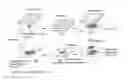
FIG. 1 shows the experimental procedures for observing the surface of a resin mold.
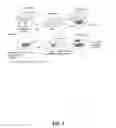
FIG. 2 illustrates the change in height (Δt) of the resin mold.
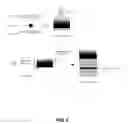
FIG. 3 shows the manufacturing process of optical film (such as antireflection film) using a resin mold hereof.
DETAILED DESCRIPTION
Experimental Procedures:
FIG. 1 shows the experimental procedures for observation of surface of resin mold. The experimental procedure is as follows:
-
- (a) A composition for forming resin mold is disposed on a substrate.
- (b) A concavo-convex surface of a quartz mold is pressed to the composition against the substrate. Irradiation of the composition with a light transmitted through the quartz mold forms a resin mold of which the surface has a concavo-convex pattern transferred from the quartz mold.
- (c) The resin mold is released from the quartz mold.
- (d) The concavo-convex pattern of the resin mold is pressed to a composition for transfer printing disposed on a substrate against the substrate.
- (e) An irradiation of the composition for transfer printing with a light transmitted through the quartz mold forms a resin member of which surface has a concavo-convex pattern transferred from the resin mold.
- (f) The resin member is released from the resin mold and the surface having the concave-convex pattern of the resin mold is observed. Therefore, at least one of the resin mold and the resin member requires mold release capability.
For a resin mold to be used for nanoimprinting, it is desired that there be little deterioration of the concavo-convex pattern of the resin mold by repeated transfer printings. Such a repeating process can be applied to component fabrication of components such as optical components, electronic components, and other devices due to the long working lifetime of the resin mold hereof.
FIG. 2 shows an explanation for change in height (Δt) of resin mold. t0 and tN are the difference between the bottom and the top of the concavo-convex pattern in a cross-section view before performing transfer printings and that after performing transfer printings, respectively. Δt is a reflection of the degree of the deterioration and increases with the progression of the deterioration.
A resin mold for which a small Δt is observed is a superior one useful, e.g., for nanoimprinting. The major reason for the increase of Δt is considered to be that the resin mold swells by penetration of components or a solvent included in composition for transfer printing during transfer printings. Therefore, materials suppressing penetration of such components should be used for resin molds. More concretely, liquid repellent capability and/or high crosslink density are required for the materials used for resin molds.
The invention is further described with the aid of the following illustrative Examples.
EXAMPLES
Series A of Experiments
Table 1 shows compositions of resin molds and changes in height of the resin molds. The compositions presented in Table 1 include the constituent A1 (average molecular weight: ca 1850; p: 8.7 (average); q: 5.1 (average)) and initiator I. In addition to the constituent A1 and initiator I, the constituent A2 (average molecular weight: ca 1000; n: 1.5 (average)) and/or constituent B are added to the compositions. Since the constituent A2 has fluorine atoms and a higher ratio of the number of polymerizable substituents to the molecular weight higher than that of the constituent A1, the constituent A2 is considered to make greater contribution to crosslink density than the constituent A1 while contributing to liquid repellent capability. Since the ratio of the number of polymerizable substituents to the molecular weight in the constituent B is greatest among the constituents A1, A2, and B, the constituent B is considered to make greatest contribution to crosslink density. Entries 2-6 are desirable compositions for forming resin molds used for nanoimprinting since dimension errors (Δt/t0) % for 400 times transfer printings of the resin molds formed by the compositions of the entries 2-6 are equal to smaller than 12%.
| TABLE 1 |
| Compositions of resins and changes in height of the resin mold (Series A) |
| Composition for mold resin | Entry 1 | Entry 2 | Entry 3 | Entry 4 | Entry 5 | Entry 6 |
| Constituent A1 | 76 | 66 | 46 | 36 | 26 | 51 |
| Constituent A2 | 20 | 30 | 40 | |||
| Constituent B | 20 | 30 | 30 | 30 | 30 | 45 |
| Initiator I | 10 | 10 | 10 | 10 | 10 | 10 |
| the estimated concentration of | 36.9% | 32.1% | 31.0% | 30.4% | 29.9% | 24.8% |
| fluorine in the resin/% by | ||||||
| weight | ||||||
| Δt/nm (Change in height after | 57 | 27 | 18 | 19 | 10 | 17 |
| 400 times transfer printings) | ||||||
| Dimension error (Δt/t0) % | 25 | 12 | 8 | 8 | 4 | 8 |
The dimension error is desirable to be within 12% when 400 times of transfer printings are carried out.
The resin formed from composition of Entry 1 shows a change in height after 500 transfer printings, 800 transfer printings, and 1000 transfer printings of less than 60 nm. Thus, the dimension errors are within 26% when 500 times, 800 times and 1000 time of transfer printings are carried out.
The resin formed from composition of Entry 5 shows a change in height after 500 transfer printings, 800 transfer printings, and 1000 transfer printings of less than 10 nm. Thus, the dimension errors are within 10% when 500 times, 800 times and 1000 time of transfer printings are carried out.
Series B of Experiments
Table 2 shows compositions of resins and changes in height of the resin molds. The compositions presented by Table 2 include constituents A1 (average molecular weight: ca 1850; p: 8.7 (average); q: 5.1 (average)), B, and initiator I. Since the ratio of the number of polymerizable substituents to the molecular weight in the constituent B is greater than the constituent A1, the constituent B is considered to make greatest contribution to crosslink density. Entries 2-4 are desirable compositions for forming resin molds used for nanoimprinting since dimension errors (Δt/t0) % for 50 times transfer printings of the resin molds formed by the compositions of the entries are less than or equal to 10%.
| TABLE 2 |
| Compositions of resins and changes in height of the resins (Series B) |
| Composition for mold resin | Entry 1 | Entry 2 | Entry 3 | Entry 4 |
| Constituent A1 | 91 | 76 | 71 | 66 |
| Constituent B | 5 | 20 | 25 | 30 |
| Initiator I | 10 | 10 | 10 | 10 |
| the estimated concentration of | 44.2% | 36.9% | 34.5% | 32.1% |
| fluorine in the resin/% by weight | ||||
| Δt/nm (Change in height | +50 nm | +10 nm | +5 nm | +5 nm |
| after 50 times transfer printings) | ||||
| Dimension error (Δt/t0)/% | 50 | 10 | 5 | 5 |
The dimension error is desirable to be within 10% when 50 times of transfer printings are carried out.
Initiators:
Instead of the Initiator I, for example, acetophenone-based initiators, alkylphenone-based initiators, benzoin-based initiators, benzyl ketal-based initiators, anthraquinone-based initiators, acyloxime-based initiators, and acyl phosphine oxide-based initiators can be used for curing the precursors (constituents A1, A2, and B).
FIG. 3 shows the manufacturing process of an optical film (such as an antireflection film) using the resin mold formed from one of the compositions disclosed herein.
A resin mold and a substrate are prepared. The precursor for film is disposed between the resin mold and the substrate. An optical film is formed by irradiation of the precursor with a light transmitted through the resin mold. After the optical film is released from the resin mold and substrate, the optical film is attached to a liquid crystal display (LCD). The optical film can be used as an optical film for other electro-optical devices such as an electroluminescence device and/or electrophoretic device.
Such resin mold can be used in repeating fashion for components or devices such as optical components and electronic devices due to the long working lifetime of the resin mold hereof.
Claims
What is claimed is:1. A resin mold comprising:
a first surface where a plurality of first portions and a plurality of second portions are formed; and
a second surface,
wherein the resin mold is characterized in that:
a first distance between the plurality of first portions and the second surface at a first time before 400 times transfer printings are carried out using the resin mold is greater than a second distance between the plurality of second portions and the second surface at the first time;
a third distance between the plurality of first portions and the second surface at a second time after 400 transfer printings are carried out is greater than a fourth distance between the plurality of second portions and the second surface at the second time;
a first difference between the first distance and the second distance is different than a second difference between the third distance and the fourth distance; and
a ratio of a third difference between the first difference and the second difference to the first difference being less than or equal to 12%.
2. The resin mold of claim 1, wherein the resin mold is constituted of a first resin having a plurality of carbon-fluorine bonds.
3. The resin mold of claim 2, wherein
the first resin includes a first unit and a second unit, the first unit having a first main chain and the second unit has a second main chain, and a first average content of fluorine atom per one atom included in the first main chain is different than a second average of fluorine atom per one atom included in the second main chain.
4. The resin mold of claim 3, wherein
the first resin further includes a third unit, the third unit having a third main chain, and
a third average content of fluorine atom per one atom included in the third main chain is different than the first average and the second average.
5. A resin mold comprising:
a first surface wherein a plurality of first portions and a plurality of second portions are formed; and
a second surface,
wherein the resin mold is characterized in:
a first distance between the plurality of first portions and the second surface being greater than a second distance between the plurality of second portions and the second surface;
the resin mold being constituted of a first resin;
the first resin including a first unit and a second unit;
the first unit having a first main chain;
the second unit having a second main chain; and
a first average content of fluorine atom per one atom included in the first main chain being different than a second average of fluorine atom per one atom included in the second main chain.
6. The resin mold of claim 5, wherein
the first resin further includes a third unit, the third unit having a third main chain, and
a third average content of fluorine atom per one atom included in the third main chain being different than the first average and the second average.
7. The resin mold of claim 1, wherein
the resin mold is constituted of a first resin; and
a concentration of fluorine atom included in the first resin is greater than or equal to 20 wt %.
8. A resin mold, comprising:
a first surface where a plurality of first portions and a plurality of second portions are formed; and
a second surface,
wherein the resin mold is characterized in:
a first distance between the plurality of first portions and the second surface being greater than a second distance the plurality of second portions and the second surface;
the resin mold being constituted of a first resin; and
a concentration of fluorine atom included in the first resin being greater than or equal to 20 wt %.
9. The resin mold of claim 8, wherein the concentration of fluorine atom is less than or equal to 76 wt %.
10. The resin mold of claim 9, wherein the concentration of fluorine atom is greater than or equal to 24.8 wt %.
11. The resin mold of claim 8, wherein the concentration of fluorine atom is less than or equal to 32.1 wt %.
12. The resin mold of claim 1, wherein
the resin mold is constituted of a first resin; the first resin including a first bond between a carbon atom bonded to two fluorine atoms and a first constituent atom other than a carbon atom and a fluorine atom.
13. The resin mold of claim 12, wherein the first resin includes a second bond between a carbon atom bonded to two fluorine atoms and a carbon atom.
14. The resin mold of claim 12, wherein the first resin includes a carbon atom bonded to a first fluorine atom, a second fluorine atom, a first carbon atom, and a second carbon atom.
15. The resin mold of claim 14, wherein the first carbon atom is bonded to a second constituent atom other than a carbon atom and a fluorine atom.
16. A method for manufacturing a plurality of components, the method comprising:
preparing the resin mold of claim 1; and
repeating transfer printings to manufacture the plurality of components.
Images & Drawings included:

Sources:
- United States Patent and Trademark Office - verify current appl. status at the USPTO↗
Similar patent applications:
- » 20120323078
MANUFACTURING METHOD OF RESIN MOLDED ARTICLE, RESIN MOLDED ARTICLE, RESIN MOLDED ARTICLE FOR ENDOSCOPE, ENDOSCOPE USING RESIN MOLDED ARTICLE, AND MANUFACTURING APPARATUS OF RESIN MOLDED ARTICLE - » 20130341834
Manufacturing method of resin molding mold, resin molding mold, resin molding mold set, manufacturing method of microchip substrate, and manufacturing method of microchip using said mold - » 20080303052
Light emitting diode package with a heat sink support ring and having multiple molding resins, wherein secondary molding resin with higher hardness than primary molding resin and which covers primary molding resin that covers LED die - » 20240408802
MOLD FOR RESIN MOLDING, RESIN MOLDING APPARATUS, AND METHOD FOR PRODUCING RESIN MOLDED ARTICLE - » 20240009899
COMPRESSION MOLD, RESIN MOLDING APPARATUS, RESIN MOLDING SYSTEM, AND METHOD OF MANUFACTURING RESIN-MOLDED PRODUCT - » 20220410437
RESIN MOLDING DIE, METHOD FOR MANUFACTURING RESIN MOLDING DIE, METHOD FOR MANUFACTURING RESIN MOLDED ARTICLE, AND SYSTEM FOR MANUFACTURING RESIN MOLDED ARTICLE - » 20100075149
Mold for resin molding, method for manufacturing mold for resin molding, and resin molded product - » 20240246265
COMPRESSION MOLDING DIE, RESIN MOLDING DEVICE, RESIN MOLDING SYSTEM, AND METHOD FOR MANUFACTURING RESIN MOLDED PRODUCT - » 20100155992
MOLD RESIN MOLDING METHOD AND MOLD RESIN MOLDING APPARATUS - » 20110036833
Heater, resin molding apparatus, resin molding method and resin molded body
Recent applications in this class:
- » 20250162237 2025-05-22
METHOD FOR THE PRODUCTION OF AN EMBOSSED POLYMER FILM - » 20240424726 2024-12-26
SYSTEMS AND METHODS FOR MICROPATTERNING OBJECTS - » 20240399648 2024-12-05
IMPRINT APPARATUS, IMPRINT METHOD AND ARTICLE MANUFACTURING METHOD - » 20240359393 2024-10-31
EMBOSS PATTERNS FOR THERMOPLASTIC FILMS - » 20240336003 2024-10-10
IMPRINT DEVICE, IMPRINT METHOD, AND METHOD FOR MANUFACTURING ARTICLE - » 20240326317 2024-10-03
Technique for dynamic length compensation - » 20240083101 2024-03-14
GRAPHITE MATERIALS AND DEVICES WITH SURFACE MICRO-TEXTURING - » 20240083100 2024-03-14
DEVICE AND METHOD FOR EMBOSSING A COMPONENT - » 20240042674 2024-02-08
POSITIONING METHOD, METHOD FOR MANUFACTURING LAYERED BODY, POSITIONING DEVICE, LAYERED BODY MANUFACTURING DEVICE, AND LAYERED BODY - » 20230405915 2023-12-21
MICROSTRUCTURED SURFACE WITH INCREASED MICROORGANISM REMOVAL WHEN CLEANED, ARTICLES AND METHODS
Recent applications for this Assignee:
- » 20230013430 2023-01-19
SULFONIUM SALT, ACID GENERATOR, RESIST COMPOSITION, AND METHOD FOR PRODUCING DEVICE - » 20210397097 2021-12-23
METHOD OF PRODUCING MOLDED PRODUCT, RESIST FOR COLLECTIVE MOLDING WITH IMPRINT-ELECTRONIC LITHOGRAPHY, METHOD OF PRODUCING REPLICA MOLD, METHOD OF PRODUCING DEVICE, AND IMPRINT MATERIAL - » 20210263409 2021-08-26
Method for manufacturing device, and composition - » 20180231887 2018-08-16
METHOD FOR MANUFACTURING DEVICE, AND COMPOSITION - » 20180011401 2018-01-11
Sulfonic acid derivative, photoacid generator using same, resist composition, and device manufacturing method - » 20170075219 2017-03-16
ONIUM SALT, PHOTOACID GENERATOR, PHOTOSENSITIVE RESIN COMPOSITION, AND METHOD FOR PRODUCING DEVICE - » 20170072601 2017-03-16
Composition - » 20170037169 2017-02-09
Manufacturing method of polymer - » 20160369217 2016-12-22
PLATES FOR CULTURE OF BIOLOGICAL SAMPLES - » 20160326276 2016-11-10
Composition and a method for manufacturing a component