Radiation Sensor, and its Application in a Charged-Particle Microscope
US20160056015A1
2016-02-25
14/833,947
2015-08-24
Abstract:
A pixelated CMOS radiation sensor (e.g. in a 4T pinned photodiode device) that comprises a layered structure including:
-
- A p-type Si substrate;
- An n-doped region within said substrate;
- A p+-doped pinning layer that overlies said n-doped region;
- An SiOx layer that overlies said p+-doped pinning layer and serves as a Pre-Metal Dielectric or Inter-Metal Dielectric layer,
in which a Boron film is deposited between said p+-doped pinning layer and said SiOx layer. Application of such a (pure) Boron film serves to reduce leakage current by one or more orders of magnitude. Even a relatively thin Boron film (e.g. thickness 1-2 nm) can produce this effect.
Inventors:
- Cornelis Sander Kooijman 24 🇳🇱 Veldhoven, Netherlands
- Gerard Nicolaas Anne van Veen 9 🇳🇱 Waalre, Netherlands
- Luc Roger Simonne Haspeslagh 1 🇧🇪 Lubbeek-Linden, Belgium
Assignee:
- FEI Company 804 🇺🇸 Hillsboro, OR, United States
Interested in similar patents?
Get notified when new applications in this technology area are published.
Classification:
H01J2237/285 » CPC further
Discharge tubes exposing object to beam, e.g. for analysis treatment, etching, imaging; Electron or ion microscopes Emission microscopes
H01J2237/2441 » CPC further
Discharge tubes exposing object to beam, e.g. for analysis treatment, etching, imaging; Detection characterized by the detecting means Semiconductor detectors, e.g. diodes
H01J37/244 » CPC main
Discharge tubes with provision for introducing objects or material to be exposed to the discharge, e.g. for the purpose of examination or processing thereof; Details Detectors; Associated components or circuits therefor
H01J37/04 » CPC further
Discharge tubes with provision for introducing objects or material to be exposed to the discharge, e.g. for the purpose of examination or processing thereof; Details Arrangements of electrodes and associated parts for generating or controlling the discharge, e.g. electron-optical arrangement, ion-optical arrangement
H01J37/285 » CPC further
Discharge tubes with provision for introducing objects or material to be exposed to the discharge, e.g. for the purpose of examination or processing thereof; Electron or ion microscopes; Electron or ion diffraction tubes Emission microscopes, e.g. field-emission microscopes
Description
The invention relates to a pixelated CMOS (Complementary Metal Oxide Semiconductor) radiation sensor that comprises a layered structure including:
-
- A p-type Si substrate;
- An n-doped region within said substrate;
- A p+-doped pinning layer that overlies said n-doped region;
- An SiOx layer that overlies said p+-doped pinning layer and serves as a Pre-Metal Dielectric or Inter-Metal Dielectric layer.
The invention also relates to a charged-particle microscope, comprising:
-
- A specimen holder, for holding a specimen;
- A source, for producing a beam of charged particles;
- A particle-optical column, for directing said beam so as to irradiate the specimen;
- A detector, for detecting radiation emanating from the specimen in response to said irradiation,
which detector comprises a sensor as set forth above.
Charged-particle microscopy is a well-known and increasingly important technique for imaging microscopic objects, particularly in the form of electron microscopy. Historically, the basic genus of electron microscope has undergone evolution into a number of well-known apparatus species, such as the Transmission Electron Microscope (TEM), Scanning Electron Microscope (SEM), and Scanning Transmission Electron Microscope (STEM), and also into various sub-species, such as so-called “dual-beam” tools (e.g. a FIB-SEM), which additionally employ a “machining” Focused Ion Beam (FIB), allowing supportive activities such as ion-beam milling or Ion-Beam-Induced Deposition (IBID), for example. More specifically:
-
- In a SEM, irradiation of a specimen by a scanning electron beam precipitates emanation of “auxiliary” radiation from the specimen, in the form of secondary electrons, backscattered electrons, X-rays and photoluminescence (infrared, visible and/or ultraviolet photons), for example; one or more components of this flux of emanating radiation is/are then detected and used for image accumulation purposes.
- In a TEM, the electron beam used to irradiate the specimen is chosen to be of a high-enough energy to penetrate the specimen (which, to this end, will generally be thinner than in the case of a SEM specimen); the flux of transmitted electrons emanating from the specimen can then be used to create an image. When such a TEM is operated in scanning mode (thus becoming a STEM), the image in question will be accumulated during a scanning motion of the irradiating electron beam. If desired, imagery in a STEM can also be accrued in the same way as in a SEM, i.e. by collecting auxiliary radiation emanating from the specimen.
More information on some of the topics elucidated here can, for example, be gleaned from the following Wikipedia links:
http://en.wikipedia.org/wiki/Electron_microscope
http://en.wikipedia.org/wiki/Scanning_electron_microscope
http://en.wikipedia.org/wiki/Transmission_electron_microscopy
http://en.wikipedia.org.wiki/Scanning_transmission_electron_microscopy
As an alternative to the use of electrons as irradiating beam, charged-particle microscopy can also be performed using other species of charged particle. In this respect, the phrase “charged particle” should be broadly interpreted as encompassing electrons, positive ions (e.g. Ga or He ions), negative ions, protons and positrons, for instance. As regards ion-based microscopy, some further information can, for example, be gleaned from sources such as the following:
http://en.wikipedia.org/wiki/Scanning_Helium_Ion_Microscope
-
- W. H. Escovitz, T. R. Fox and R. Levi-Setti, Scanning Transmission Ion Microscope with a Field Ion Source, Proc. Nat. Acad. Sci. USA 72(5), pp 1826-1828 (1975).
It should be noted that, in addition to imaging, a charged-particle microscope (CPM) may also have other functionalities, such as performing spectroscopy, examining diffractograms, performing (localized) surface modification (e.g. milling, etching, deposition), etc.
- W. H. Escovitz, T. R. Fox and R. Levi-Setti, Scanning Transmission Ion Microscope with a Field Ion Source, Proc. Nat. Acad. Sci. USA 72(5), pp 1826-1828 (1975).
In all cases, a Charged-Particle Microscope (CPM) will comprise at least the following components:
-
- A radiation source, such as a Schottky electron source or ion gun.
- A particle-optical column, which serves to manipulate a “raw” radiation beam from the source, perform upon it certain operations such as focusing, aberration mitigation, cropping (with an aperture), filtering, etc., and then irradiate (illuminate) a chosen specimen herewith.
The particle-optical column will generally comprise one or more charged-particle lenses, and may comprise other types of particle-optical component also. If desired, it can be provided with a deflector system that can be invoked to cause its output beam to perform a scanning motion across the specimen being investigated. In the case of a TEM/STEM and transmission-type ion microscopes, a second particle-optical column will be positioned “downstream” of the specimen, serving as an imaging system to image transmitted charged particles onto a fluorescent screen and/or detector.
-
- A specimen holder, on which a specimen under investigation can be held and positioned (e.g. tilted, rotated). If desired, this holder can be moved so as to perform scanning motion of the irradiating beam w.r.t. the specimen. In general, such a specimen holder will be connected to a positioning system such as a mechanical stage.
- A detector, which may be unitary or compound/distributed in nature, and which can take many different forms, depending on the radiation being detected. Examples include photomultipliers (including solid-state photomultipliers, SSPMs), photodiodes, CMOS detectors, CCD detectors, photovoltaic cells, etc., which may, for example, be used in conjunction with a scintillator film, for instance. A typical CPM may comprise several detectors, often of different types, and the quality, accuracy and reliability of such detectors is of major importance to the performance of the CPM.
In what follows, the invention may—by way of example—sometimes be set forth in the specific context of electron microscopy. However, such simplification is intended solely for clarity/illustrative purposes, and should not be interpreted as limiting.
A sensor as set forth in the opening paragraph above is known from so-called 4T (four-transistor) CMOS sensor designs. Each pixel in such a sensor comprises four transistors that co-operate with a so-called pinned photodiode, which has the abovementioned layered structure. See, for example, the following references:
http://fairchildimaging.com/files/spie—7021-2-pre-print.pdf
http://ieeexplore.ieee.org/stamp/stamp.jsp?arnumber=6742594
http://harvestimaging.com/pubdocs/125—2008_SSE_CMOS_overview.pdf
In such a layered structure:
-
- The (extrinsic) p-type substrate can be realized by appropriately doping an (intrinsic) Si substrate with a p-type dopant (such as Boron, for example). This can, for example, be achieved by continuously adding a (gas-phase) dopant during Si boule (crystal) growth.
- The n-doped region may, for example, be created by implanting Phosphorous ions (or ions of other pentavalent elements) into a portion of the p-type Si substrate. A typical concentration for such implantation is about 1015-1017 atoms per cm3, and the region itself may have a depth of the order of about 0.3-1.0 μm, for example. Lateral dimensions will very much depend on the particulars of the device concerned, but dimensions of the order of about 1-10 μm are conceivable/typical.
- The p+-doped pinning layer may be created by implanting Boron ions (or ions of other trivalent elements) into a portion of the underlying structure. A typical dopant concentration in such a layer may be about 1017-1019 atoms per cm3, and the layer itself may have a depth of the order of at least 50 nm (typically 50-150 nm), for example. The skilled artisan will be familiar with the concept of a pinning layer but, if desired, more information on this topic can, for example, be gleaned from the article by V. Goiffon et al., Radiation Effects in Pinned Photodiode CMOS Image Sensors: Pixel Performance Degradation due to Total Ionizing Dose, IEEE Transactions on Nuclear Science 59(6), pp. 2878-2887 (2012), ISSN 0018-9499:
http://core.ac.uk/download/pdf/12044005.pdf
-
- The SiOx layer may, for example, comprise SiO and/or SiO2, and its thickness will typically be of the order of at least 1 μm (e.g. 1-2 μm), for instance. It may, for example, be deposited using low-temperature CVD (Chemical Vapor Deposition), compatible with back-end CMOS processing. It fulfills the role of Pre-Metal Dielectric (PMD) [below a metal layer] or Inter-Metal Dielectric (IMD) [between two metal layers], serving inter alia to electrically isolate said metal layer(s) and to impede the migration of possible impurities resulting from deposition/processing of the metal layer(s). A PMD or IMD is sometimes generically referred to as an Inter-Layer Dielectric (ILD). The skilled artisan will be familiar with the concept of a PDM/IMD/ILD but, if desired, more information on this topic can, for example, be gleaned from the book by T. K. Gupta, Copper Interconnect Technology, Springer publishers (2009), particularly Chapter 2:
http://www.researchgate.net/pubtopics.PublicPostFileLeader.html?id=576d2fd648d2 08b467b&key=fcd067fe-6781-418f9c77-dd10974298bb
In a typical pixelated CMOS photodiode, several patterned metal layers (e.g. 3, 4, or 5 layers) will often be necessary to address/read out the array of pixels present—with an IMD between each pair of metal layers, and a PMD at the bottom of the stack. In such a structure, the cumulative thickness of the PMD+IMD(s) may, for example, lie in the range 3-6 μm.
As regards the prefix “photo” in the term “photodiode”, this should not be interpreted as indicating a device that can only detect photons; rather, the term (as used throughout this text) is intended to indicate a more generic device that can generate an electrical signal in response to interception of various types of particulate radiation (photons, electrons, ions, etc.). Use of an intermediary (such as a scintillator layer) to convert non-photonic radiation to photonic radiation is not generally required.
For more information on some of the topics alluded to here, reference is made to the following Wikipedia links:
http://en.wikipedia.org/wiki/Extrinsic_semiconductor
http://en.wikipedia.org/wiki/Doping_%28semiconductor%29
Although they are widely used for detection of various types of particulate radiation—such as photons, electrons, and ions—sensors of this type suffer from a number of disadvantages. In particular, such sensors can demonstrate a relatively large “leakage current” or “dark current”, which is effectively a parasitic sensor output in the absence of an input flux of radiation. Such a leakage current can be problematic for a number of reasons:
-
- If it is too large relative to typical “bright current” values produced by the sensor (when the sensor is detecting radiation), the dynamic range of the sensor can suffer. In acute situations, the leakage current may actually saturate the sensor, so that it cannot produce any useful detection output.
- It requires the sensor to be calibrated, whereby the leakage current is measured, and its value is subtracted from the sensor's output current. However, the leakage current does not necessarily exhibit linear behavior, thus essentially requiring re-calibration on a “per measurement” basis, whereby “bright frame” and “dark frame” measurements are conducted in pairs, and the latter subtracted from the former each time. This obviously entails a throughput penalty.
These problems are compounded by the fact that, compared to a reference “virgin” sensor that has not been irradiated, the leakage current tends to increase as a function of the cumulative radiation dose to which the sensor is exposed. Consequently, the sensor tends to degrade with use (vis-à-vis leakage current), thereby potentially limiting its usefulness/usable lifetime.
It is an object of the invention to address these issues. In particular, it is an object of the invention to provide a sensor as described above, which, compared to prior-art sensors, suffers to a reduced extent from leakage current behavior. More specifically, it is an object of the invention that such a sensor should demonstrate improved radiation hardness, particularly in that it suffers less (and preferably no) increase in leakage current in response to a given radiation dose.
These and other objects are achieved in a sensor as set forth in the opening paragraph above, characterized in that a Boron film is deposited between said p+-doped pinning layer and said SiOx layer.
In experiments leading to the invention, the inventors sought to investigate the mechanism that was responsible for production of leakage currents as referred to above. It appeared that fundamental structural differences between the sensor's (doped) Si underlayers and SiOx overlayer were playing a role in this phenomenon. More particularly, lattice mismatches in the interface zone between the Si and SiOx were leading to lattice defects—more specifically in the form of Si atoms that were not bonded to an optimal number of neighboring atoms, leading to the occurrence of dangling bonds. These dangling bonds acted as recombination/generation centers—capable of capturing a charge carrier, and, accordingly, disturbing the overall equilibrium of charge carriers in the device, with the attendant generation of leakage current flows. Often, hydrogen is used in CMOS devices in an attempt to passivate the Si/SiOx interface. Typically, when such a set-up is irradiated during a detection run, incoming radiation particles tend to (re-)create dangling bonds (inter alia by disrupting Si—H bonds in the case of a H-passivated Si/SiOx interface)—allowing the whole process of carrier capture and leakage current generation to repeat itself once irradiation stops. Confronted with this phenomenon, the inventors conducted various experiments in which they ultimately observed that application of a thin film of Boron between the Si and SiOx lattices will cause the aforementioned recombination/generation centers to be occupied by a Boron atom, and that this is essentially a stable, permanent occupancy that is not undone en masse when the sensor is irradiated. Stable occupation of such centers by Boron atoms (with attendant elimination of associated dangling bonds) means that they can no longer act as carrier traps, with a resulting significant reduction in leakage current—typically by one or more orders of magnitude.
In addition to the effects set forth in the previous paragraph, the inventors also arrived at additional insights, as follows. When ionizing radiation passes through a SiOx layer, electron-hole pairs are generally formed. Electrons typically have relatively high mobility, and they will be collected by the closest positively biased electrode; however, holes tend to have very low mobility (orders of magnitude lower than electrons) and can stay trapped in the oxide for a timespan that can vary from a few seconds to many years, depending on the position where charges are created and the oxide thickness involved. The thicker the oxide, the longer the holes tend to be trapped, and this effect can lead to the formation of semi-permanent positive charge in the SiOx layer. Such positive charges in the SiOx above the photodiode tend to cause an effective doping reduction along the Si/SiOx interface. The higher the radiation dose, the more pronounced this effect becomes, causing the pinning layer (p+-doped layer) to lose effectiveness. The Boron film of the present invention counteracts this effect by “shielding” the pinning layer from the above-mentioned space charge effects in the overlying SiOx layer (or stack of such layers).
As already stated above, a relatively thin film of Boron (e.g. 1-2 nm) is enough to produce the inventive effect being sought. A thicker layer is, in principle, possible, but the inventors have observed that relatively thin Boron films can exhibit more advantageous properties. For example, Boron occurs in column III of the periodic table of the elements, together with metals such as Al, Ga, In and Tl; however, Boron itself is a metalloid, with properties intermediate between those of metals and non-metals. By keeping the Boron film in the inventive sensor thin, the inventors have observed that its behavior migrates (further) away from metallic behavior and toward semiconductor behavior. This can produce some surprising results: for example, one might think that the presence of the inventive Boron film in a pinned photodiode structure would produce Schottky-like behavior but, surprisingly, normal diode behavior is preserved. It should be noted that Boron film thicknesses of less than 1 nm are, in principle, allowed by the current invention, though such films may be more difficult to deposit in a closed/contiguous form (rather than a patchwork of islands).
It should be noted that, when the current text refers to a “Boron film”, it should be interpreted as indicating a film that is predominantly (or totally) comprised of Boron atoms. In practice, such a film may comprise relatively small quantities of impurities/interstitials, but the presence of minority numbers of foreign atoms still falls within the scope of the label “Boron film”. In any case, it will be clear to the skilled artisan that a Boron film as here alluded to is a very different entity to a Boron-doped layer, in which Boron atoms are introduced as minority impurities in a layer of other majority atoms.
In an embodiment of the invention, the employed Boron film is deposited using Chemical Vapor Deposition (CVD). This may, for example, be achieved by using a mixture of B2H6 and H2 as a precursor gas. CVD (including its various hybrids, such as PECVD, etc.) is advantageous in that it can be used to produce a thin, uniform film in a very controllable manner (as opposed, for example, to sputtering, which tends to grow layers via merging islands in a process that is generally less controllable). Other deposition techniques that could be employed to produce the present invention's characteristic Boron film include Molecular Beam Epitaxy (MBE) and Atomic Layer Deposition (ALD), for example.
For some general information on CVD, MBE and ALD, reference is made to the following Wikipedia links:
http://en.wikipedia.org/wiki/Chemical_vapor_deposition
http://en.wikipedia.org/wiki/Molecular_beam_epitaxy
http://en.wikipedia.org/wiki/Atomic_layer_deposition
The sensor of the current invention lends itself particularly to designs in which each pixel comprises (at least) 4 transistors. These include so-called 4T, 5T and 6T designs, for example. However, in principle, the invention could also be applied in other architectures, such as a 3T design, for example.
Care should be taken not to confuse the structure and nature of the current invention with prior-art descriptions that might appear to be similar but are, in fact, very different. For example:
-
- (a) In US 2010/203667 A1, bulk crystal lattice damage (“displacement damage”) occurs during device manufacture, specifically as a result of ion implantation procedures. This damage is addressed by applying Rapid Thermal Annealing (RTA) during manufacturing to relax the lattice back to its nominal geometry. There is no use of a boron film in accordance with the current invention. There is also no mention of ionization damage as a result of post-manufacture use of the device to detect radiation. The RTA procedure of this prior-art document could not be used to address ionization damage in a post-manufacture sensor, since the temperatures involved in the annealing procedure (˜800-1200° C.) would damage many components of the completed/packaged sensor.
- (b) In the article by Agata {hacek over (S)}akić et al., Boron-layer silicon photodiodes for high-efficiency low-energy electron detection, Solid State Electronics 65 (2011), pp. 38-44, ISSN 0038-1101, a thin Boron layer is used as an entrance window (top layer) and anode in a photodiode. Unlike the current invention, this prior-art boron layer is not overlaid by a thick ILD oxide layer; this is logical, since such an oxide layer would absorb the low-energy electrons that the prior-art document is trying to detect. Any films present above the boron layer in the prior-art document are necessarily very thin, and play the role of protective, absorber or filler films. This prior-art boron layer is used only to reduce dark current increases due to interface traps: it is not (and cannot be) used to address the effects of radiation-induced fixed positive charges in an overlying thick oxide layer, because it doesn't have such a layer. In fact, the {hacek over (S)}akić article explicitly points away from the current invention by stipulating that its isolation oxide layer must not be exposed to radiation.
- (c) The device in EP 2 346 094 A1 is similar to that in document (b). A boron layer is overlaid by a layer of SiO2 that is very thin (thickness ca. 10-200 nm) so as to minimize dead-layer thickness. Once again, relatively low-energy radiation is being detected, and there is (accordingly) no mention of radiation damage in said oxide layer.
- (d) In WO 2014/067754 A2, a boron layer is deposited on a p-type silicon epilayer rather than a p+-doped pinning layer. This boron layer is then overlaid by a silicon oxide layer, which serves as a (nm-)thin anti-reflective coating rather than a (μm-)thick ILD. Since this silicon oxide layer is so thin (a specific requirement, in order to enable tunneling), no formation of fixed positive charges will occur therein. As in case (b) above, the boron layer is therefore only used as a radiation hardener against interface traps, and does not address positive charge formation in a thick overlying oxide; in fact, the device in document (d) could not work with such a thick oxide, because it would impede the tunneling effects on which said device depends.
As a general note, it should be remembered that positive charges that arise in a thin oxide cover layer will dissipate relatively rapidly, so that they typically tend to be of relatively little concern. On the other hand, positive charges in a thick ILD oxide layer will tend to linger for a much longer time, and will thus need to be effectively addressed. This situation is further exacerbated when several such layers are stacked in an alternating sandwich structure with interposed metal layers, thus leading to an even greater cumulative oxide thickness. The problem becomes even more of an issue for high-energy incident radiation, such as the electrons typically used in a TEM (with energies of up to 300 keV, for example) and the X-rays emitted from an irradiated specimen in a CPM (and used, for example, in EDX [Energy-Dispersive X-Ray Spectroscopy] studies).
The invention will now be elucidated in more detail on the basis of exemplary embodiments and the accompanying schematic drawings, in which:
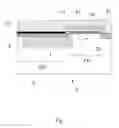
FIG. 1 renders a cross-sectional view of part of an embodiment of a pixelated CMOS radiation sensor according to the current invention.
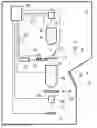
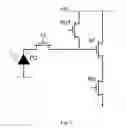
FIG. 2 depicts a circuit diagram for a typical 4T (four-transistor) CMOS sensor design.
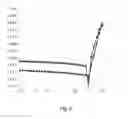
FIG. 3 renders a graph of leakage current versus applied voltage for a test radiation sensor according to the prior art (squares) and the current invention (triangles), after exposure to a given high-energy electron dose.
FIG. 4 renders a longitudinal cross-sectional view of a charged-particle microscope in which a radiation sensor according to the current invention can be employed.
In the Figures, where pertinent, corresponding parts are indicated using corresponding reference symbols. It should be noted that, in general, the Figures are not to scale.
EMBODIMENT 1
FIG. 1 renders a cross-sectional view of part of an embodiment of a pixelated CMOS radiation sensor 3 according to the current invention. The layered structure depicted in the Figure comprises the following parts/aspects:
5: A p-type Si substrate, e.g. a Si crystal doped with a small quantity of B.
7: An n-doped region within p-type substrate 5.
9: A p+-doped layer (“pinning layer”) that (at least partially) overlies the n-doped region 7.
11: An SiOx layer that (at least partially) overlies the p+-doped layer 9.
13: A Boron film deposited between p+-doped layer 9 and SiOx layer 11.
- The components 5-13 comprise a pinned photodiode structure PD. In prior-art structures of this type, Boron film 13 is absent, and layer 11 sits directly atop layer 9.
- To the right of the Figure, some ancillary structures are visible, which will be better understood in the context of FIG. 2/Embodiment 2 below. Specifically, a Transfer Gate Transistor TX is depicted, which comprises the following (additional) parts/aspects:
15: An n-doped floating diffusion layer.
17: A gate oxide layer.
19: A polysilicon layer.
21: So-called spacers, e.g. comprising SiN (silicon nitride).
- In use, radiation (such as a stream of electrons, photons or ions, for example) will impinge upon the SiO2 layer 11. As set forth above, the presence of the Boron film 13 between structures 9 and 11 serves to fill dangling bond sites that can arise due to a mismatch between the Si lattice of layer 9 and the SiO2 lattice of layer 11, thereby reducing the occurrence of carrier traps/leakage currents. The Boron film 13 also shields the pinning layer 9 from (irradiation-induced) positive charge accumulation in the SiO2 layer 11. In effect, the Boron film 13 can be regarded as a “radiation shield” or “radiation-hardening film” for the sensor 3, in that it (ultimately) mitigates undesirable effects that can arise as an effect of irradiation.
EMBODIMENT 2
FIG. 2 depicts a circuit diagram for (a single pixel of) a typical 4T (four-transistor) CMOS sensor design. The Figure comprises the following parts/aspects:
PD: Pinned photodiode.
TX: Transfer Gate Transistor.
RST: Reset Transistor.
SF: Source Follower Transistor.
RS: Row Select Transistor.
Vdd: Power Supply voltage.
- Irradiation of the pinned photodiode PD during sensing operations is schematically illustrated by the dashed arrows impinging on it from the left. The subject of FIG. 1 effectively illustrates an embodiment of the parts PD and TX of this circuit.
- The skilled artisan will understand that many variations of/supplements to this basic circuit schematic are possible, e.g. by including various capacitors in the layout. He will also understand that the CMOS sensor of the current invention does not necessarily have to be used in a 4T architecture; for instance, it could also be used in a 3T structure, or in a 5T structure, e.g. of a type as set forth in the following reference:
http://www.cse.yorku.ca/visor/resources/Tsai_twostep_readout.pdf
EMBODIMENT 3
FIG. 3 shows a graph of leakage current versus applied voltage for a test radiation sensor according to the prior art (squares; no boron film) and the current invention (triangles; boron film), after exposure to a given high-energy electron dose (see below). The employed radiation sensor had an architecture similar to that depicted in FIG. 1, except in that an extra connection pad/via was provided down to the n-doped region (FIG. 1, item 7), to allow bias voltage to be adjusted (normally, a structure such as that shown in FIG. 1 is self-biasing, with a bias voltage typically in the range −1 to −1.5 Volts). The vertical axis of the graph is logarithmic, and renders measured current in (exponents of) Amperes, whereas the horizontal axis is linear, and renders applied voltage in Volts. The data are depicted for a pixel area of 14×14 μm2, and a dose per pixel of 1 GPE (Giga Primary Electron), corresponding to per-pixel irradiation with a billion electrons (e.g. along axis 8 in a set-up such as that shown in FIG. 4). The tests were conducted at room temperature (20° C.) and, for the test structure corresponding to the present invention (triangles), the employed Boron film (FIG. 1, item 13) had a thickness of one nanometer.
Looking at the part of the graph to the left of zero Volts, it is evident that there is a large difference in leakage current between the prior-art structure (squares; no boron film) and the inventive structure (triangles; boron film). In the present case, this difference amounts to a factor of ca. eighteen, i.e. the leakage current in the inventive structure is only about 5.5% of the leakage current in the prior-art structure. This is a striking illustration of the effectiveness of the present invention.
EMBODIMENT 4
FIG. 4 is a highly schematic depiction of an embodiment of a CPM M that lends itself to use in conjunction with the current invention; the depicted microscope is a STEM (i.e. a TEM, with scanning functionality) but, in the context of the current invention, it could just as validly be an ion-based microscope, for example. In the Figure, within a vacuum enclosure 2, an electron source 4 (such as a Schottky gun, for example) produces a beam of electrons that traverse an electron-optical illuminator 6, serving to direct/focus them onto a chosen region of a (substantially planar) specimen S. This illuminator 6 has an electron-optical axis 8, and will generally comprise a variety of electrostatic/magnetic lenses, (scan) deflectors, correctors (such as stigmators), etc.; typically, it can also comprise a condenser system.
The specimen S is held on a specimen holder 10 that can be positioned in multiple degrees of freedom by a positioning device (stage) 12; for example, the specimen holder 10 may comprise a finger that can be moved (inter alia) in the XY plane (see the depicted Cartesian coordinate system). Such movement allows different regions of the specimen S to be irradiated/imaged/inspected by the electron beam traveling (in the −Z direction) along axis 8 (and/or allows scanning motion to be performed, as an alternative to beam scanning). An optional cooling device 14 is in intimate thermal contact with the specimen holder 10, and is capable of maintaining the latter at cryogenic temperatures, e.g. using a circulating cryogenic coolant to achieve and maintain a desired low temperature.
The (focused) electron beam traveling along axis 8 will interact with the specimen S in such a manner as to cause various types of “stimulated” radiation to emanate from the specimen S, including (for example) secondary electrons, backscattered electrons, X-rays and optical radiation (cathodoluminescence). If desired, one or more of these radiation types can be detected with the aid of detector 22, which might be a combined scintillator/photomultiplier or EDX (Energy-Dispersive X-Ray Spectroscopy) detector, for instance; in such a case, an image could be constructed using basically the same principle as in a SEM. However, alternatively or supplementally, one can study electrons that traverse (pass through) the specimen S, emerge from it and continue to propagate (substantially, though generally with some deflection/scattering) along axis 8. Such transmitted electrons enter an imaging system (combined objective/projection lens) 24, which will generally comprise a variety of electrostatic/magnetic lenses, deflectors, correctors (such as stigmators), etc. In normal (non-scanning) TEM mode, this imaging system 24 can focus the transmitted electrons onto a fluorescent screen 26, which, if desired, can be retracted/withdrawn (as schematically indicated by arrows 28) so as to get it out of the way of axis 8. An image of (part of) the specimen S will be formed by imaging system 24 on screen 26, and this may be viewed through viewing port 30 located in a suitable portion of the wall 2. The retraction mechanism for screen 26 may, for example, be mechanical and/or electrical in nature, and is not depicted here.
As an alternative to viewing an image on screen 26, one can instead make use of electron detector D, particularly in STEM mode. To this end, adjuster lens 24′ can be enacted so as to shift the focus of the electrons emerging from imaging system 24 and re-direct/focus them onto detector D (rather than the plane of retracted screen 26: see above). At detector D, the electrons can form an image (or diffractogram) that can be processed by controller 50 and displayed on a display device (not depicted), such as a flat panel display, for example. In STEM mode, an output from detector D (and/or detector 22) can be recorded as a function of (X,Y) scanning beam position on the specimen S, and an image can be constructed that is a “map” of detector output as a function of X,Y. The skilled artisan will be very familiar with these various possibilities, which require no further elucidation here.
Note that the controller (computer processor) 50 is connected to various illustrated components via control lines (buses) 50′. This controller 50 can provide a variety of functions, such as synchronizing actions, providing setpoints, processing signals, performing calculations, and displaying messages/information on a display device (not depicted). Needless to say, the (schematically depicted) controller 50 may be (partially) inside or outside the enclosure 2, and may have a unitary or composite structure, as desired. The skilled artisan will understand that the interior of the enclosure 2 does not have to be kept at a strict vacuum; for example, in a so-called “Environmental STEM”, a background atmosphere of a given gas is deliberately introduced/maintained within the enclosure 2.
In the context of the current invention, detector D (and possibly also other detectors in the microscope M, such as detector 22) is embodied to comprise a pixelated CMOS radiation sensor as set forth above, comprising the characteristic “radiation-hardening” Boron film of the invention.
Claims
1. A pixelated CMOS radiation sensor that comprises a layered structure including:
a p-type Si substrate;
an n-doped region within said substrate;
a p+-doped pinning layer that overlies said n-doped region;
an SiOx layer that overlies said p+-doped pinning layer and serves as a Pre-Metal Dielectric or Inter-Metal Dielectric layer,
in which a Boron film is deposited between said p+-doped pinning layer and said SiOx layer.
2. A sensor according to claim 1, wherein said Boron film has a thickness of at least 1 nm.
3. A sensor according to claim 1, wherein said Boron film is deposited using Chemical Vapor Deposition.
4. A sensor according to claim 1, wherein said Boron film serves to shield said p+-doped pinning layer from space charge effects in said SiOx layer.
5. A sensor according to claim 1, wherein said p+-doped pinning layer has a thickness of at least 50 nm.
6. A sensor according to claim 1, wherein said p+-doped pinning layer has a doping concentration in the range 1017-1019 atoms per cm3.
7. A sensor according to claim 1, wherein said SiOx layer has a thickness of at least 1 μm.
8. A sensor according to claim 1, wherein each pixel comprises three or more transistors.
9. A charged-particle microscope, comprising:
a specimen holder, for holding a specimen;
a source, for producing a beam of charged particles;
a particle-optical column, for directing said beam so as to irradiate the specimen;
a detector, for detecting radiation emanating from the specimen in response to said irradiation,
wherein said detector comprises a sensor according to claim 1.
10. A sensor according to claim 3, wherein said Boron film serves to shield said p+-doped pinning layer from space charge effects in said SiOx layer.
11. A sensor according to claim 4, wherein said p+-doped pinning layer has a thickness of at least 50 nm.
12. A senor according to claim 5, wherein said p+-doped pinning layer has a doping concentration in the range 1017-1019 atoms per cm3.
13. A sensor according to claim 6, wherein said SiOx layer has a thickness of at least 1 μm.
14. A sensor according to claim 7, wherein each pixel comprises three or more transistors.
15. A charged-particle microscope, comprising:
A specimen holder, for holding a specimen;
A source, for producing a beam of charged particles;
A particle-optical column, for directing said beam so as to irradiate the specimen;
A detector, for detecting radiation emanating from the specimen in response to said irradiation,
wherein said detector comprises a sensor according to claim 2.
16. A charged-particle microscope, comprising:
A specimen holder, for holding a specimen;
A source, for producing a beam of charged particles;
A particle-optical column, for directing said beam so as to irradiate the specimen;
A detector, for detecting radiation emanating from the specimen in response to said irradiation,
wherein said detector comprises a sensor according to claim 4.
17. A charged-particle microscope, comprising:
A specimen holder, for holding a specimen;
A source, for producing a beam of charged particles;
A particle-optical column, for directing said beam so as to irradiate the specimen;
A detector, for detecting radiation emanating from the specimen in response to said irradiation,
wherein said detector comprises a sensor according to claim 5.
18. A charged-particle microscope, comprising:
A specimen holder, for holding a specimen;
A source, for producing a beam of charged particles;
A particle-optical column, for directing said beam so as to irradiate the specimen;
A detector, for detecting radiation emanating from the specimen in response to said irradiation,
wherein said detector comprises a sensor according to claim 6.
19. A charged-particle microscope, comprising:
A specimen holder, for holding a specimen;
A source, for producing a beam of charged particles;
A particle-optical column, for directing said beam so as to irradiate the specimen;
A detector, for detecting radiation emanating from the specimen in response to said irradiation,
wherein said detector comprises a sensor according to claim 7.
20. A charged-particle microscope, comprising:
A specimen holder, for holding a specimen;
A source, for producing a beam of charged particles;
A particle-optical column, for directing said beam so as to irradiate the specimen;
A detector, for detecting radiation emanating from the specimen in response to said irradiation,
wherein said detector comprises a sensor according to claim 8.
Images & Drawings included:
Sources:
- United States Patent and Trademark Office - verify current appl. status at the USPTO↗
Recent applications in this class:
- » 20250157788 2025-05-15
RATING SUBSTRATE SUPPORT ASSEMBLIES BASED ON IMPEDANCE CIRCUIT ELECTRON FLOW - » 20250149288 2025-05-08
Ion Milling Device, and Inspection System - » 20250140515 2025-05-01
X-RAY IMAGING SYSTEM FOR RADIATION THERAPY - » 20250125118 2025-04-17
DETECTOR DEVICE, ELECTRON BEAM APPARATUS, AND METHOD FOR INSPECTING AND/OR IMAGING A SAMPLE - » 20250112022 2025-04-03
METHODS AND SYSTEMS OF ELECTRON DIFFRACTION - » 20250087449 2025-03-13
Electron Filter - » 20250087448 2025-03-13
ION BEAM PROFILING USING OPTICAL TOMOGRAPHY - » 20250087447 2025-03-13
Charged Particle Beam Apparatus and Sample Analysis Method - » 20250079118 2025-03-06
LIGHT GUIDE, ELECTRON RAY DETECTOR, AND CHARGED PARTICLE DEVICE - » 20250069846 2025-02-27
SENSOR DEVICE AND SYSTEM USING THE SAME
Recent applications for this Assignee:
- » 20250174428 2025-05-29
SEGMENTED ENDPOINTING FOR SAMPLE PREPARATION - » 20250159789 2025-05-15
SYSTEM AND METHOD FOR SPECTROMETRY OF A SAMPLE IN A PLASMA - » 20250157780 2025-05-15
METHODS FOR DETERMINING THE VIRTUAL SOURCE LOCATION OF A LIQUID METAL ION SOURCE - » 20250157779 2025-05-15
MINIMIZATION OF ENERGY SPREAD IN FOCUSED ION BEAM (FIB) SYSTEMS - » 20250155387 2025-05-15
BIFOCAL ELECTRON MICROSCOPE - » 20250138037 2025-05-01
APPARATUS FOR MOVING SAMPLE HOLDERS - » 20250125116 2025-04-17
CORRECTION OF OPTICAL ABERRATIONS IN CHARGED PARTICLE BEAM MICROSCOPY - » 20250112024 2025-04-03
ADAPTIVE SLICE DEPTH IN SLICE & VIEW WORKFLOW - » 20250112022 2025-04-03
METHODS AND SYSTEMS OF ELECTRON DIFFRACTION - » 20250112019 2025-04-03
MULTIPOLE ELEMENTS AND CHARGED PARTICLE MICROSCOPE SYSTEMS INCLUDING THE SAME