Heat sink with integrated threaded lid
US20170229374A1
2017-08-10
15/076,986
2016-03-22
✅ Patent granted
US 10,002,819 B2
2018-06-19
-
-
Sarang Afzali | Darrell C Ford
Law Office of Jim Boice
2036-10-18
Abstract:
A method affixes a heat sink to a module lid. A module lid is mounted to a substrate by use of a lid adhesive. The module lid has a threaded exterior portion. The module lid is thermally interfaced to a die by use of a thermal interface material. The heat sink is then screwed onto a module lid, where the heat sink includes a threaded heat sink base pocket that mates with the threaded exterior portion of the module lid, and wherein the heat sink is screwed down onto the module lid until 1) a solid mechanical and thermal contact is established between the heat sink and the module lid, and 2) an airflow from an air moving device flows unobstructed across vanes on the heat sink.
Inventors:
- Phillip V. Mann 96 🇺🇸 Rochester, MN, United States
- Bret P. Elison 23 🇺🇸 Rochester, MN, United States
- William J. Anderl 30 🇺🇸 Rochester, MN, United States
Assignee:
- INTERNATIONAL BUSINESS MACHINES CORPORATION 136,239 🇺🇸 ARMONK, NY, United States
Applicant:
Interested in similar patents?
Get notified when new applications in this technology area are published.
Classification:
H01L2023/4087 » CPC further
Details of semiconductor or other solid state devices; Arrangements for cooling, heating, ventilating or temperature compensation ; Temperature sensing arrangements; Mountings or securing means for detachable cooling or heating arrangements ; fixed by friction, plugs or springs with bolts or screws; Mechanical elements Mounting accessories, interposers, clamping or screwing parts
H01L23/40 IPC
Details of semiconductor or other solid state devices; Arrangements for cooling, heating, ventilating or temperature compensation ; Temperature sensing arrangements Mountings or securing means for detachable cooling or heating arrangements ; fixed by friction, plugs or springs
H01L21/4882 » CPC further
Processes or apparatus adapted for the manufacture or treatment of semiconductor or solid state devices or of parts thereof; Manufacture or treatment of semiconductor devices or of parts thereof the devices having at least one potential-jump barrier or surface barrier, e.g. PN junction, depletion layer or carrier concentration layer; Manufacture or treatment of parts, e.g. containers, prior to assembly of the devices, using processes not provided for in a single one of the subgroups -; Conductive parts; Bases, plates or heatsinks Assembly of heatsink parts
H01L24/16 » CPC further
Arrangements for connecting or disconnecting semiconductor or solid-state bodies; Methods or apparatus related thereto; Means for bonding being attached to, or being formed on, the surface to be connected, e.g. chip-to-package, die-attach, "first-level" interconnects; Manufacturing methods related thereto; Bump connectors ; Manufacturing methods related thereto; Structure, shape, material or disposition of the bump connectors after the connecting process of an individual bump connector
H01L23/4006 » CPC main
Details of semiconductor or other solid state devices; Arrangements for cooling, heating, ventilating or temperature compensation ; Temperature sensing arrangements; Mountings or securing means for detachable cooling or heating arrangements ; fixed by friction, plugs or springs with bolts or screws
H01L23/42 » CPC further
Details of semiconductor or other solid state devices; Arrangements for cooling, heating, ventilating or temperature compensation ; Temperature sensing arrangements Fillings or auxiliary members in containers or encapsulations selected or arranged to facilitate heating or cooling
H01L23/3675 » CPC further
Details of semiconductor or other solid state devices; Arrangements for cooling, heating, ventilating or temperature compensation ; Temperature sensing arrangements; Selection of materials, or shaping, to facilitate cooling or heating, e.g. heatsinks; Cooling facilitated by shape of device characterised by the shape of the housing
H01L24/73 » CPC further
Arrangements for connecting or disconnecting semiconductor or solid-state bodies; Methods or apparatus related thereto Means for bonding being of different types provided for in two or more of groups , , , , , , ,
H01L2023/4056 » CPC further
Details of semiconductor or other solid state devices; Arrangements for cooling, heating, ventilating or temperature compensation ; Temperature sensing arrangements; Mountings or securing means for detachable cooling or heating arrangements ; fixed by friction, plugs or springs with bolts or screws characterised by thermal path or place of attachment of heatsink heatsink to additional heatsink
H01L2023/4062 » CPC further
Details of semiconductor or other solid state devices; Arrangements for cooling, heating, ventilating or temperature compensation ; Temperature sensing arrangements; Mountings or securing means for detachable cooling or heating arrangements ; fixed by friction, plugs or springs with bolts or screws characterised by thermal path or place of attachment of heatsink heatsink to or through board or cabinet
H01L2224/73253 » CPC further
Indexing scheme for arrangements for connecting or disconnecting semiconductor or solid-state bodies and methods related thereto as covered by; Means for bonding being of different types provided for in two or more of groups; Location after the connecting process on different surfaces Bump and layer connectors
G06F1/20 » CPC further
Details not covered by groups - and; Constructional details or arrangements Cooling means
H01L2924/15311 » CPC further
Indexing scheme for arrangements or methods for connecting or disconnecting semiconductor or solid-state bodies as covered by; Details of package parts other than the semiconductor or other solid state devices to be connected; Die mounting substrate; Connection portion the connection portion being formed only on the surface of the substrate opposite to the die mounting surface being a ball array, e.g. BGA
H01L2924/16152 » CPC further
Indexing scheme for arrangements or methods for connecting or disconnecting semiconductor or solid-state bodies as covered by; Details of package parts other than the semiconductor or other solid state devices to be connected; Cap; Shape Cap comprising a cavity for hosting the device, e.g. U-shaped cap
H05K7/20 IPC
Constructional details common to different types of electric apparatus Modifications to facilitate cooling, ventilating, or heating
H05K7/20 IPC
Constructional details common to different types of electric apparatus Modifications to facilitate cooling, ventilating, or heating
B23P11/00 IPC
Connecting or disconnecting metal parts or objects by metal-working techniques not otherwise provided for
B23P15/26 IPC
Making specific metal objects by operations not covered by a single other subclass or a group in this subclass heat exchangers or the like
H01L23/367 IPC
Details of semiconductor or other solid state devices; Arrangements for cooling, heating, ventilating or temperature compensation ; Temperature sensing arrangements; Selection of materials, or shaping, to facilitate cooling or heating, e.g. heatsinks Cooling facilitated by shape of device
H01L21/48 IPC
Processes or apparatus adapted for the manufacture or treatment of semiconductor or solid state devices or of parts thereof; Manufacture or treatment of semiconductor devices or of parts thereof the devices having at least one potential-jump barrier or surface barrier, e.g. PN junction, depletion layer or carrier concentration layer Manufacture or treatment of parts, e.g. containers, prior to assembly of the devices, using processes not provided for in a single one of the subgroups -
H01L23/00 IPC
Details of semiconductor or other solid state devices
H01L2023/4037 » CPC further
Details of semiconductor or other solid state devices; Arrangements for cooling, heating, ventilating or temperature compensation ; Temperature sensing arrangements; Mountings or securing means for detachable cooling or heating arrangements ; fixed by friction, plugs or springs with bolts or screws characterised by thermal path or place of attachment of heatsink
H01L2023/4068 » CPC further
Details of semiconductor or other solid state devices; Arrangements for cooling, heating, ventilating or temperature compensation ; Temperature sensing arrangements; Mountings or securing means for detachable cooling or heating arrangements ; fixed by friction, plugs or springs with bolts or screws characterised by thermal path or place of attachment of heatsink Heatconductors between device and heatsink, e.g. compliant heat-spreaders, heat-conducting bands
H01L2924/15174 » CPC further
Indexing scheme for arrangements or methods for connecting or disconnecting semiconductor or solid-state bodies as covered by; Details of package parts other than the semiconductor or other solid state devices to be connected; Die mounting substrate; Multilayer substrate; Fan-out arrangement of the internal vias in different layers of the multilayer substrate
B23P17/00 IPC
Metal-working operations, not covered by a single other subclass or another group in this subclass
H01L2924/16251 » CPC further
Indexing scheme for arrangements or methods for connecting or disconnecting semiconductor or solid-state bodies as covered by; Details of package parts other than the semiconductor or other solid state devices to be connected; Cap; Disposition Connecting to an item not being a semiconductor or solid-state body, e.g. cap-to-substrate
Description
BACKGROUND
The present disclosure relates to the field of electronic circuits, and specifically to cooling devices used in electronic circuits. Still more specifically, the present invention relates to heat sinks used as cooling devices in electronic circuits.
SUMMARY
A method affixes a heat sink to a module lid. A module lid is mounted to a substrate by use of a lid adhesive. The module lid has a threaded exterior portion. The module lid is thermally interfaced to a die by use of a thermal interface material. The heat sink is then screwed onto a module lid, where the heat sink includes a threaded heat sink base pocket that mates with the threaded exterior portion of the module lid, and wherein the heat sink is screwed down onto the module lid until 1) a solid mechanical and thermal contact is established between the heat sink and the module lid, and 2) an airflow from an air moving device flows unobstructed across vanes on the heat sink.
BRIEF DESCRIPTION OF THE DRAWINGS
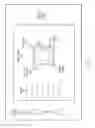
FIG. 1 depicts an exemplary computing device into which a novel heat sink structure is incorporated;
FIG. 2 illustrates a top view of the novel heat sink structure presented herein; and
FIG. 3 depicts a cross-sectional view of the heat sink structure shown in FIG. 2.
DETAILED DESCRIPTION
Electronics cooling for packaged modules often uses two methods of mounting/mating their cooling solution: mounting hardware and adhesive thermal interface material (TIM). In the prior art, mounting hardware used clips, screws, springs, etc. that provided tensions between the cooling solution (e.g., a heat sink) and the device being cooled (e.g., an integrated circuit (IC), also known as a “die”, which is a small block of semiconducting material on which a functional circuit is fabricated). The adhesive TIM provides thermal conduction between the heat sink and the die.
Mounting hardware poses several problems.
First, mounting hardware takes up high quality board space and is sometimes impossible to use on various modules. That is, springs, clips, etc. not only take up space in a system, they are also difficult to manipulate.
Second, mounting hardware is not adjustable. That is, a clip/spring simply holds the heat sink down at a certain pressure, which is fixed. This results in undue pressure on connectors (between the die and a circuit board) as well as on the die itself.
Third, mounting hardware such as ball grid array (BGA) spring clips (used on modules to provide actuation to small heat sinks and used in conjunction with high performance TIMs) have the drawbacks of reduction in heat sink performance (due to poor mating between the heat sink and the die); solder ball stress/integrity issues (due to undue pressure against the die by the BGA spring clips); the inability to support high loads (due to the limited strength of the springs in the BGA spring clips); and the inability to survive shock/vibe requirements (due to the limited resilience provided by BGA spring clips).
Furthermore, adhesive thermal interface materials (TIMs), when used alone to adhere a heat sink to a die are among the lowest performers for thermal conductivity since they are mainly composed of polymer adhesive. Furthermore, adhesive TIMs are also extremely difficult to rework or remove, since they are an adhesive (glue) that permanently bonds the heat sink to the die.
Other actuation hardware requires board space and sometimes holes in the board in order to have retention. This is the most undesirable option since board space near modules is at a premium and any hardware in these regions takes away from the capability and/or signal integrity of the whole system.
With reference now to the figures, and specifically to FIG. 1, an exemplary computing device 101 into which the presently-presented and novel heat sink structure 103 is incorporated is presented. Heat sink structure 103 includes a module lid 105, which is mounted atop a die 107 (e.g., an integrated circuit), which is mounted atop a substrate 109 (e.g., a glass epoxy that supports internal wires to external connectors), which is mounted on a circuit board 111 (e.g. a glass epoxy structure that supports various integrated circuits, power supplies, fans, input/output interfaces, etc.).
As shown in FIG. 1, in an embodiment of the present invention module lid 105 has a polygonal shape (e.g., a square) that has multiple threaded corners, such as threaded corner 113. When a heat sink (shown in FIGS. 2-3 but not FIG. 1) is fully engaged with the module lid 105, airflow 115 from an air moving device 117 (e.g., a cooling fan within a housing of computing device 101 and/or mounted on the circuit board 111 itself) flows parallel to (and thus unimpeded by) cooling vanes on the heat sink. Additional details of the heat sink structure 103 are shown below in FIGS. 2-3.
With reference now to FIG. 2, a top view of the novel heat sink structure 103 introduced in FIG. 1 is presented. As shown in FIG. 2, a heat sink 202 is mounted over the module lid 105. Heat sink 202 has a threaded heat sink base pocket 204, which is screwed onto the threaded corners (e.g., threaded corner 113) of module lid 105 to form multiple thread engagements (e.g., thread engagement 206). Thus, heat sink 202 is screwed down onto module lid 105 until 1) solid mechanical and thermal contact is established between heat sink 202 and module lid 105, and 2) the airflow 115 from air moving device 117 flows unobstructed across the vanes (e.g., vane 208) on heat sink 202.
With reference now to FIG. 3, a cross-sectional view of the heat sink structure 103 shown in FIG. 2 is presented.
As shown in FIG. 3, a package ball grid array (BGA) 301 provides electrical connections between a planar (i.e., a printed circuit board—not shown) and the die 107 using internal wiring, such as the depicted wire 303 that connects one of the solder balls from package BGA 301 to one or more of the solder balls in the chip BGA 305. The chip BGA 305 is connected to internal circuitry (not shown) within the die 107, which is thermally coupled by a die thermal interface material (TIM) 307 to the underside of the module lid 105. As depicted, module lid 105 is adhered to substrate 109 using a lid adhesive 311 (e.g., a heat resistant glue), thus providing a fixed combination of module lid 105, die 107, and substrate 109.
The present invention provides a novel and adjustable means for affixing the heat sink 202 to the module lid 105. That is, the heat sink 202 has a threaded heat sink base pocket 204, whose inner surfaces are threaded. These threaded inner surfaces from the threaded heat sink base pocket 204 screw onto the threaded corners (e.g., threaded corner 113) of the polygonal-shaped module lid 105 at areas such as the depicted thread engagement 206 area.
As a user screws the heat sink 202 down onto the module lid 105, the user is able to 1) selectively control the amount of pressure forced against the module lid 105; 2) evenly spread out the lid thermal interface material (TIM) 309 between the heat sink 202 and the module lid 105 by the rotational movement of the heat sink 202; and 3) align the orientation of the vanes (e.g., vane 208) such that airflow 115 from the air moving device 117 shown in FIGS. 1-2 flows between the vanes, thereby providing maximum heat removal.
Thus, as depicted and described herein, the corners of a lidded module are rounded and threaded such that a heat sink with a certain-depth threaded recess can be screwed on. Mounting a heat sink in this fashion prevents the need for board level mounting hardware and allows the use of a high quality thermal interface material. The threading is aligned such that at an optimal, nominal gap, the fins and heat sink orientation are properly aligned with the airflow direction. Given the planarity of lidded modules, this type of actuation has a beneficial effect on the thermal bond line directly over the hottest components, further improving thermal performance of the heat sink.
An additional benefit of the mounting scheme presented and described in the present disclosure and figures includes better electromagnetic interference (EMI) protection due to the intimate contact between the heat sink base and the module lid.
In an alternative embodiment of the present invention, a threaded ring is used on the previously described heat sink structure to provide a compliant surface for mounting a standard heat sink. This type of mounting allows a spring clip or other constant force mounting scheme without using board space or impacting signal integrity.
Having thus described embodiments of the present invention of the present application in detail and by reference to illustrative embodiments thereof, it will be apparent that modifications and variations are possible without departing from the scope of the present invention defined in the appended claims.
Claims
What is claimed is:1. A method of affixing a heat sink to a module lid, the method comprising:
mounting a module lid to a substrate by use of a lid adhesive, wherein the module lid has a threaded exterior portion;
thermally interfacing the module lid to a die by use of a thermal interface material; and
screwing a heat sink onto the module lid, wherein the heat sink comprises a threaded heat sink base pocket that mates with the threaded exterior portion of the module lid, and wherein the heat sink is screwed down onto the module lid until 1) a solid mechanical and thermal contact is established between the heat sink and the module lid, and 2) an airflow from an air moving device flows unobstructed across vanes on the heat sink.
2. The method of claim 1, wherein the module lid has a polygonal shape that has corners, and wherein the threaded exterior portion of the module lid is only at the corners of the module lid.
3. The method of claim 1, wherein the airflow from the air moving device is parallel to vanes of the heat sink when a thread engagement between the heat sink and the module lid mechanically and thermally couples the heat sink to the module lid.
Images & Drawings included:



Sources:
- United States Patent and Trademark Office - verify current appl. status at the USPTO↗
Similar patent applications:
- » 20170231113
Heat sink with integrated threaded lid
Recent applications in this class:
- » 20250293116 2025-09-18
SEMICONDUCTOR STORAGE DEVICE - » 20250285937 2025-09-11
HOUSING, SEMICONDUCTOR MODULE COMPRISING A HOUSING, AND METHOD FOR ASSEMBLING A SEMICONDUCTOR MODULE - » 20250285936 2025-09-11
SEMICONDUCTOR APPARATUS AND HEAT SINK - » 20250285935 2025-09-11
ELECTRONIC DEVICE WITH WARPAGE MITIGATION AND METHOD THEREFOR - » 20250279335 2025-09-04
SEMICONDUCTOR MODULE AND POWER ELECTRONICS DEVICE - » 20250273537 2025-08-28
POSITIONING DEVICE WITH HEAT DISSIPATION EFFECT - » 20250246512 2025-07-31
POWER MODULE, METHOD OF MANUFACTURING POWER MODULE, AND POWER CONVERSION DEVICE - » 20250226286 2025-07-10
HEAT DISSIPATION BASE, SEMICONDUCTOR MODULE, AND ENERGY CONVERSION DEVICE - » 20250174519 2025-05-29
ELASTIC MEMBER AND ELASTIC DEVICE - » 20250167073 2025-05-22
POWER SEMICONDUCTOR DEVICE AND METHOD OF MANUFACTURING POWER SEMICONDUCTOR DEVICE
Recent applications for this Assignee:
- » 20250294045 2025-09-18
THREAT POLICY FINE-TUNING BASED ON THE VULNERABILITY OF A SUBNET AS A SOURCE OF A MALICIOUS ATTACK - » 20250294041 2025-09-18
DEVICE POPULATION ANOMALY DETECTION - » 20250292574 2025-09-18
SCENE PARSING - » 20250292026 2025-09-18
A GENERATIVE ARTIFICIAL INTELLIGENCE COMMENTARY - » 20250291689 2025-09-18
MACHINE LEARNING MODEL TRAINING TO ASSIST IN SYSTEM DEBUG - » 20250287215 2025-09-11
PORTABLE MEDIA GEOFENCE AND DEVICE PAIRING SECURITY - » 20250285610 2025-09-11
RECIPIENT-SPECIFIC VOICE TONE ADJUSTMENT IN TELEPHONY - » 20250284728 2025-09-11
CONTEXT LARGE LANGUAGE MODEL OUTPUT EXPLANATION - » 20250278669 2025-09-04
COUNTERFACTUALS WITH FEATURE PREFERENCES FOR CONSISTENT AND DIVERSE EXPLANATIONS - » 20250274345 2025-08-28
MULTI-LAYER EDGE ARCHITECTURE SIMULATION