Oxide sintered body, sputtering target, and oxide semiconductor thin film obtained using sputtering target
US20170345653A1
2017-11-30
15/520,983
2015-11-16
✅ Patent granted
US 10,128,108 B2
2018-11-13
WO; PCT/JP2015/082068; 20151116
WO; WO2016/084636; 20160602
Mark Kopec
Kratz, Quintos & Hanson, LLP
2035-11-23
Abstract:
Provided are an oxide sintered compact whereby low carrier density and high carrier mobility are obtained when the oxide sintered compact is used to obtain an oxide semiconductor thin film by a sputtering method, and a sputtering target which uses the oxide sintered compact. This oxide sintered compact contains oxides of indium, gallium, and aluminum. The gallium content is from 0.15 to 0.49 by Ga/(In+Ga) atomic ratio, and the aluminum content is from 0.0001 to less than 0.25 by Al/(In+Ga+Al) atomic ratio. A crystalline oxide semiconductor thin film formed using this oxide sintered compact as a sputtering target is obtained at a carrier density of 4.0×1018 cm−3 or less and a carrier mobility of 10 cm−2V−1sec−1 or greater.
Inventors:
- Tokuyuki NAKAYAMA 13 🇯🇵 Ome-shi, Japan
- Eiichiro NISHIMURA 13 🇯🇵 Ome-shi, Japan
- Fumihiko MATSUMURA 11 🇯🇵 Ome-shi, Japan
- Tokuyuki Nakayama 7 🇯🇵 Ome, Japan
- Eiichiro Nishimura 7 🇯🇵 Ome, Japan
- Fumihiko Matsumura 7 🇯🇵 Ome, Japan
Assignee:
- SUMITOMO METAL MINING CO., LTD. 780 🇯🇵 Tokyo, Japan
Applicant:
Interested in similar patents?
Get notified when new applications in this technology area are published.
Classification:
C23C14/34 IPC
Coating by vacuum evaporation, by sputtering or by ion implantation of the coating forming material characterised by the process of coating Sputtering
C23C14/3407 » CPC further
Coating by vacuum evaporation, by sputtering or by ion implantation of the coating forming material characterised by the process of coating; Sputtering Cathode assembly for sputtering apparatus, e.g. Target
H01J37/3426 » CPC further
Discharge tubes with provision for introducing objects or material to be exposed to the discharge, e.g. for the purpose of examination or processing thereof; Gas-filled discharge tubes operating with cathodic sputtering; Constructional aspects of the reactor; Targets Material
H01L21/02631 » CPC further
Processes or apparatus adapted for the manufacture or treatment of semiconductor or solid state devices or of parts thereof; Manufacture or treatment of semiconductor devices or of parts thereof; Forming layers; Forming inorganic semiconducting materials on a substrate; Formation types; Deposition types Physical deposition at reduced pressure, e.g. MBE, sputtering, evaporation
H01L21/02664 » CPC further
Processes or apparatus adapted for the manufacture or treatment of semiconductor or solid state devices or of parts thereof; Manufacture or treatment of semiconductor devices or of parts thereof; Forming layers; Forming inorganic semiconducting materials on a substrate; Special treatments Aftertreatments
C23C14/08 » CPC further
Coating by vacuum evaporation, by sputtering or by ion implantation of the coating forming material characterised by the coating material Oxides
H01J37/34 IPC
Discharge tubes with provision for introducing objects or material to be exposed to the discharge, e.g. for the purpose of examination or processing thereof; Gas-filled discharge tubes operating with cathodic sputtering
H01L29/24 IPC
Semiconductor devices adapted for rectifying, amplifying, oscillating or switching, or capacitors or resistors with at least one potential-jump barrier or surface barrier, e.g. PN junction depletion layer or carrier concentration layer; Details of semiconductor bodies or of electrodes thereof; Multistep manufacturing processes therefor; Semiconductor bodies ; Multistep manufacturing processes therefor characterised by the materials of which they are formed including, apart from doping materials or other impurities, only semiconductor materials not provided for in groups
H01L29/247 » CPC further
Semiconductor devices adapted for rectifying, amplifying, oscillating or switching, or capacitors or resistors with at least one potential-jump barrier or surface barrier, e.g. PN junction depletion layer or carrier concentration layer; Details of semiconductor bodies or of electrodes thereof; Multistep manufacturing processes therefor; Semiconductor bodies ; Multistep manufacturing processes therefor characterised by the materials of which they are formed including, apart from doping materials or other impurities, only semiconductor materials not provided for in groups Amorphous materials
C04B2235/3286 » CPC further
Aspects relating to ceramic starting mixtures or sintered ceramic products; Composition of constituents of the starting material or of secondary phases of the final product; Constituents and secondary phases not being of a fibrous nature; Metal oxides, mixed metal oxides, or oxide-forming salts thereof, e.g. carbonates, nitrates, (oxy)hydroxides, chlorides Gallium oxides, gallates, indium oxides, indates, thallium oxides, thallates or oxide forming salts thereof, e.g. zinc gallate
C04B2235/96 » CPC further
Aspects relating to ceramic starting mixtures or sintered ceramic products; Aspects relating to sintered or melt-casted ceramic products Properties of ceramic products, e.g. mechanical properties such as strength, toughness, wear resistance
H01L29/786 IPC
Semiconductor devices adapted for rectifying, amplifying, oscillating or switching, or capacitors or resistors with at least one potential-jump barrier or surface barrier, e.g. PN junction depletion layer or carrier concentration layer; Details of semiconductor bodies or of electrodes thereof; Multistep manufacturing processes therefor; Types of semiconductor device ; Multistep manufacturing processes therefor controllable by only the electric current supplied, or only the electric potential applied, to an electrode which does not carry the current to be rectified, amplified or switched; Unipolar devices, e.g. field effect transistors; Field effect transistors with field effect produced by an insulated gate Thin film transistors, i.e. transistors with a channel being at least partly a thin film
H01L21/02 IPC
Processes or apparatus adapted for the manufacture or treatment of semiconductor or solid state devices or of parts thereof Manufacture or treatment of semiconductor devices or of parts thereof
H01L21/465 » CPC further
Processes or apparatus adapted for the manufacture or treatment of semiconductor or solid state devices or of parts thereof; Manufacture or treatment of semiconductor devices or of parts thereof the devices having at least one potential-jump barrier or surface barrier, e.g. PN junction, depletion layer or carrier concentration layer the devices having semiconductor bodies not provided for in groups, , , and with or without impurities, e.g. doping materials; Treatment of semiconductor bodies using processes or apparatus not provided for in groups to change their surface-physical characteristics or shape, e.g. etching, polishing, cutting Chemical or electrical treatment, e.g. electrolytic etching
H01L21/02422 » CPC further
Processes or apparatus adapted for the manufacture or treatment of semiconductor or solid state devices or of parts thereof; Manufacture or treatment of semiconductor devices or of parts thereof; Forming layers; Forming inorganic semiconducting materials on a substrate; Substrates; Materials Non-crystalline insulating materials, e.g. glass, polymers
C04B35/6261 » CPC further
Shaped ceramic products characterised by their composition ; Ceramics compositions ; Processing powders of inorganic compounds preparatory to the manufacturing of ceramic products; Forming processes; Processing powders of inorganic compounds preparatory to the manufacturing of ceramic products; Preparing or treating the powders individually or as batches ; preparing or treating macroscopic reinforcing agents for ceramic products, e.g. fibres; mechanical aspects section; Treating the starting powders individually or as mixtures Milling
H01L21/02565 » CPC main
Processes or apparatus adapted for the manufacture or treatment of semiconductor or solid state devices or of parts thereof; Manufacture or treatment of semiconductor devices or of parts thereof; Forming layers; Forming inorganic semiconducting materials on a substrate; Deposited layers; Materials Oxide semiconducting materials not being Group 12/16 materials, e.g. ternary compounds
C04B35/626 IPC
Shaped ceramic products characterised by their composition ; Ceramics compositions ; Processing powders of inorganic compounds preparatory to the manufacturing of ceramic products; Forming processes; Processing powders of inorganic compounds preparatory to the manufacturing of ceramic products Preparing or treating the powders individually or as batches ; preparing or treating macroscopic reinforcing agents for ceramic products, e.g. fibres; mechanical aspects section
C23C14/3414 » CPC further
Coating by vacuum evaporation, by sputtering or by ion implantation of the coating forming material characterised by the process of coating; Sputtering; Cathode assembly for sputtering apparatus, e.g. Target Metallurgical or chemical aspects of target preparation, e.g. casting, powder metallurgy
C23C14/5806 » CPC further
Coating by vacuum evaporation, by sputtering or by ion implantation of the coating forming material; After-treatment Thermal treatment
C23C14/00 IPC
Coating by vacuum evaporation, by sputtering or by ion implantation of the coating forming material
C03C2217/23 » CPC further
Coatings on glass; Materials for coating a single layer on glass; Oxides Mixtures
C03C2218/156 » CPC further
Methods for coating glass; Deposition methods from the vapour phase by sputtering by magnetron sputtering
C04B2235/3217 » CPC further
Aspects relating to ceramic starting mixtures or sintered ceramic products; Composition of constituents of the starting material or of secondary phases of the final product; Constituents and secondary phases not being of a fibrous nature; Metal oxides, mixed metal oxides, or oxide-forming salts thereof, e.g. carbonates, nitrates, (oxy)hydroxides, chlorides Aluminum oxide or oxide forming salts thereof, e.g. bauxite, alpha-alumina
C04B2235/3222 » CPC further
Aspects relating to ceramic starting mixtures or sintered ceramic products; Composition of constituents of the starting material or of secondary phases of the final product; Constituents and secondary phases not being of a fibrous nature; Metal oxides, mixed metal oxides, or oxide-forming salts thereof, e.g. carbonates, nitrates, (oxy)hydroxides, chlorides; Aluminum oxide or oxide forming salts thereof, e.g. bauxite, alpha-alumina Aluminates other than alumino-silicates, e.g. spinel (MgAlO)
C04B2235/5445 » CPC further
Aspects relating to ceramic starting mixtures or sintered ceramic products; Composition of constituents of the starting material or of secondary phases of the final product; Constituents or additives of the starting mixture chosen for their shape or used because of their shape or their physical appearance; Particle size related information expressed by the size of the particles or aggregates thereof submicron sized, i.e. from 0,1 to 1 micron
C04B2235/604 » CPC further
Aspects relating to ceramic starting mixtures or sintered ceramic products; Aspects relating to the preparation, properties or mechanical treatment of green bodies or pre-forms Pressing at temperatures other than sintering temperatures
C04B2235/6565 » CPC further
Aspects relating to ceramic starting mixtures or sintered ceramic products; Aspects relating to heat treatments of ceramic bodies such as green ceramics or pre-sintered ceramics, e.g. burning, sintering or melting processes characterised by specific heating conditions during heat treatment Cooling rate
C04B2235/6586 » CPC further
Aspects relating to ceramic starting mixtures or sintered ceramic products; Aspects relating to heat treatments of ceramic bodies such as green ceramics or pre-sintered ceramics, e.g. burning, sintering or melting processes; Atmosphere during thermal treatment Processes characterised by the flow of gas
C04B2235/72 » CPC further
Aspects relating to ceramic starting mixtures or sintered ceramic products; Aspects relating to sintered or melt-casted ceramic products Products characterised by the absence or the low content of specific components, e.g. alkali metal free alumina ceramics
C04B2235/76 » CPC further
Aspects relating to ceramic starting mixtures or sintered ceramic products; Aspects relating to sintered or melt-casted ceramic products; Physical characteristics Crystal structural characteristics, e.g. symmetry
H01B1/08 » CPC further
Conductors or conductive bodies characterised by the conductive materials; Selection of materials as conductors mainly consisting of other non-metallic substances oxides
C03C17/245 » CPC further
Surface treatment of glass, not in the form of fibres or filaments, by coating with other inorganic material; Oxides by deposition from the vapour phase
C23C14/58 IPC
Coating by vacuum evaporation, by sputtering or by ion implantation of the coating forming material After-treatment
C04B2235/6562 » CPC further
Aspects relating to ceramic starting mixtures or sintered ceramic products; Aspects relating to heat treatments of ceramic bodies such as green ceramics or pre-sintered ceramics, e.g. burning, sintering or melting processes characterised by specific heating conditions during heat treatment Heating rate
C04B35/01 » CPC further
Shaped ceramic products characterised by their composition ; Ceramics compositions ; Processing powders of inorganic compounds preparatory to the manufacturing of ceramic products based on oxide ceramics
C04B2235/80 » CPC further
Aspects relating to ceramic starting mixtures or sintered ceramic products; Aspects relating to sintered or melt-casted ceramic products Phases present in the sintered or melt-cast ceramic products other than the main phase
Description
TECHNICAL FIELD
The present invention relates to an oxide sintered body, a target, and an oxide semiconductor thin film obtained by using the target, and more particularly to a sputtering target that allows an amorphous oxide semiconductor thin film to have low carrier density by allowing the amorphous oxide semiconductor thin film to contain indium, gallium, and aluminum, an oxide sintered body that is most suitable for obtaining the sputtering target and contains indium, gallium, and aluminum, and an amorphous oxide semiconductor thin film that is obtained by using the sputtering target, has low carrier density and high carrier mobility, and contains indium, gallium, and aluminum.
BACKGROUND ART
Thin film transistors (TFTs) are a type of field effect transistors (hereinafter referred to as FETs). TFTs are three-terminal elements having a gate terminal, a source terminal, and a drain terminal in the basic structure. TFTs are active elements having a function of switching the current between the source terminal and the drain terminal so that a semiconductor thin film deposited on a substrate is used as a channel layer in which electrons or holes move and a voltage is applied to the gate terminal to control the current flowing in the channel layer. TFTs are electronic devices that are most widely used these days in practical application. Typical applications of TFTs include liquid-crystal driving elements.
Currently, most widely used TFTs are metal-insulator-semiconductor-FETs (MIS-FETs) in which a polycrystalline silicon film or an amorphous silicon film is used as a channel layer material. MIS-FETs including silicon are opaque to visible light and thus fail to form transparent circuits. Therefore, when MIS-FETs are used as switching elements for driving liquid crystals in liquid crystal displays, the aperture ratio of a display pixel in the devices is small.
Due to the recent need for high-resolution liquid crystals, switching elements for driving liquid crystals now require high-speed driving. In order to achieve high-speed driving, a semiconductor thin film in which the mobility of electrons or holes as carriers, is higher than that in at least amorphous silicon needs to be used as a channel layer.
Under such circumstances, Patent Document 1 proposes a transparent semi-insulating amorphous oxide thin film which is a transparent amorphous oxide thin film deposited by vapor deposition and containing elements of In, Ga, Zn, and O. The composition of the oxide is InGaO3(ZnO)m (m is a natural number less than 6) when the oxide is crystallized. The transparent semi-insulating amorphous oxide thin film is a semi-insulating thin film having a carrier mobility (also referred to as carrier electron mobility) of more than 1 cm2 V−1sec−1 and a carrier density (also referred to as carrier electron density) of 1016 cm−3 or less without doping with an impurity ion.
However, as proposed in Patent Document 1, it is pointed out that the transparent amorphous oxide thin film (a-IGZO film) containing elements of In, Ga, Zn, and O and deposited by any method of vapor deposition selected from sputtering and pulsed laser deposition has a carrier mobility in a range of about 1 cm2 V−1 sec−1 or more to 10 cm2 V−1 sec−1 or less, and carrier mobility with respect to higher resolution of a device is not sufficient.
Patent Document 2 discloses a sputtering target for forming the amorphous oxide thin film described in Patent Document 1, that is, a sputtering target that is a sintered body target containing at least In, Zn, and Ga. The composition thereof contains In, Zn, and Ga, the relative density is 75% or more, and the resistance value ρ is 50 Ω cm or less. However, since the target of Patent Document 2 is a polycrystalline oxide sintered body having a homologous phase crystal structure, the amorphous oxide thin film obtained from the polycrystalline oxide sintered body has a carrier mobility of only about 10 cm2 V−1 sec−1, similarly to Patent Document 1.
Regarding materials for realizing high carrier mobility, Patent Document 3 proposes a thin film transistor including an oxide thin film in which gallium is dissolved in indium oxide. In the oxide thin film, the Ga/(Ga+In) atomic ratio is 0.001 or more and 0.12 or less, and the percentage of indium and gallium with respect to the total metal atoms is 80 at % or more. The oxide thin film has an In2O3 bixbyite structure. An oxide sintered body is proposed as the material of the oxide thin film in which gallium is dissolved in indium oxide. In the oxide sintered body, the Ga/(Ga+In) atomic ratio is 0.001 or more and 0.12 or less, and the percentage of indium and gallium with respect to the total metal atoms is 80 at % or more. The oxide sintered body has an In2O3 bixbyite structure.
However, when the crystalline oxide semiconductor thin film as proposed in Patent Document 3 is applied to TFTs, a problem arises in the variation of TFT characteristics caused by the crystal grain boundary. In particular, it is extremely difficult to uniformly form a TFT on a large-sized glass substrate of the eighth generation or later.
Patent Document 4 describes an oxide sintered body having a bixbyite structure and containing indium oxide, gallium oxide, and positive trivalent and/or positive tetravalent metal. In the sintered body, the content of positive trivalent and/or positive tetravalent metal is 100 ppm or more and 10,000 ppm or less and the composition amount of indium (In) and gallium (Ga) is in the composition range satisfying the formula: 0.005<In/(In+Ga)<0.15 in atomic percent. In the TFT evaluation, Example having high mobility of about 60 cm2 V−1 sec−1 is disclosed.
However, an oxide semiconductor thin film obtained by the sintered body of Patent Document 4 has a problem in that microcrystals or the like are likely to be generated, and particularly, it is difficult to form a TFT having a favorable yield ratio on a large-sized glass substrate. In the production process of a thin film transistor of an oxide semiconductor, generally, an amorphous film is formed once and then an amorphous or crystalline oxide semiconductor thin film is obtained by subjecting the amorphous film to an annealing treatment. Wet etching with weak acid of an aqueous solution or the like containing oxalic acid, hydrochloric acid, or the like is carried out in order to perform the patterning processing to create a desired channel layer after the amorphous film forming process. However, when an oxide sintered body substantially composed of only a bixbyite structure of Patent Document 4 is used, the crystallization temperature of the amorphous film to be formed is decreased. Thus, a problem arises in that microcrystals are already generated at the subsequent stage after the film deposition to generate residues in the etching process or crystallization partially proceeds so that etching cannot be performed. That is, a problem arises in that the desired TFT channel layer is difficult to pattern and form by a wet etching method using a photolithographic technique or the like, or even if a TFT can be formed, the TFT is not stably operated.
- Patent Document 1: Japanese Unexamined Patent Application, Publication No. 2010-219538
- Patent Document 2: Japanese Unexamined Patent Application, Publication No. 2007-073312
- Patent Document 3: PCT International Publication No. WO2010/032422
- Patent Document 4: PCT International Publication No. WO2011/152048
DISCLOSURE OF THE INVENTION
Problems to be Solved by the Invention
An object of the present invention is to provide a sputtering target that allows an amorphous oxide semiconductor thin film having a favorable wet etching property and high carrier mobility to be formed, an oxide sintered body most suitable for obtaining the sputtering target, and an oxide semiconductor thin film that is obtained by using the sputtering target and has low carrier density and high carrier mobility.
Means for Solving the Problems
The present inventors have newly found out that when an oxide sintered body containing indium, gallium, and aluminum as oxides and having a gallium content of 0.15 or more and 0.49 or less in terms of the Ga/(In+Ga) atomic ratio and an aluminum content of 0.0001 or more and less than 0.25 in terms of the Al/(In+Ga+Al) atomic ratio includes an In2O3 phase having a bixbyite-type structure, and a GaInO3 phase having a β-Ga2O3-type structure as a formed phase other than the In2O3 phase, or a GaInO3 phase having a β-GaZO3-type structure, a (Ga, In)2O3 phase, and an InAlO3 phase as a formed phase other than the In2O3 phase, an amorphous oxide semiconductor thin film produced by using the oxide sintered body has favorable wet etching property, low carrier density, and high carrier mobility.
That is, in a first embodiment of the present invention, an oxide sintered body contains indium, gallium, and aluminum as oxides. The content of the gallium is 0.15 or more and 0.49 or less in terms of Ga/(In+Ga) atomic ratio, and the content of the aluminum is 0.0001 or more and less than 0.25 in terms of Al/(In+Ga+Al) atomic ratio.
In a second embodiment of the present invention, the oxide sintered body according to the first embodiment includes an In2O3 phase having a bixbyite-type structure, and a GaInO3 phase having a β-Ga2O3-type structure as a formed phase other than the In2O3 phase, or a GaInO3 phase having a β-Ga2O3-type structure and a (Ga, In)2O3 phase as a formed phase other than the In2O3 phase.
In a third embodiment of the present invention, the content of the aluminum is 0.01 or more and 0.20 or less in terms of Al/(In+Ga+Al) atomic ratio in the oxide sintered body according to the first or second embodiment.
In a fourth embodiment of the present invention, the content of the gallium is 0.20 or more and 0.45 or less in terms of Ga/(In+Ga) atomic ratio in the oxide sintered body according to any one of the first to third embodiments.
In a fifth embodiment of the present invention, a sputtering target is obtained by machining the oxide sintered body according to any one of the first to fourth embodiments.
In a sixth embodiment of the present invention, an amorphous oxide semiconductor thin film is formed on a substrate by a sputtering method using the sputtering target according to the fifth embodiment and then subjected to a heat treatment in an oxidizing atmosphere.
In a seventh embodiment of the present invention, the oxide semiconductor thin film according to the sixth embodiment has a carrier density of less than 4.0×1018 cm−3 and a carrier mobility of 10 cm2 V−1 sec−1 or more.
In an eighth embodiment of the present invention, the oxide semiconductor thin film according to the seventh embodiment has a carrier density of 6.0×1017 cm−3 or less.
In a ninth embodiment of the present invention, the oxide semiconductor thin film according to the seventh or eighth embodiment has a carrier mobility of 15 cm2 V−1 sec−1 or more.
Effects of the Invention
When the oxide sintered body of the present invention containing indium, gallium, and aluminum as oxides, having a gallium content of 0.15 or more and 0.49 or less in terms of the Ga/(In+Ga) atomic ratio and an aluminum content of 0.0001 or more and less than 0.25 in terms of Al/(In+Ga+Al) atomic ratio, and including an In2O3 phase having a bixbyite-type structure, and a GaInO3 phase having a β-Ga2O3-type structure as a formed phase other than the In2O3 phase, or a GaInO3 phase having a β-Ga2O3-type structure and a (Ga, In)2O3 phase as a formed phase other than the In2O3 phase is used, for example, as a sputtering target, the amorphous oxide semiconductor thin film of the present invention can be obtained by sputter deposition and then subjecting the thin film to a heat treatment. The thin film formed by sputter deposition has an effect obtained by containing a predetermined amount of gallium and aluminum so that microcrystals or the like are not generated and the thin film has sufficient amorphous properties. Thus, the thin film can be subjected to patterning processing in a desired shape by wet etching. By the same effect, the amorphous oxide semiconductor thin film of the present invention has low carrier density and high carrier mobility. Thus, when the amorphous oxide semiconductor thin film of the present invention is applied to TFTs, the on/off ratio of TFTs can be increased. Therefore, the oxide sintered body, the target, and the oxide semiconductor thin film obtained by using the target of the present invention are industrially very useful.
BRIEF DESCRIPTION OF THE DRAWINGS
FIG. 1 is a graph showing an X-ray diffraction measurement spectrum of an oxide sintered body of Example 6.
FIG. 2 is a graph showing an X-ray diffraction measurement spectrum of an oxide sintered body of Example 9.
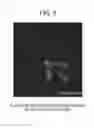
FIG. 3 is a crystal grain photograph of the oxide sintered body of Example 9 captured by using a scanning transmission electron microscope.
FIG. 4 is an electron beam diffraction photograph of white crystal grains of the oxide sintered body of Example 9 captured by using a scanning transmission electron microscope.
FIG. 5 is an electron beam diffraction photograph of black crystal grains of the oxide sintered body of Example 9 captured by using a scanning transmission electron microscope.
PREFERRED MODE FOR CARRYING OUT THE INVENTION
An oxide sintered body, a sputtering target, and an oxide semiconductor thin film obtained by using the target in the present invention will be described below in detail.
(1) Oxide Sintered Body
(a) Composition
The oxide sintered body of the present invention is an oxide sintered body containing indium, gallium, and aluminum as oxides. A gallium content is 0.15 or more and 0.49 or less in terms of Ga/(In+Ga) atomic ratio, and an aluminum content is 0.0001 or more and less than 0.25 in terms of Al/(In+Ga+Al) atomic ratio.
The gallium content, in terms of Ga/(In+Ga) atomic ratio, is 0.15 or more and 0.49 or less and preferably 0.20 or more and 0.45 or less. Gallium has the effect of increasing the crystallization temperature of the amorphous oxide semiconductor thin film of the present invention. Further, gallium has high bonding strength to oxygen and has the effect of reducing the oxygen loss in the amorphous oxide semiconductor thin film of the present invention. When the gallium content is less than 0.15 in terms of Ga/(In+Ga) atomic ratio, these effects are not sufficiently obtained. On the other hand, when the gallium content is more than 0.49, the carrier mobility is not high enough for an oxide semiconductor thin film.
The oxide sintered body of the present invention contains aluminum in addition to indium and gallium in the composition ranges defined above. The concentration of aluminum, in terms of Al/(In+Ga+Al) atomic ratio, is 0.0001 or more and less than 0.25 and preferably 0.01 or more and 0.20 or less. Aluminum has the effect of increasing the crystallization temperature of the amorphous oxide semiconductor thin film of the present invention. Further, doping the oxide sintered body with aluminum suppresses the carrier density of the amorphous oxide semiconductor thin film of the present invention. However, when the concentration of aluminum is more than 0.25, the bulk resistance value of the sputtering target increases. Thus, a homogeneous film cannot be obtained due to abnormal discharge such as arc discharge (arcing) at the time of deposition when sputtering is performed.
According to the effect, when the amorphous oxide semiconductor thin film of the present invention is applied to TFTs, the on/off ratio of TFTs can be increased.
(b) Structure of Sintered Body
The oxide sintered body of the present invention includes an In2O3 phase having a bixbyite-type structure and a GaInO3 phase having a β-Ga2O3-type structure, and may contain a (Ga, In)2O3 phase to a certain extent in addition thereto.
Herein, gallium is preferably dissolved in the In2O3 phase or preferably makes up the GaInO3 phase. In the case of being dissolved in the In2O3 phase, gallium, which is basically a trivalent cation, substitutes for indium, which similarly is a trivalent cation, at the lattice position. In the case of making up the GaInO3 phase and the (Ga, In)2O3 phase, basically, Ga occupies the original lattice position, but may be slightly dissolved to substitute at the lattice position of In as a defect. Further, it is not preferred that gallium is difficult to dissolve in the In2O3 phase, or the GaInO3 phase having a β-Ga2O3-type structure and the (Ga, In)2O3 phase are difficult to generate, and as a result, the Ga2O3 phase having a β-Ga2O3-type structure is formed because of unsuccessful sintering or the like. Since the Ga2O3 phase has low conductivity, abnormal discharge arises.
Aluminum is preferably dissolved in the In2O3 phase or the GaInO3 phase. In the case of being dissolved in the In2O3 phase, aluminum, which is basically a trivalent cation, substitutes for indium, which is similarly a trivalent cation, at the lattice position. In the case of being dissolved in the GaInO3 phase and the (Ga, In)2O3 phase, basically, In or Ga substitutes at the lattice position.
The oxide sintered body may be composed of at least an In2O3 phase, and contain a GaInO3 phase having a β-Ga2O3-type structure and a (Ga, In)2O3 phase. Crystal grains of these phases preferably have a mean particle size of 5 μm or less. Crystal grains of these phases are difficult to subject to sputtering as compared to the crystal grains of the In2O3 phase having a bixbyite-type structure so that they remain and generate nodules, and thus the nodules may cause arcing.
(2) Method for Producing Oxide Sintered Body
The oxide sintered body of the present invention is produced by using an oxide powder consisting of an indium oxide powder and a gallium oxide powder, and an aluminum oxide powder as raw material powders.
In the process for producing the oxide sintered body of the present invention, these raw material powders are mixed and then compacted, and the compact is sintered by ordinary-pressure sintering. The formed phases in the structure of the oxide sintered body of the present invention strongly depend on the conditions in each step for producing the oxide sintered body, for example, the particle size of the raw material powders, the mixing conditions, and the sintering conditions.
The structure of the oxide sintered body of the present invention is preferably controlled so that each crystal grain of the InAlO3 phase, the GaInO3 phase having a β-Ga2O3-type structure, and the (Ga, In)2O3 phase is 5.0 μm or less. For this reason, the mean particle size of the raw material powder is adjusted to more preferably 3.0 μm or less and even more preferably 1.0 μm or less.
Indium oxide powder is a raw material for ITO (tin-doped indium oxide), and fine indium oxide powder having good sintering properties has been developed along with improvements in ITO. Since indium oxide powder has been continuously used in large quantities as a raw material for ITO, a raw material powder having a mean particle size of 1.0 μm or less is available these days.
Since aluminum oxide (alumina) powder is widely used as a raw material for ceramics or sapphire, raw material powder having a mean particle size of 1.0 μm or less is available.
However, since the amount of gallium oxide powder used is still smaller than that of indium oxide powder used, it is difficult to obtain raw material powder having a mean particle size of 1.0 μm or less. When only coarse gallium oxide powder is available, the powder needs to be pulverized into particles having a mean particle size of 1.0 μm or less.
In the process for sintering the oxide sintered body of the present invention, ordinary-pressure sintering is preferably employed. Ordinary-pressure sintering is a simple and industrially advantageous method, and is also an economically preferable means.
When ordinary-pressure sintering is used, a compact is first produced as described above. Raw material powders are placed in a resin pot and mixed with a binder (for example, PVA) and the like by wet ball milling or the like. The oxide sintered body of the present invention may be composed of the InAlO3 phase, the In2O3 phase having a bixbyite-type structure, and the GaInO3 phase having a β-Ga2O3-type structure, and may further include the (Ga, In)2O3 phase. The crystal grains of these phases are preferably controlled to have a mean particle size of 5 μm or less and to be finely dispersed. It is preferable to suppress formation of the (Ga, In)2O3 phase as much as possible. In addition, it is necessary that the Ga2O3 phase having a β-Ga2O3-type structure, which causes arcing, other than these phases is not generated. The ball mill mixing is preferably performed for 18 hours or longer in order to satisfy these requirements. At this time, hard ZrO2 balls may be used as mixing balls. After mixing, the slurry is taken out, filtered, dried, and granulated. Subsequently, the resultant granulated material is compacted under a pressure of about 9.8 MPa (0.1 ton/cm2) or more and 294 MPa (3 ton/cm2) or less by cold isostatic pressing to form a compact.
The sintering process by ordinary-pressure sintering is preferably preformed in an atmosphere containing oxygen. The volume fraction of oxygen in the atmosphere is preferably over 20%. In particular, when the volume fraction of oxygen is over 20%, the oxide sintered body is further densified. n excessive amount of oxygen in the atmosphere causes the surface of the compact to undergo sintering in advance during the early stage of sintering. Subsequently, sintering proceeds while the inside of the compact is reduced, and a highly dense oxide sintered body is finally obtained.
In an atmosphere free of oxygen, the surface of the compact does not undergo sintering and as a result, densification of the sintered body does not proceed. If oxygen is absent, indium oxide decomposes particularly at about 900° C. to 1000° C. to form metal indium, which makes it difficult to obtain a desired oxide sintered body.
The temperature range of ordinary-pressure sintering is preferably 1200° C. or higher and 1550° C. or lower and more preferably 1350° C. or higher and 1450° C. or lower in an atmosphere obtained by introducing oxygen gas into air in a sintering furnace. The sintering time is preferably 10 hours or longer and 30 hours or shorter, and more preferably 15 hours or longer and 25 hours or shorter.
When the sintering temperature is adjusted in the above range and the oxide powder consisting of an indium oxide powder and a gallium oxide powder and the aluminum oxide powder which are controlled to have a mean particle size of 1.0 μm or less are used as raw material powders, the oxide sintered body is mainly composed of the In2O3 phase having a bixbyite-type structure and the GaInO3 phase having a β-Ga2O3-type structure or the (Ga, In)2O3 phase.
At a sintering temperature lower than 1200° C., the sintering reaction does not proceed well. On the other hand, densification increase with more difficulty at a sintering temperature higher than 1550° C., and the components of the sintering furnace and the oxide sintered body react with each other, which makes it difficult to obtain a desired oxide sintered body. In particular, since the gallium content in the oxide sintered body of the present invention is 0.15 or more in terms of Ga/(In+Ga) atomic ratio, the sintering temperature is preferably set to 1450° C. or lower. This is because formation of the (Ga, In)2O3 phase is significant in the temperature range around 1500° C. in some cases. There is no problem as long as the amount of the (Ga, In)2O3 phase is small, but when the amount thereof is large, a decrease in deposition rate and arcing may occur, which is not preferable.
The temperature elevation rate until the sintering temperature is reached is preferably in the range of 0.2° C. to 5° C./min in order to cause debinding without forming cracks in the sintered body. As long as the temperature elevation rate is this range, the temperature may be increased to the sintering temperature in a combination of different temperature elevation rates as desired. During the temperature elevation process, a particular temperature may be maintained for a certain time in order for debinding and sintering to proceed. After sintering, oxygen introduction is stopped before cooling. The temperature is preferably decreased to 1000° C. at a temperature drop rate in the range of preferably 0.2 to 5° C./min, and particularly 0.2° C./min or more and less than 1° C./min.
(3) Target
The target of the present invention can be obtained by machining the oxide sintered body of the present invention to a predetermined size. When the oxide sintered body is used as the target, the target can be obtained by further grinding the surface thereof and bonding the oxide sintered body to a backing plate. The target preferably has a flat shape, but may have a cylindrical shape. When a cylindrical target is used, it is preferred to suppress particle generation due to target rotation. In addition, the oxide sintered body is machined, for example, into a circular cylindrical shape to form a tablet, and the tablet can be used for film deposition by a vapor-deposition method or an ion plating method.
For use as a sputtering target, the density of the oxide sintered body of the present invention is preferably 6.3 g/cm3 or more and more preferably 6.7 g/cm3 or more. When the density is less than 6.3 g/cm3, nodules are formed during use in mass production. For use as a tablet for ion plating, the density of the oxide sintered body is preferably less than 6.3 g/cm3 and more preferably 3.4 g/cm3 or more and 5.5 g/cm3 or less. In this case, the sintering temperature is preferably lower than 1200° C.
(4) Oxide Semiconductor Thin Film and Method for Depositing Oxide Semiconductor Thin Film
The amorphous oxide semiconductor thin film of the present invention is mainly obtained as follows: first forming an amorphous oxide thin film on a substrate by a sputtering method using the sputtering target; and then subjecting the amorphous oxide thin film to an annealing treatment.
The sputtering target is formed from the oxide sintered body of the present invention. The structure of the oxide sintered body, that is, the structure composed basically of an In2O3 phase having a bixbyite-type structure and a GaInO3 phase having a β-Ga2O3-type structure or a GaInO3 phase having a β-Ga2O3-type structure and a (Ga, In)2O3 phase, is important. In order to obtain the amorphous oxide semiconductor thin film of the present invention, it is important that the crystallization temperature of the amorphous oxide semiconductor thin film is high. This is related to the structure of the oxide sintered body. That is, when the oxide sintered body includes not only an In2O3 phase having a bixbyite-type structure but also a GaInO3 phase having a β-Ga2O3-type structure or a GaInO3 phase having a β-Ga2O3-type structure and a (Ga, In)2O3 phase as in the oxide sintered body of the present invention, the oxide thin film obtained from this oxide sintered body has a high crystallization temperature, namely, a crystallization temperature of 300° C. or higher, more preferably 350° C. or higher, and is a stable amorphous film. In contrast, when the oxide sintered body includes only an In2O3 phase having a bixbyite-type structure, the oxide thin film obtained from this oxide sintered body has a low crystallization temperature of about 200° C. and is not amorphous. Incidentally, in this case, microcrystals are already generated after the film deposition so that the amorphous properties are not maintained. Thus, it is difficult to perform patterning by wet etching.
In the film deposition process of the amorphous oxide semiconductor thin film of the present invention, a general sputtering method is used. In particular, according to a direct current (DC) sputtering method, thermal influence in film deposition is small, and high rate film deposition is possible, which is thus industrially advantageous. To form the oxide semiconductor thin film of the present invention by the direct current sputtering method, a gas mixture of inert gas and oxygen, particularly argon and oxygen, is preferably used as the sputtering gas. Sputtering is preferably performed in a chamber of a sputtering apparatus at an internal pressure of 0.1 Pa or more and 1 Pa or less, particularly, 0.2 Pa or more and 0.8 Pa or less.
The substrate is typically a glass substrate and is preferably an alkali-free glass. In addition, any resin sheet and resin film that withstands the above process condition can be used.
In the process for forming the amorphous oxide thin film, presputtering can be performed as follows: for example, after evacuation to 2×10⁻⁴ Pa or less, introducing a gas mixture of argon and oxygen until the gas pressure reaches 0.2 Pa or more and 0.8 Pa or less; and generating a direct current plasma by applying direct current power so that the direct current power with respect to the area of the target, namely, the direct current power density, is in the range of about 1 W/cm2 or more and 7 W/cm2 or less. It is preferred that, after this presputtering for 5 minutes or longer and 30 minutes or shorter, the substrate position be corrected as desired and then sputtering be performed.
In sputter deposition in the film deposition process, the direct current power applied is increased in order to increase the deposition rate.
The amorphous oxide semiconductor thin film of the present invention is obtained by forming the amorphous oxide thin film and then performing an annealing treatment on the amorphous oxide thin film. As a method until the annealing treatment, for example, an amorphous oxide thin film is first formed at a low temperature, such as at around room temperature, and then an annealing treatment is performed at a temperature lower than the crystallization temperature to obtain an oxide semiconductor thin film while maintaining the amorphous state. As another method, a substrate is heated to a temperature lower than the crystallization temperature, preferably, to 100° C. or higher and 300° C. or lower to form an amorphous oxide semiconductor thin film. Subsequently thereto, an annealing treatment may be further performed. The heating temperature in these two methods is sufficiently about 600° C. or lower and can be set to be equal to or lower than the strain point of an alkali-free glass substrate.
The amorphous oxide semiconductor thin film of the present invention is obtained by first forming an amorphous oxide thin film and then subjecting the amorphous oxide thin film to an annealing treatment. The condition for the annealing treatment is a temperature lower than the crystallization temperature in an oxidizing atmosphere. The oxidizing atmosphere is preferably an atmosphere containing oxygen, ozone, water vapor, or nitrogen oxides. The temperature for annealing is 200° C. or higher and 600° C. or lower and preferably 300° C. or higher and 500° C. or lower. The time for annealing, i.e. the time during which the amorphous thin film is held at the temperature for annealing, is 1 minute or longer and 120 minutes or shorter and preferably 5 minutes or longer and 60 minutes or shorter.
The composition of indium, gallium, and aluminum of the amorphous oxide thin film and the amorphous oxide semiconductor thin film substantially corresponds to the composition of the oxide sintered body of the present invention. That is, the amorphous oxide semiconductor thin film contains indium and gallium as oxides and further contains aluminum. The gallium content is 0.15 or more and 0.49 or less in terms of Ga/(In+Ga) atomic ratio and the aluminum content is 0.0001 or more and less than 0.25 in terms of Al/(In+Ga+Al) atomic ratio.
The amorphous oxide semiconductor thin film of the present invention has a reduced carrier density of 4.0×1018 cm−3 or less and a carrier mobility of 10 cm2 V−1 sec−1 or more when the oxide sintered body with the controlled composition and structure as described above is deposited by using a sputtering target or the like and the annealing treatment is performed thereon under the appropriate conditions. The amorphous oxide semiconductor thin film more preferably with a carrier mobility of 15 cm2 V−1 sec−1 or more, particularly preferably with a carrier mobility of 20 cm2 V−1 sec−1 or more is obtained.
The amorphous oxide semiconductor thin film of the present invention is subjected to micromachining, which is required in applications such as TFTs by wet etching or dry etching. Generally, it is possible to perform micromachining by wet etching after the formation of an amorphous oxide thin film first when a temperature lower than the crystallization temperature, for example, an appropriate substrate temperature in the range of from room temperature to 300° C. is selected. Most weak acids can be used as the etchant, but a weak acid composed mainly of oxalic acid or hydrochloric acid is preferably used. For example, commercial products, such as ITO-06N available from Kanto Chemical Co., Inc., can be used. Dry etching may be selected depending on the configuration of TFT.
Although the thickness of the amorphous oxide semiconductor thin film of the present invention is not limited, the thickness is 10 nm or more and 500 nm or less, preferably 20 nm or more and 300 nm or less, and more preferably 30 nm or more and 100 nm or less. When the thickness is less than 10 nm, favorable semiconductor characteristics are not obtained, and as a result, high carrier mobility is not achieved. On the other hand, when the thickness is more than 500 nm, it is disadvantageous in that a problem associated with productivity arises.
EXAMPLES
A more detailed description is provided below by way of Examples of the present invention, but the present invention is not limited by these Examples.
<Evaluation of Oxide Sintered Body>
The composition of the metal elements in the obtained oxide sintered body was determined by ICP emission spectroscopy. The formed phases were identified by a method using a powder X-ray diffractometer (available from Philips) using rejects of the obtained oxide sintered body. The formed phases were identified by making the obtained oxide sintered body into a thin piece by using a focused ion beam apparatus, and performing observation of crystal grains and electron beam diffraction measurement with a scanning transmission electron microscope (available from Hitachi High-Technologies Corporation). Further, the composition of each crystal grain was determined by energy dispersive X-ray analysis (available from Hitachi High-Technologies Corporation).
<Evaluation of Basic Properties of Oxide Thin Film>
The composition of the obtained oxide thin film was determined by ICP emission spectrometry. The thickness of the oxide thin film was determined with a surface profilometer (available from KLA-Tencor Corporation). The deposition rate was calculated from the film thickness and the film deposition time. The carrier density and mobility of the oxide thin film were determined with a Hall-effect measurement apparatus (available from TOYO Corporation). The formed phases in the film were identified by X-ray diffraction measurement.
(Production of Oxide Sintered Body and Oxide Thin Film)
An indium oxide powder, a gallium oxide powder, and an aluminum oxide powder were prepared as raw material powders so that each powder has a mean particle size of 1.0 μm or less. These raw material powders were prepared so as to obtain the Ga/(In+Ga) atomic ratio and the Al/(In+Ga+Al) atomic ratio of Examples and Comparative Examples shown in Table 1 and Table 3. The raw material powders were placed in a resin pot together with water and mixed by wet ball milling. In this case, hard ZrO2 balls were used, and the mixing time was 18 hours. After mixing, the slurry was taken out, filtered, dried, and granulated. The granulated material was compacted by cold isostatic pressing under a pressure of 3 ton/cm2.
Next, the compact was sintered as described below.
The compact was sintered at a sintering temperature of between 1350 and 1450° C. for 20 hours in an atmosphere obtained by introducing oxygen into air in a sintering furnace at a rate of 5 L/min per 0.1 m3 furnace volume. At this time, the temperature was increased by 1° C./min, oxygen introduction was stopped during cooling after sintering, and the temperature was decreased to 1000° C. by 1° C./min.
The composition of the obtained oxide sintered body was analyzed by ICP emission spectrometry. As a result, it was confirmed that the proportion of the metal elements was substantially the same as the composition prepared at the time of mixing raw material powders in all Examples.
Next, results obtained by performing the phase identification of the oxide sintered body by X-ray diffraction measurement (X-ray diffraction, XRD) and the observation of crystal grains by a scanning transmission electron microscope (STEM) and analyzing the composition of each crystal grain by energy dispersive X-ray spectrometry (EDX) analysis are shown in Table 1.
In addition, the results obtained by performing X-ray diffraction measurement and phase identification on Example 6 are shown in FIG. 1, the results obtained by performing X-ray diffraction measurement and phase identification on Example 9 are shown in FIG. 2, and the observation result of Example 9 with a scanning transmission electron microscope is shown in FIG. 3. Through observation with a scanning transmission electron microscope, it was confirmed that there are two types of crystal grains, that is, white crystal grains and black crystal grains. Further, an electron beam diffraction photograph of white crystal grains in FIG. 3 is shown in FIG. 4 and an electron beam diffraction photograph of black crystal grains in FIG. 3 is shown in FIG. 5. Incidentally, in FIGS. 4 and 5, the positions of transparent spots and analyzed diffraction spots are represented by “0” and the transparent spots and the diffraction spots are connected by white lines. The plane distance and the plane angle of each crystal grain are obtained from FIGS. 4 and 5 and results obtained by comparing the plane distance and the plane angle with literature values of a JCPDS card are shown in Table 2. From the comparison with a JCPDS card, it is found that the white crystal grains are In2O3 phases (JCPDS card number: 00-006-0416) and the black crystal grains are GaInO3 phases (JCPDS card number: 04-017-1567). Further, from the results of X-ray diffraction measurement and energy dispersive X-ray analysis, it is also found that the white crystal grains are In2O3 phases and the black crystal grains are GaInO3 phases.
The oxide sintered body was machined to a size of 152 mm in diameter and 5 mm in thickness. The sputtering surface was grinded with a cup grinding wheel so that the maximum height Rz was 3.0 μm or less. The machined oxide sintered body was bonded to an oxygen-free copper backing plate by using metal indium to provide a sputtering target.
Film deposition by direct current sputtering was performed at a substrate temperature described in Table 3 by using the sputtering targets of Examples and Comparative Examples and an alkali-free glass substrate (Eagle XG available from Corning). The sputtering target was attached to the cathode of a direct current magnetron sputtering apparatus (available from Tokki Corporation) having a direct current power supply with no arcing control function. At this time, the target-substrate (holder) distance was fixed at 60 mm. After evacuation to 2×10⁻⁴ Pa or less, a gas mixture of argon and oxygen was introduced at an appropriate oxygen ratio, which depends on the gallium content and the aluminum content in each target. The gas pressure was set to 0.6 Pa. A direct current plasma was generated by applying a direct current power of 300 W (1.64 W/cm2). After presputtering for 10 minutes, the substrate was placed directly above the sputtering target, namely, in the stationary opposing position, and an oxide semiconductor thin film having a thickness of 50 nm was formed. At this time, the presence or absence of the occurrence of arcing was confirmed. The composition of the obtained oxide semiconductor thin film was confirmed to be substantially the same as that of the target.
The deposited oxide semiconductor thin film was subjected to a heat treatment at 300° C. or higher and 500° C. or lower for 30 minutes or longer and 60 minutes or shorter in oxygen as described in Table 3. The crystallinity of the oxide semiconductor thin film after the heat treatment was examined by X-ray diffraction measurement. As a result, the oxide semiconductor thin films of Comparative Examples 1 and 2 were crystallized and the In2O3 phase having a bixbyite-type structure was generated. However, Examples and Comparative Examples except Comparative Examples 1 and 2 maintained amorphous properties. For crystallized oxide semiconductor thin films, the crystalline phases in the oxide semiconductor thin films were identified. The Hall-effect measurement was performed on the oxide semiconductor thin films of Examples and Comparative Examples except Comparative Examples 1 and 2 to obtain the carrier density and the carrier mobility. The obtained evaluation results are summarized in Table 3.
[Evaluation]
From the results of Table 1, when the gallium content was 0.15 or more and 0.49 or less in terms of Ga/(In+Ga) atomic ratio and the aluminum content was 0.0001 or more and less than 0.25 in terms of Al/(In+Ga+Al) atomic ratio, the oxide sintered bodies of Examples 1 to 17 included an In2O3 phase having a bixbyite-type structure, and a GaInO3 phase having a β-Ga2O3-type structure or a GaInO3 phase having a β-Ga2O3-type structure and a (Ga, In)2O3 phase. On the other hand, in Comparative Examples 1 to 3, the gallium content or aluminum content of the oxide sintered body was smaller than the range of the present invention. For this reason, in Comparative Example 1, the oxide sintered body included only an In2O3 phase having a bixbyite-type structure. Further, in Comparative Examples 4 to 8, since the aluminum content was excessive, arcing occurs at the time of sputter deposition and a homogeneous film cannot be obtained. Thus, a desired oxide sintered body of the present invention cannot be obtained.
From the results of Table 3, the oxide semiconductor thin film was an amorphous oxide semiconductor thin film containing indium, gallium, and aluminum, in which the gallium content is set to 0.15 or more and 0.49 or less in terms of Ga/(In+Ga) atomic ratio, the aluminum content is controlled to 0.0001 or more and less than 0.25 in terms of Al/(In+Ga+Al) atomic ratio.
It is found that all of the oxide semiconductor thin films of Examples are amorphous. In addition, it is found that the oxide semiconductor thin films of Examples have a carrier density of 4.0×1018 cm−3 or less and a carrier mobility of 10 cm2 V−1 sec−1 or more, and particularly, the oxide semiconductor thin films of Examples 6, 7, 9, 11, and 12 in which the gallium content is 0.20 or more and 0.45 or less in terms of Ga/(In+Ga) atomic ratio and the aluminum content is 0.01 or more and 0.20 or less in terms of Al/(In+Ga+Al) atomic ratio have excellent properties in that the carrier density is 6.0×1017 cm−3 or less and the carrier mobility is 15 cm2 V−1 sec−1 or more.
On the other hand, in Comparative Examples 1 and 2, the oxide semiconductor thin films after annealing were crystallized and were not amorphous due to the generation of an In2O3 phase having a bixbyite-type structure. It is found that, in Comparative Example 3, the aluminum content in terms of Al/(In+Ga+Al) atomic ratio does not satisfy the range of the present invention, and as a result, the carrier density exceeds 4.0×1018 cm−3. Regarding the oxide semiconductor thin films of Comparative Examples 4 to 8, as a result of the aluminum content, arcing occurred so that a homogeneous film was not obtained. Thus, the evaluation of carrier density and carrier mobility was not performed on the oxide semiconductor thin films of Comparative Examples 4 to 8. It is found that, since the Ga/(In+Ga) of the oxide semiconductor of Comparative Example 9 exceeds the upper limit, the carrier mobility is less than 10 cm2 V−1 sec−1.
| TABLE 1 | ||||
| Sintered body |
| EDX |
| In2O3 PHASE | GalnO3 PHASE |
| Ga/ | Al/(In + | Sintering | STEM | In/(In + | Ga/(In + | Al/(In + | In/(In + | Ga/(In + | Al/(In + | ||
| (In + Ga) | Ga + Al) | temper- | Type of | Ga + Al) | Ga + Al) | Ga + Al) | Ga + Al) | Ga + Al) | Ga + Al) | ||
| Atomic | Atomic | ature | XRD | crystal | Atomic | Atomic | Atomic | Atomic | Atomic | Atomic | |
| ratio | ratio | (° C.) | Formed phase | grain | ratio | ratio | ratio | ratio | ratio | ratio | |
| Comparative Example 1 | 0.15 | 0 | 1450 | In2O3 | 1 | Not measured | — | — | — |
| Comparative Example 2 | 0.1 | 0.01 | 1400 | In2O3 | GalnO3 | 2 | 0.89 | 0.10 | 0.01 | 0.48 | 0.51 | 0.01 |
| Comparative Example 3 | 0.15 | 0.00005 | 1450 | In2O3 | GalnO3 | 2 | 0.88 | 0.11 | 0.01 | 0.49 | 0.50 | 0.01 |
| Example 1 | 0.15 | 0.0001 | 1400 | In2O3 | GalnO3 | 2 | 0.88 | 0.11 | 0.01 | 0.47 | 0.52 | 0.01 |
| Example 2 | 0.15 | 0.01 | 1400 | In2O3 | GalnO3 | 2 | 0.88 | 0.11 | 0.01 | 0.46 | 0.52 | 0.02 |
| Example 3 | 0.15 | 0.2 | 1400 | In2O3 | GalnO3 | 2 | 0.85 | 0.12 | 0.03 | 0.37 | 0.51 | 0.12 |
| Example 4 | 0.15 | 0.24 | 1400 | In2O3 | GalnO3 | 2 | 0.86 | 0.11 | 0.03 | 0.37 | 0.50 | 0.13 |
| Comparative Example 4 | 0.15 | 0.25 | 1350 | In2O3 | GalnO3 | 2 | 0.86 | 0.11 | 0.03 | 0.36 | 0.30 | 0.14 |
| Example 5 | 0.2 | 0.0001 | 1400 | In2O3 | GalnO3 | 2 | 0.87 | 0.12 | 0.01 | 0.48 | 0.51 | 0.01 |
| Example 6 | 0.2 | 0.01 | 1400 | In2O3 | GalnO3 | 2 | 0.87 | 0.12 | 0.01 | 0.47 | 0.52 | 0.01 |
| Example 7 | 0.2 | 0.2 | 1400 | In2O3 | GalnO3 | 2 | 0.85 | 0.11 | 0.04 | 0.35 | 0.53 | 0.12 |
| Example 8 | 0.2 | 0.24 | 1350 | In2O3 | GalnO3 | 2 | 0.84 | 0.11 | 0.05 | 0.35 | 0.52 | 0.13 |
| Comparative Example 5 | 0.2 | 0.25 | 1350 | In2O3 | GalnO3 | 2 | 0.83 | 0.12 | 0.03 | 0.35 | 0.51 | 0.14 |
| Example 9 | 0.25 | 0.05 | 1400 | In2O3 | GalnO3 | 2 | 0.84 | 0.13 | 0.03 | 0.39 | 0.52 | 0.09 |
| Example 10 | 0.45 | 0.0001 | 1400 | In2O3 | GalnO3 | 2 | 0.85 | 0.14 | 0.01 | 0.48 | 0.51 | 0.01 |
| Example 11 | 0.45 | 0.01 | 1400 | In2O3 | GalnO3 | 2 | 0.85 | 0.14 | 0,01 | 0.47 | 0.52 | 0.01 |
| Example 12 | 0.45 | 0.2 | 1400 | In2O3 | GalnO3 | 2 | 0.85 | 0.14 | 0.01 | 0.35 | 0.53 | 0.12 |
| Example 13 | 0.45 | 0.24 | 1400 | In2O3 | GalnO3 | 2 | 0.82 | 0.14 | 0.04 | 0.33 | 0.54 | 0.13 |
| Comparative Example 6 | 0.45 | 0.25 | 1350 | In2O3 | GalnO3 | 2 | 0.82 | 0.14 | 0.04 | 0.35 | 0.51 | 0.14 |
| Comparative Example 7 | 0.45 | 0.25 | 1350 | In2O3 | GalnO3 | 2 | 0.82 | 0.14 | 0.04 | 0.34 | 0.53 | 0.13 |
| Example 14 | 0.49 | 0.0001 | 1400 | In2O3 | GalnO3 | 2 | 0.85 | 0.14 | 0.01 | 0.46 | 0.53 | 0.01 |
| Example 15 | 0.49 | 0.01 | 1400 | In2O3 | GalnO3 | 2 | 0.85 | 0.14 | 0.01 | 0.43 | 0.54 | 0.01 |
| Example 16 | 0.49 | 0.2 | 1400 | In2O3 | GalnO3 | 2 | 0.83 | 0.14 | 0.03 | 0.45 | 0.52 | 0.03 |
| Example 17 | 0.49 | 0.24 | 1400 | In2O3 | GalnO3 | 2 | 0.83 | 0.14 | 0.03 | 0.36 | 0.51 | 0.13 |
| Comparative Example 8 | 0.5 | 0.25 | 1350 | In2O3 | GalnO3 | 2 | 0.83 | 0.14 | 0.03 | 0.35 | 0.53 | 0.12 |
| TABLE 2 | |||||
| Plane distance (nm) | Plane angle (°) |
| JCPDS | JCPDS |
| In2O3 | GalnO3 | In2O3 | GalnO3 | ||||||
| Measure- | Plane | Measure- | Card | Card | Measure- | Card | Card | ||
| ment | orientation | ment | number | number | ment | number | number |
| place | h | k | l | value | 00-006-0416 | 04-017-1567 | Measurement place | value | 00-006-0416 | 04-017-1567 | |
| White | 1 | 4 | 4 | 0 | 0.18 | 0.179 | — | Angle formed by 1 and 2 | 63.9 | 64.8 | — |
| crystal | 2 | 2 | 6 | 2 | 0.15 | 0.1453 | — | Angle formed by 2 and 3 | 51.1 | 50.5 | — |
| grains | 3 | 6 | 2 | 2 | 0.15 | 0.153 | — | ||||
| Black | 1 | 3 | 1 | 3 | 0.14 | — | 0.145 | Angle formed by 1 and 2 | 29.2 | — | 29.6 |
| crystal | 2 | 2 | 2 | 5 | 0.09 | — | 0.096 | Angle formed by 2 and 3 | 36.6 | — | 37.1 |
| grains | 3 | 5 | 1 | 2 | 0.17 | — | 0.178 | ||||
| TABLE 3 | |||||||||
| Heat | |||||||||
| treat- | Crystal | ||||||||
| Ga/ | Al/(In + | ment | Film | structure | |||||
| (In + Ga) | Ga + Al) | Substrate | temper- | thick- | of | Carrier | Arcing | ||
| Atomic | Atomic | temperature | ature | ness | thin | density | (cm2/ | occur- | |
| ratio | ratio | (° C.) | (° C.) | (nm) | film | (×1017 cm−3) | V · s) | rence | |
| Comparative Example 1 | 0.15 | 0 | Room temperature | 300 | 50 | In2O3 | Not measured | Not measured | No |
| Comparative Example 2 | 0.1 | 0.01 | Room temperature | 300 | 50 | In2O3 | Not measured | Not measured | No |
| Comparative Example 3 | 0.15 | 0.00005 | Room temperature | 300 | 50 | Amorphous | 87 | 23.5 | No |
| Example 1 | 0.15 | 0.0001 | Room temperature | 300 | 50 | Amorphous | 13.8 | 21.5 | No |
| Example 2 | 0.15 | 0.01 | Room temperature | 300 | 50 | Amorphous | 7.6 | 18.9 | No |
| Example 3 | 0.15 | 0.2 | Room temperature | 300 | Not measured | Amorphous | 1.0 | 15.2 | No |
| Example 4 | 0.15 | 0.24 | Room temperature | 300 | 50 | Amorphous | 0.8 | 14.2 | No |
| Comparative Example 4 | 0.15 | 0.25 | Room temperature | 300 | 50 | Amorphous | 0.7 | 9.8 | Yes |
| Example 5 | 0.2 | 0.0001 | Room temperature | 350 | 50 | Amorphous | 10.4 | 16.1 | No |
| Example 6 | 0.2 | 0.01 | Room temperature | 350 | 50 | Amorphous | 5.7 | 16.2 | No |
| Example 7 | 0.2 | 0.2 | Room temperature | 350 | 50 | Amorphous | 0.8 | 15.9 | No |
| Example 8 | 0.2 | 0.24 | Room temperature | 350 | 50 | Amorphous | 0.6 | 10.7 | No |
| Comparative Example 5 | 0.2 | 0.25 | Room temperature | 350 | 50 | Amorphous | 0.5 | 7.4 | Yes |
| Example 9 | 0.25 | 0.05 | Room temperature | 400 | 50 | Amorphous | 3.8 | 15.1 | No |
| Example 10 | 0.45 | 0.0001 | Room temperature | 500 | 50 | Amorphous | 0.3 | 11.7 | No |
| Example 11 | 0.45 | 0.01 | Room temperature | 500 | 50 | Amorphous | 0.2 | 15.1 | No |
| Example 12 | 0.45 | 0.2 | Room temperature | 500 | 50 | Amorphous | 0.1 | 15.4 | No |
| Example 13 | 0.45 | 0.24 | Room temperature | 500 | 50 | Amorphous | 0.1 | 10.8 | No |
| Comparative Example 6 | 0.45 | 0.25 | Room temperature | 500 | 50 | Amorphous | 0.1 | 7.9 | Yes |
| Comparative Example 7 | 0.45 | 0.25 | 200 | 400 | 50 | Amorphous | 0.1 | 7.8 | Yes |
| Example 14 | 0.49 | 0.0001 | 200 | 400 | 50 | Amorphous | 0.3 | 11.0 | No |
| Example 15 | 0.49 | 0.01 | 200 | 400 | 50 | Amorphous | 0.2 | 10.5 | No |
| Example 16 | 0.49 | 0.2 | 200 | 400 | 50 | Amorphous | 0.1 | 10.3 | No |
| Example 17 | 0.49 | 0.24 | 200 | 400 | 50 | Amorphous | 0.1 | 10.2 | No |
| Comparative Example 8 | 0.5 | 0.25 | 200 | 400 | 50 | Amorphous | 0.1 | 7.5 | Yes |
Claims
1: An oxide sintered body comprising indium, gallium, and aluminum as oxides, wherein
the content of the gallium is 0.15 or more and 0.49 or less in terms of Ga/(In+Ga) atomic ratio, and
the content of the aluminum is 0.0001 or more and less than 0.25 in terms of Al/(In+Ga+Al) atomic ratio,
the oxide sintered body includes an In2OQ phase having a bixbvite-type structure, and a GaInO3 phase having a β-Ga2O3-type structure as a formed phase other than the In2O3 phase, or a GaInO3 phase having a β-Ga2O3-type structure and a (Ga, In)2O3 phase as a formed phase other than the In2O3 phase.
2. (canceled)
3: The oxide sintered body according to claim 1, wherein the content of the aluminum is 0.01 or more and 0.20 or less in terms of Al/(In+Ga+Al) atomic ratio.
4: The oxide sintered body according to claim 1, wherein the content of the gallium is 0.20 or more and 0.45 or less in terms of Ga/(In+Ga) atomic ratio.
5: A sputtering target obtained by machining the oxide sintered body according to claim 1.
6: An amorphous oxide semiconductor thin film formed on a substrate by a sputtering method using the sputtering target according to claim 5 and then subjected to a heat treatment in an oxidizing atmosphere.
7: The oxide semiconductor thin film according to claim 6, wherein a carrier density is less than 4.0×1018 cm−3 and a carrier mobility is 10 cm2 V−1 sec−1 or more.
8: The oxide semiconductor thin film according to claim 7, wherein the carrier density is 6.0×1017 cm−3 or less.
9: The oxide semiconductor thin film according to claim 7, wherein the carrier mobility is 15 cm2 V−1 sec−1 or more.
Images & Drawings included:


Sources:
- United States Patent and Trademark Office - verify current appl. status at the USPTO↗
Similar patent applications:
- » 20160348229
Oxide sintered body, sputtering target, and oxide semiconductor thin film obtained using sputtering target - » 20160348230
Oxide sintered body, sputtering target, and oxide semiconductor thin film obtained using sputtering target - » 20170029335
Oxide sintered body, sputtering target, and oxide semiconductor thin film obtained using sputtering target - » 20170029336
Oxide sintered body, sputtering target, and oxide semiconductor thin film obtained using sputtering target - » 20170047206
OXIDE SINTERED BODY, SPUTTERING TARGET, AND OXIDE SEMICONDUCTOR THIN FILM OBTAINED USING SPUTTERING TARGET - » 20170076943
OXIDE SINTERED BODY, SPUTTERING TARGET, AND OXIDE SEMICONDUCTOR THIN FILM OBTAINED USING SPUTTERING TARGET - » 20170092780
Oxide sintered body, sputtering target, and oxide semiconductor thin film obtained using sputtering target - » 20170130329
Oxide sintered body, sputtering target, and oxide semiconductor thin film obtained using sputtering target - » 20170137324
OXIDE SINTERED BODY, SPUTTERING TARGET, AND OXIDE SEMICONDUCTOR THIN FILM OBTAINED USING SPUTTERING TARGET
Recent applications in this class:
- » 20250273463 2025-08-28
METHOD FOR FORMING DOPED METAL OXIDE FILMS ON A SUBSTRATE BY CYCLICAL DEPOSITION AND RELATED SEMICONDUCTOR DEVICE STRUCTURES - » 20250140555 2025-05-01
VAPOR PHASE DEPOSITION PROCCESSES FOR FORMING MAGNESIUM INDIUM ZINC OXIDE (MIZO) LAYERS - » 20250105005 2025-03-27
SEMICONDUCTOR DEVICE WITH LAYER TRANSFER - » 20250095986 2025-03-20
TIN OXIDE NANORIBBON ACETONE GAS SENSOR, PREPARATION METHOD THEREOF AND USE THEREOF - » 20250029836 2025-01-23
SEMICONDUCTOR DEVICE, MANUFACTURING METHOD THEREOF, AND SEMICONDUCTOR STORAGE DEVICE - » 20240420956 2024-12-19
Scalable Self-assembly Technique for Strain-Engineering of Amorphous Complex Oxides and Fabrication of Hybrid Superlattices - » 20240347338 2024-10-17
SEMICONDUCTOR STRUCTURE AND METHOD OF MANUFACTURING THE SAME - » 20240274436 2024-08-15
FILM FORMING METHOD AND SUBSTRATE PROCESSING DEVICE - » 20240234139 2024-07-11
Diamond-Capped Gallium Oxide Transistor - » 20240234138 2024-07-11
OXIDE SEMICONDUCTOR FILM AND FILM-FORMING METHOD THE SAME, SEMICONDUCTOR APPARATUS
Recent applications for this Assignee:
- » 20250286160 2025-09-11
ALLOY PROCESSING METHOD - » 20250269427 2025-08-28
GOLD POWDER AND METHOD OF PRODUCING THE SAME - » 20250170640 2025-05-29
COPPER POWDER AND METHOD FOR PRODUCING COPPER POWDER - » 20250158147 2025-05-15
PRODUCTION METHOD FOR VALUABLE METALS - » 20250137088 2025-05-01
METHOD FOR PRODUCING VALUABLE METALS - » 20250125433 2025-04-17
METHOD FOR RECOVERING VALUABLE METALS - » 20250122362 2025-04-17
INFRARED ABSORBING COMPOSITE FINE PARTICLES, INFRARED ABSORBING FINE PARTICLE DISPERSION LIQUID, AND INFRARED ABSORBING FINE PARTICLE DISPERSION BODY - » 20250118820 2025-04-10
METHOD FOR PRODUCING VALUABLE METAL - » 20250091035 2025-03-20
METHOD FOR PRODUCING GRANULATED BODY FOR LITHIUM ADSORPTION - » 20250043383 2025-02-06
TREATMENT METHOD FOR ALLOY