METHOD AND APPARATUS PROVIDING INTEGRATED CIRCUIT SYSTEM WITH INTERCONNECTED STACKED DEVICE WAFERS
US20130264688A1
2013-10-10
13/441,627
2012-04-06
Abstract:
An integrated circuit system includes a first device wafer that has a first semiconductor layer proximate to a first metal layer including a first conductor disposed within a first metal layer oxide. A second device wafer that has a second semiconductor layer proximate to a second metal layer including a second conductor disposed within a second metal layer oxide is also included. A frontside of the first metal layer oxide is bonded to a frontside of the second metal layer oxide at an oxide bonding interface between the first metal layer oxide and the second metal layer oxide. A conductive path couples the first conductor to the second conductor with conductive material formed in a cavity etched between the first conductor and the second conductor and etched through the oxide bonding interface and through the second semiconductor layer from a backside of the second device wafer.
Inventors:
- Duli Mao 157 🇺🇸 Sunnyvale, CA, United States
- Hsin-Chih Tai 74 🇺🇸 San Jose, CA, United States
- Yin Qian 96 🇺🇸 Milpitas, CA, United States
- Howard E. Rhodes 94 🇺🇸 San Martin, CA, United States
- Tiejun Dai 79 🇺🇸 Santa Clara, CA, United States
- Hongli Yang 5 🇺🇸 Saratoga, CA, United States
Assignee:
- OMNIVISION TECHNOLOGIES, INC. 1,146 🇺🇸 Santa Clara, CA, United States
Interested in similar patents?
Get notified when new applications in this technology area are published.
Classification:
H01L24/80 » CPC main
Arrangements for connecting or disconnecting semiconductor or solid-state bodies; Methods or apparatus related thereto Methods for connecting semiconductor or other solid state bodies using means for bonding being attached to, or being formed on, the surface to be connected
H01L21/76898 » CPC further
Processes or apparatus adapted for the manufacture or treatment of semiconductor or solid state devices or of parts thereof; Manufacture or treatment of devices consisting of a plurality of solid state components formed in or on a common substrate or of parts thereof; Manufacture of integrated circuit devices or of parts thereof; Manufacture of specific parts of devices defined in group; Applying interconnections to be used for carrying current between separate components within a device comprising conductors and dielectrics formed through a semiconductor substrate
H01L24/92 » CPC further
Arrangements for connecting or disconnecting semiconductor or solid-state bodies; Methods or apparatus related thereto; Methods for connecting semiconductor or solid state bodies including different methods provided for in two or more of groups - Specific sequence of method steps
H01L24/94 » CPC further
Arrangements for connecting or disconnecting semiconductor or solid-state bodies; Methods or apparatus related thereto; Batch processes at wafer-level, i.e. with connecting carried out on a wafer comprising a plurality of undiced individual devices
H01L25/0657 » CPC further
Assemblies consisting of a plurality of individual semiconductor or other solid state devices ; Multistep manufacturing processes thereof all the devices being of a type provided for in the same subgroup of groups - , e.g. assemblies of rectifier diodes the devices not having separate containers the devices being of a type provided for in group Stacked arrangements of devices
H01L27/14634 » CPC further
Devices consisting of a plurality of semiconductor or other solid-state components formed in or on a common substrate including semiconductor components sensitive to infra-red radiation, light, electromagnetic radiation of shorter wavelength or corpuscular radiation and specially adapted either for the conversion of the energy of such radiation into electrical energy or for the control of electrical energy by such radiation; Devices controlled by radiation; Imager structures; Structural or functional details thereof Assemblies, i.e. Hybrid structures
H01L2224/04042 » CPC further
Indexing scheme for arrangements for connecting or disconnecting semiconductor or solid-state bodies and methods related thereto as covered by; Means for bonding being attached to, or being formed on, the surface to be connected, e.g. chip-to-package, die-attach, "first-level" interconnects; Manufacturing methods related thereto; Bonding areas; Manufacturing methods related thereto; Structure, shape, material or disposition of the bonding areas prior to the connecting process Bonding areas specifically adapted for wire connectors, e.g. wirebond pads
H01L2224/24105 » CPC further
Indexing scheme for arrangements for connecting or disconnecting semiconductor or solid-state bodies and methods related thereto as covered by; Means for bonding being attached to, or being formed on, the surface to be connected, e.g. chip-to-package, die-attach, "first-level" interconnects; Manufacturing methods related thereto; High density interconnect [HDI] connectors; Manufacturing methods related thereto; Structure, shape, material or disposition of the high density interconnect connectors after the connecting process of an individual high density interconnect connector; Disposition Connecting bonding areas at different heights
H01L2224/48151 » CPC further
Indexing scheme for arrangements for connecting or disconnecting semiconductor or solid-state bodies and methods related thereto as covered by; Means for bonding being attached to, or being formed on, the surface to be connected, e.g. chip-to-package, die-attach, "first-level" interconnects; Manufacturing methods related thereto; Wire connectors; Manufacturing methods related thereto; Structure, shape, material or disposition of the wire connectors after the connecting process of an individual wire connector; Disposition Connecting between a semiconductor or solid-state body and an item not being a semiconductor or solid-state body, e.g. chip-to-substrate, chip-to-passive
H01L2224/73251 » CPC further
Indexing scheme for arrangements for connecting or disconnecting semiconductor or solid-state bodies and methods related thereto as covered by; Means for bonding being of different types provided for in two or more of groups; Location after the connecting process on different surfaces
H01L2224/80357 » CPC further
Indexing scheme for arrangements for connecting or disconnecting semiconductor or solid-state bodies and methods related thereto as covered by; Methods for connecting semiconductor or other solid state bodies using means for bonding being attached to, or being formed on, the surface to be connected by connecting a bonding area directly to another bonding area, i.e. connectorless bonding, e.g. bumpless bonding; Bonding interfaces of the bonding area being flush with the surface
H01L2224/80896 » CPC further
Indexing scheme for arrangements for connecting or disconnecting semiconductor or solid-state bodies and methods related thereto as covered by; Methods for connecting semiconductor or other solid state bodies using means for bonding being attached to, or being formed on, the surface to be connected by connecting a bonding area directly to another bonding area, i.e. connectorless bonding, e.g. bumpless bonding; Bonding techniques; Direct bonding, i.e. joining surfaces by means of intermolecular attracting interactions at their interfaces, e.g. covalent bonds, van der Waals forces between electrically insulating surfaces, e.g. oxide or nitride layers
H01L2224/80986 » CPC further
Indexing scheme for arrangements for connecting or disconnecting semiconductor or solid-state bodies and methods related thereto as covered by; Methods for connecting semiconductor or other solid state bodies using means for bonding being attached to, or being formed on, the surface to be connected by connecting a bonding area directly to another bonding area, i.e. connectorless bonding, e.g. bumpless bonding Specific sequence of steps, e.g. repetition of manufacturing steps, time sequence
H01L2224/82031 » CPC further
Indexing scheme for arrangements for connecting or disconnecting semiconductor or solid-state bodies and methods related thereto as covered by; Methods for connecting semiconductor or other solid state bodies using means for bonding being attached to, or being formed on, the surface to be connected by forming build-up interconnects at chip-level, e.g. for high density interconnects [HDI]; Pre-treatment of the connector or the bonding area; Reshaping, e.g. forming vias by chemical means, e.g. etching, anodisation
H01L2224/82106 » CPC further
Indexing scheme for arrangements for connecting or disconnecting semiconductor or solid-state bodies and methods related thereto as covered by; Methods for connecting semiconductor or other solid state bodies using means for bonding being attached to, or being formed on, the surface to be connected by forming build-up interconnects at chip-level, e.g. for high density interconnects [HDI]; Forming a build-up interconnect by subtractive methods
H01L2224/9202 » CPC further
Indexing scheme for arrangements for connecting or disconnecting semiconductor or solid-state bodies and methods related thereto as covered by; Methods for connecting semiconductor or solid state bodies including different methods provided for in two or more of groups - ; Specific sequence of method steps Forming additional connectors after the connecting process
H01L2225/06544 » CPC further
Details relating to assemblies covered by the group but not provided for in its subgroups; All the devices being of a type provided for in the same subgroup of groups - the devices not having separate containers the devices being of a type provided for in group; Stacked arrangements of devices; Conductive via connections through the device, e.g. vertical interconnects, through silicon via [TSV] Design considerations for via connections, e.g. geometry or layout
H01L2924/14 » CPC further
Indexing scheme for arrangements or methods for connecting or disconnecting semiconductor or solid-state bodies as covered by; Details of semiconductor or other solid state devices to be connected; Device type Integrated circuits
H01L2924/1433 » CPC further
Indexing scheme for arrangements or methods for connecting or disconnecting semiconductor or solid-state bodies as covered by; Details of semiconductor or other solid state devices to be connected; Device type; Integrated circuits; Digital devices Application-specific integrated circuit [ASIC]
H01L2924/3511 » CPC further
Indexing scheme for arrangements or methods for connecting or disconnecting semiconductor or solid-state bodies as covered by; Technical effects; Mechanical effects; Thermal stress Warping
H01L2224/94 » CPC further
Indexing scheme for arrangements for connecting or disconnecting semiconductor or solid-state bodies and methods related thereto as covered by; Batch processes at wafer-level, i.e. with connecting carried out on a wafer comprising a plurality of undiced individual devices
H01L2224/80001 » CPC further
Indexing scheme for arrangements for connecting or disconnecting semiconductor or solid-state bodies and methods related thereto as covered by; Methods for connecting semiconductor or other solid state bodies using means for bonding being attached to, or being formed on, the surface to be connected by connecting a bonding area directly to another bonding area, i.e. connectorless bonding, e.g. bumpless bonding
H01L2924/00012 » CPC further
Indexing scheme for arrangements or methods for connecting or disconnecting semiconductor or solid-state bodies as covered by; Technical content checked by a classifier Relevant to the scope of the group, the symbol of which is combined with the symbol of this group
H01L2924/00014 » CPC further
Indexing scheme for arrangements or methods for connecting or disconnecting semiconductor or solid-state bodies as covered by; Technical content checked by a classifier the subject-matter covered by the group, the symbol of which is combined with the symbol of this group, being disclosed without further technical details
H01L2224/2401 » CPC further
Indexing scheme for arrangements for connecting or disconnecting semiconductor or solid-state bodies and methods related thereto as covered by; Means for bonding being attached to, or being formed on, the surface to be connected, e.g. chip-to-package, die-attach, "first-level" interconnects; Manufacturing methods related thereto; High density interconnect [HDI] connectors; Manufacturing methods related thereto; Structure, shape, material or disposition of the high density interconnect connectors after the connecting process of an individual high density interconnect connector Structure
H01L23/481 » CPC further
Details of semiconductor or other solid state devices; Arrangements for conducting electric current to or from the solid state body in operation, e.g. leads, terminal arrangements ; Selection of materials therefor Internal lead connections, e.g. via connections, feedthrough structures
H01L29/06 IPC
Semiconductor devices adapted for rectifying, amplifying, oscillating or switching, or capacitors or resistors with at least one potential-jump barrier or surface barrier, e.g. PN junction depletion layer or carrier concentration layer; Details of semiconductor bodies or of electrodes thereof; Multistep manufacturing processes therefor; Semiconductor bodies ; Multistep manufacturing processes therefor characterised by their shape; characterised by the shapes, relative sizes, or dispositions of the semiconductor regions ; characterised by the concentration or distribution of impurities within semiconductor regions
H01L21/28 IPC
Processes or apparatus adapted for the manufacture or treatment of semiconductor or solid state devices or of parts thereof; Manufacture or treatment of semiconductor devices or of parts thereof the devices having at least one potential-jump barrier or surface barrier, e.g. PN junction, depletion layer or carrier concentration layer the devices having semiconductor bodies comprising elements of Group IV of the Periodic System or AB compounds with or without impurities, e.g. doping materials Manufacture of electrodes on semiconductor bodies using processes or apparatus not provided for in groups -
Description
BACKGROUND INFORMATION
1. Field of the Disclosure
The present invention relates generally semiconductor processing. More specifically, embodiments of the present invention are related to semiconductor processing of stacked integrated circuit systems.
2. Background
As integrated circuit technologies continue to advance, there are continuing efforts to increase performance and density, improve form factor, and reduce costs. The implementation of stacked three dimensional integrated circuits have been one approach that designers sometimes use to realize these benefits. Some examples of where three dimensional integrated circuits are a suitable consideration include stacking memory on top of image sensors or processor chips, stacking memory on top of processor chips, stacking processor chips on top of image sensors, stacking chips that are fabricated with different fabrication processes, stacking two small integrated circuit chips whose separate yield may be higher than one large one, or stacking chips to reduce the integrated circuit system footprint.
A key challenge to implementing stacked three dimensional integrated circuits is how to make many small area interconnects between the integrated circuit chips with high yield and reliability. For example, the typical copper-to-copper bonds between the stacked integrated circuit chips often suffer from wafer warpage as well as bow. Furthermore, the copper surface roughness and non-planarity present additional challenges when trying to provide connections between the integrated circuit chips. Other known techniques for making the many small area interconnects between the stacked integrated circuit chips are also expensive, unreliable and large.
BRIEF DESCRIPTION OF THE DRAWINGS
Non-limiting and non-exhaustive embodiments of the present invention are described with reference to the following figures, wherein like reference numerals refer to like parts throughout the various views unless otherwise specified.
FIG. 1 is a cross-section diagram illustrating one example of first and second device wafers that may be included in an example integrated circuit system accordance with the teachings of the present invention.
FIG. 2 is a cross-section diagram illustrating one example of first and second device wafers that are stacked and bonded together in an example integrated circuit system accordance with the teachings of the present invention.
FIG. 3 is a cross-section diagram illustrating one example of stacked and bonded first and second device wafers with one of the wafers having a thinned and passivated semiconductor layer in an example integrated circuit system accordance with the teachings of the present invention.
FIG. 4 is a cross-section diagram illustrating one example of stacked and bonded first and second device wafers with an oxide deposition over an etched opening through the of one of the semiconductor layers in an example integrated circuit system accordance with the teachings of the present invention.
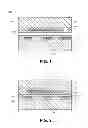
FIG. 5A is a cross-section diagram illustrating one example of stacked and bonded first and second device wafers with a trench etched with a first mask in an opening through one of the semiconductor layers to a conductor in an example integrated circuit system accordance with the teachings of the present invention.
FIG. 5B is a cross-section diagram illustrating one example of stacked and bonded first and second device wafers with a cavity etched in the trench with a second mask between first and second conductors and etched through a bonding interface and through one of the semiconductor layers from a backside of one of the device wafers in an example integrated circuit system accordance with the teachings of the present invention.
FIG. 6A is a cross-section diagram illustrating another example of stacked and bonded first and second device wafers with a cavity etched with a first mask between first and second conductors and etched through a bonding interface and through one of the semiconductor layers from a backside of one of the device wafers in an example integrated circuit system accordance with the teachings of the present invention.
FIG. 6B is a cross-section diagram illustrating another example of stacked and bonded first and second device wafers with a trench etched over the cavity with a second mask in an opening through one of the semiconductor layers to a conductor in an example integrated circuit system accordance with the teachings of the present invention.
FIG. 7 is a cross-section diagram illustrating yet another example of stacked and bonded first and second device wafers with a cavity etched with a single mask between first and second conductors and etched through a donut hole in one of the conductors, through a bonding interface and through one of the semiconductor layers from a backside of one of the device wafers in an example integrated circuit system accordance with the teachings of the present invention.
FIG. 8 is a cross-section diagram illustrating one example of stacked and bonded first and second device wafers with a barrier metal deposition over the backside and a cavity etched between first and second conductors from a backside of one of the device wafers in an example integrated circuit system accordance with the teachings of the present invention.
FIG. 9 is a cross-section diagram illustrating one example of stacked and bonded first and second device wafers with a cavity etched between first and second conductors from a backside of one of the device wafers filled with conductive material to provide a conductive path between the first and second conductors in an example integrated circuit system accordance with the teachings of the present invention.
FIG. 10 is a cross-section diagram illustrating one example of stacked and bonded first and second device wafers with the conductive material providing the conductive path between the first and second conductors etched and polished in an example integrated circuit system accordance with the teachings of the present invention.
FIG. 11 is a cross-section diagram illustrating one example of stacked and bonded first and second device wafers with a wire bond cavity and wire bond in an example integrated circuit system accordance with the teachings of the present invention.
DETAILED DESCRIPTION
As will be shown, examples of a method and apparatus providing an integrated circuit system with stacked integrated circuit device wafers using one or more conductive paths between conductors in respective metal layer oxides through a bonding interface are disclosed. In the following description, numerous specific details are set forth in order to provide a thorough understanding of the present invention. It will be apparent, however, to one having ordinary skill in the art that the specific detail need not be employed to practice the present invention. In other instances, well-known materials or methods have not been described in detail in order to avoid obscuring the present invention.
Reference throughout this specification to “one embodiment”, “an embodiment”, “one example” or “an example” means that a particular feature, structure or characteristic described in connection with the embodiment or example is included in at least one embodiment of the present invention. Thus, appearances of the phrases “in one embodiment”, “in an embodiment”, “one example” or “an example” in various places throughout this specification are not necessarily all referring to the same embodiment or example. Furthermore, the particular features, structures or characteristics may be combined in any suitable combinations and/or subcombinations in one or more embodiments or examples. Particular features, structures or characteristics may be included in an integrated circuit, an electronic circuit, a combinational logic circuit, or other suitable components that provide the described functionality. In addition, it is appreciated that the figures provided herewith are for explanation purposes to persons ordinarily skilled in the art and that the drawings are not necessarily drawn to scale.
To illustrate, FIG. 1 is a cross-section diagram illustrating one example of a first device wafer 103 and a second device wafer 203 that are included in one example of an integrated circuit system 101 in accordance with the teachings of the present invention. In one example, one of first device wafer 103 and second device wafer 203 may be an imager chip, an application specific integrated circuit, or the like, and the other one of first device wafer 103 and second device wafer 203 may be a processing chip, an application specific integrated circuit, or the like.
As shown in the example, first device wafer 103 includes a first semiconductor layer 105 proximate to a first metal layer including a first conductor 109 disposed within a first metal layer oxide 107. In the depicted example, first metal layer oxide 107 is proximate to a frontside 111 of first device wafer 103 and first semiconductor layer 105 is proximate to a backside 113 of first device wafer 103. In one example, first semiconductor layer 105 includes silicon.
Continuing with the example depicted in FIG. 1, second device wafer 203 includes a second semiconductor layer 205 proximate to a second metal layer including a second conductor 209 disposed within a second metal layer oxide 207. In the depicted example, second metal layer oxide 207 is proximate to a frontside 211 of second device wafer 203 and second semiconductor layer 205 is proximate to a backside 213 of second device wafer 203. In one example, second semiconductor layer 205 includes silicon.
In one example, at least one of frontside 111 of first metal layer oxide 107 and frontside 211 of the second metal layer oxide 207 is flattened by a chemical mechanical polish.
FIG. 2 is a cross-section diagram that illustrates integrated circuit system 101 with first device wafer 103 bonded to second device wafer 203. As shown in the depicted example, frontside 111 of the first metal layer oxide 107 of the first device wafer 103 is bonded to frontside 211 of the second metal layer oxide 207 of the second device wafer 203 at a bonding interface 315 between first metal layer oxide 107 and second metal layer oxide 207 in accordance with the teachings of the present invention.
In the example illustrated in FIG. 2, it is noted that all of the conductors including first conductor 109 of the first metal layer within first metal layer oxide 107 are illustrated beneath the frontside 111 surface of first device wafer 103. Similarly, it is noted that all of the conductors including second conductor 209 of the second metal layer within second metal layer oxide 207 are illustrated beneath the frontside 211 surface of second device wafer 203. Therefore, in the depicted example, bonding interface 315 includes an oxide-to-oxide bonding between first metal layer oxide 107 and second metal layer oxide 207. In another example, it is appreciated that if one of the metal layers includes conductors that are flush with surface of frontside 111 or frontside 211, then the bonding interface 315 may be an oxide-to-conductor interface. However, in either example, at least one of the surfaces at bonding interface 315 includes the oxide of first metal layer oxide 107 and/or second metal layer oxide 207 in accordance with the teachings of the present invention. Therefore, in one example, bonding interface 315 is an oxide bonding interface in accordance with the teachings of the present invention.
FIG. 3 is a cross-section diagram that illustrates an example of integrated circuit system 101 with stacked and bonded first device wafer 103 and second device wafer 203 as discussed above, and with second device wafer 203 having a thinned second semiconductor layer 205. In one example, after second semiconductor layer 205 is thinned from backside 213 as illustrated, second semiconductor layer 205 is then passivated as shown to form a passivation layer 417 on thinned second semiconductor layer 205 in accordance with the teachings of the present invention.
FIG. 4 is a cross-section diagram that illustrates an example of integrated circuit system 101 with stacked and bonded first device wafer 103 and second device wafer 203, and second semiconductor layer 205 thinned and passivated as discussed above. In addition, the example depicted in FIG. 4 shows an opening 519 etched from backside 213 of second device wafer 203 through second semiconductor layer 205. In one example, opening 519 is etched from backside 213 through second semiconductor layer 205 to second metal layer oxide 207 as shown.
Continuing with the illustrated example, FIG. 4 also shows that after opening 519 is etched through second semiconductor layer 205 to second metal layer oxide 207, an oxide deposition 521 is deposited on backside 213 and over opening 519 of second device wafer 203 as shown.
FIG. 5A is a cross-section diagram illustrating one example of an example of integrated circuit system 101 with etched opening 519 through second semiconductor layer 205 covered with oxide deposition 521 as discussed above in FIGS. 1-4. In addition, FIG. 5A illustrates an example in which a trench 623 is then etched in opening 519 from backside 213 through oxide deposition 521 and through second metal layer oxide 207 to second conductor 209 as shown. In one example, trench 623 is etched as described from backside 213 using a first mask.
FIG. 5B continues from the example depicted above in FIG. 5A in which trench 623 is etched in opening 519 from backside 213 through oxide deposition 521 and through second metal layer oxide 207 to second conductor 209. In the example depicted in FIG. 5B, a cavity 725 is then etched through trench 623 from backside 213 of the second semiconductor layer 205 and through bonding interface 315 to first conductor 109 within first metal layer oxide 107 as shown in accordance with the teachings of the present invention. In one example, cavity 725 is etched as described from backside 213 using a second mask.
FIG. 6A is a cross-section diagram illustrating another example of an example of integrated circuit system 101 with etched opening 519 through second semiconductor layer 205 covered with oxide deposition 521 as discussed above in FIGS. 1-4. In addition, FIG. 6A illustrates an example in which cavity 725 is etched in opening 519 from backside 213 through oxide deposition 521, through second metal layer oxide 207 and through bonding interface 315 to first conductor 109 within first metal layer oxide 107 as shown. In one example, cavity 725 is etched as described from backside 213 using a first mask.
FIG. 6B continues from the example depicted above in FIG. 6A in which cavity 725 is etched in opening 519 from backside 213 through oxide deposition 521 and through second metal layer oxide 207 to first conductor 109 within first metal layer oxide 107. In the example depicted in FIG. 6B, trench 623 is then etched over cavity 725 from backside 213 through oxide deposition 521 and through second metal layer oxide 207 to second conductor 209 as shown in accordance with the teachings of the present invention. In one example, trench 623 is etched as described from backside 213 using a second mask.
FIG. 7 is a cross-section diagram illustrating still another example of an example of integrated circuit system 101 with etched opening 519 through second semiconductor layer 205 covered with oxide deposition 521 as discussed above in FIGS. 1-4. In addition, FIG. 7 illustrates an example in which second conductor 209 includes a donut hole 829 or other suitable opening through which a cavity can be etched. For instance, in the example depicted in FIG. 7, a cavity 827 is etched in opening 519 from backside 213 through oxide deposition 521, through second metal layer oxide 207, through donut hole 829 of second conductor 209 and through bonding interface 315 to first conductor 109 within first metal layer oxide 107 as shown. In one example, cavity 827 is etched as described from backside 213 using a single mask.
FIG. 8 is a cross-section diagram that illustrates an example of integrated circuit system 101 as described in the examples above in which a cavity is etched between first conductor 109 and second conductor 209 from backside 213 through oxide deposition 521, through second metal layer oxide 207 and through bonding interface 315. In addition, FIG. 8 illustrates a barrier metal deposition 931 deposited from backside 213 over oxide deposition 521 and over the walls of trench 623, and cavity 725 covering exposed portions of first conductor 109, second conductor 209, first metal layer oxide 107 and second metal layer oxide 207 in accordance with the teachings of the present invention.
FIG. 9 is a cross-section diagram that continues with the example integrated circuit system 101 as described above in which barrier metal deposition 931 is deposited from backside 213 over oxide deposition 521 and over the walls of trench 623 and cavity 725. In addition, FIG. 9 illustrates that cavity 725, trench 623 and opening 519 are filled from backside 213 with a conductive material 1033. Accordingly, a conductive path 1035 coupling first conductor 109 and second conductor 209 is now provided with conductive material 1033 formed in cavity 725 in accordance with the teachings of the present invention. Thus, first conductor 109 is coupled to second conductor 209 through conductive path 1035 and through barrier metal deposition 931.
FIG. 10 is a cross-section diagram that continues with the example integrated circuit system 101 as described above in which cavity 725, trench 623 and opening 519 are filled with conductive material 1033 from backside 213 to provide conductive path 1035 between first conductor 109 and second conductor 209. In addition, FIG. 10 shows an example of backside 213 of second device wafer 203 after being etched and/or polished down to oxide deposition 521 as shown, which removes excess conductive material 1033 from backside 213 in accordance with the teachings of the present invention.
FIG. 11 is a cross-section diagram that continues with the example integrated circuit system 101 as described above in which backside 213 of second device wafer 203 is etched and/or polished down to oxide deposition 521 removing excess conductive material 1033 from backside 213. In addition, FIG. 11 illustrates an example in which a wire bond cavity 1137 and a wire bond 1139 are formed to provide a package connection to a conductor in second metal layer oxide 207 in an example integrated circuit system 101 in accordance with the teachings of the present invention.
The above description of illustrated examples of the present invention, including what is described in the Abstract, are not intended to be exhaustive or to be limitation to the precise forms disclosed. While specific embodiments of, and examples for, the invention are described herein for illustrative purposes, various equivalent modifications are possible without departing from the broader spirit and scope of the present invention. Indeed, it is appreciated that the specific example voltages, currents, frequencies, power range values, times, etc., are provided for explanation purposes and that other values may also be employed in other embodiments and examples in accordance with the teachings of the present invention.
These modifications can be made to examples of the invention in light of the above detailed description. The terms used in the following claims should not be construed to limit the invention to the specific embodiments disclosed in the specification and the claims. Rather, the scope is to be determined entirely by the following claims, which are to be construed in accordance with established doctrines of claim interpretation. The present specification and figures are accordingly to be regarded as illustrative rather than restrictive.
Claims
1. An integrated circuit system, comprising:
a first device wafer having a first semiconductor layer proximate to a first metal layer including a first conductor disposed within a first metal layer oxide;
a second device wafer having a second semiconductor layer proximate to a second metal layer including a second conductor disposed within a second metal layer oxide, wherein a frontside of the first metal layer oxide of the first device wafer is bonded to a frontside of the second metal layer oxide of the second device wafer at a bonding interface between the first metal layer oxide and the second metal layer oxide; and
a conductive path coupling the first conductor to the second conductor, wherein the conductive path is provided with conductive material formed in a cavity etched between the first conductor and the second conductor and etched through the bonding interface and through the second semiconductor layer from a backside of the second device wafer.
2. The integrated circuit system of claim 1 further comprising a barrier metal deposition deposited in the cavity between the conductive path and the first conductor and the second conductor, wherein the first conductor is coupled to the second conductor through the barrier metal deposition and the conductive path.
3. The integrated circuit system of claim 1 further comprising an oxide deposition disposed between the conductive material and the second semiconductor layer.
4. The integrated circuit system of claim 3 further comprising a passivation layer disposed between the backside of the second semiconductor layer and the oxide deposition.
5. The integrated circuit system of claim 1 wherein at least one of the frontside of the first metal layer oxide and the frontside of the second metal layer oxide is flattened by a chemical mechanical polish.
6. The integrated circuit system of claim 1 wherein the second semiconductor layer through which the cavity is etched is thinned prior to etching of the cavity.
7. The integrated circuit system of claim 1 wherein the cavity is further etched through a donut hole in the second conductor.
8. The integrated circuit system of claim 1 wherein the cavity is further etched through a trench etched from the backside of the second semiconductor layer to the first conductor.
9. The integrated circuit system of claim 8 wherein the cavity is etched prior to etching the trench from the backside of the second semiconductor layer to the first conductor.
10. The integrated circuit system of claim 1 wherein one of the first device wafer and second device wafer comprises an imager chip and an other one of the first device wafer and second device wafer comprises a processing chip.
11-20. (canceled)
Images & Drawings included:



Sources:
- United States Patent and Trademark Office - verify current appl. status at the USPTO↗
Recent applications in this class:
- » 20130032942 2013-02-07
Semiconductor device - » 20130020704 2013-01-24
Bonding surfaces for direct bonding of semiconductor structures
Recent applications for this Assignee:
- » 20250159373 2025-05-15
Image Sensor and Optical Signal Generation Method - » 20250159372 2025-05-15
Image Sensor to Supress Flicker - » 20250150729 2025-05-08
Minimal Repeating Unit Having Reduced Blooming Effect of Clear Pixels - » 20250106533 2025-03-27
PhotoVoltaic Image Sensor To Supress Black Solar - » 20250097602 2025-03-20
PhotoVoltaic Image Sensor - » 20250081640 2025-03-06
Pixel Circuit and Image Sensor - » 20250080876 2025-03-06
Photo-voltaic phototransistor in forward bias - » 20250030941 2025-01-23
Camera having video stream indicator - » 20240422444 2024-12-19
Full Green Interpolation In Remosaicing Bayer Pattern - » 20240397236 2024-11-28
Adaptive correlated multiple sampling