Adhesive tape for electronic components
US20060286375A1
2006-12-21
11/197,322
2005-08-05
✅ Patent granted
US 8,057,894 B2
2011-11-15
-
-
Alicia Chevalier | Anish Desai
2026-09-24
Abstract:
An adhesive tape for attaching and fixing electronic components has an adhesive layer on at least one surface of a heat-resistant film. The surface hardness of the adhesive layer is about more than 25 MPa, and the surface hardness of the adhesive layer is about more than 80 MPa after thermosetting at 200° C. for about one hour.
Inventors:
- Woo-seok Kim 5 🇰🇷 Gyeonggi-do, South Korea
- Sang-Pil KIM 8 🇰🇷 Gyeongsangbuk-do, South Korea
- Ki-Jeong Moon 1 🇰🇷 Daegu, South Korea
Assignee:
- Toray Advanced Materials Korea Inc. 39 🇰🇷 Gyeongsangbuk-do, South Korea
- Toray Saehan, Inc. 10 🇰🇷 Gyeongsangbuk-do, South Korea
Interested in similar patents?
Get notified when new applications in this technology area are published.
Classification:
H01L24/83 » CPC main
Arrangements for connecting or disconnecting semiconductor or solid-state bodies; Methods or apparatus related thereto; Methods for connecting semiconductor or other solid state bodies using means for bonding being attached to, or being formed on, the surface to be connected using a layer connector
C09J7/22 » CPC further
Adhesives in the form of films or foils characterised by their carriers Plastics; Metallised plastics
C09J7/35 » CPC further
Adhesives in the form of films or foils characterised by the adhesive composition Heat-activated
H01L23/4951 » CPC further
Details of semiconductor or other solid state devices; Arrangements for conducting electric current to or from the solid state body in operation, e.g. leads, terminal arrangements ; Selection of materials therefor consisting of soldered constructions; Lead-frames or other flat leads characterised by the die pad Chip-on-leads or leads-on-chip techniques, i.e. inner lead fingers being used as die pad
H01L24/29 » CPC further
Arrangements for connecting or disconnecting semiconductor or solid-state bodies; Methods or apparatus related thereto; Means for bonding being attached to, or being formed on, the surface to be connected, e.g. chip-to-package, die-attach, "first-level" interconnects; Manufacturing methods related thereto; Layer connectors, e.g. plate connectors, solder or adhesive layers; Manufacturing methods related thereto; Structure, shape, material or disposition of the layer connectors prior to the connecting process of an individual layer connector
C08L61/04 » CPC further
Compositions of condensation polymers of aldehydes or ketones ; Compositions of derivatives of such polymers Condensation polymers of aldehydes or ketones with phenols only
C09J2409/00 » CPC further
Presence of diene rubber
H01L2224/83101 » CPC further
Indexing scheme for arrangements for connecting or disconnecting semiconductor or solid-state bodies and methods related thereto as covered by; Methods for connecting semiconductor or other solid state bodies using means for bonding being attached to, or being formed on, the surface to be connected using a layer connector the layer connector being supplied to the parts to be connected in the bonding apparatus as prepeg comprising a layer connector, e.g. provided in an insulating plate member
H01L2224/83855 » CPC further
Indexing scheme for arrangements for connecting or disconnecting semiconductor or solid-state bodies and methods related thereto as covered by; Methods for connecting semiconductor or other solid state bodies using means for bonding being attached to, or being formed on, the surface to be connected using a layer connector; Bonding techniques using a polymer adhesive, e.g. an adhesive based on silicone, epoxy, polyimide, polyester Hardening the adhesive by curing, i.e. thermosetting
H01L2924/01005 » CPC further
Indexing scheme for arrangements or methods for connecting or disconnecting semiconductor or solid-state bodies as covered by; Chemical elements Boron [B]
H01L2924/01006 » CPC further
Indexing scheme for arrangements or methods for connecting or disconnecting semiconductor or solid-state bodies as covered by; Chemical elements Carbon [C]
H01L2924/01013 » CPC further
Indexing scheme for arrangements or methods for connecting or disconnecting semiconductor or solid-state bodies as covered by; Chemical elements Aluminum [Al]
H01L2924/01015 » CPC further
Indexing scheme for arrangements or methods for connecting or disconnecting semiconductor or solid-state bodies as covered by; Chemical elements Phosphorus [P]
H01L2924/01027 » CPC further
Indexing scheme for arrangements or methods for connecting or disconnecting semiconductor or solid-state bodies as covered by; Chemical elements Cobalt [Co]
H01L2924/01029 » CPC further
Indexing scheme for arrangements or methods for connecting or disconnecting semiconductor or solid-state bodies as covered by; Chemical elements Copper [Cu]
H01L2924/0103 » CPC further
Indexing scheme for arrangements or methods for connecting or disconnecting semiconductor or solid-state bodies as covered by; Chemical elements Zinc [Zn]
H01L2924/01033 » CPC further
Indexing scheme for arrangements or methods for connecting or disconnecting semiconductor or solid-state bodies as covered by; Chemical elements Arsenic [As]
H01L2924/01082 » CPC further
Indexing scheme for arrangements or methods for connecting or disconnecting semiconductor or solid-state bodies as covered by; Chemical elements Lead [Pb]
H01L2924/07802 » CPC further
Indexing scheme for arrangements or methods for connecting or disconnecting semiconductor or solid-state bodies as covered by; Polymers; Adhesive characteristics other than chemical not being an ohmic electrical conductor
Y10T428/28 » CPC further
Stock material or miscellaneous articles Web or sheet containing structurally defined element or component and having an adhesive outermost layer
Y10T428/2852 » CPC further
Stock material or miscellaneous articles; Web or sheet containing structurally defined element or component and having an adhesive outermost layer Adhesive compositions
Y10T428/287 » CPC further
Stock material or miscellaneous articles; Web or sheet containing structurally defined element or component and having an adhesive outermost layer; Adhesive compositions including epoxy group or epoxy polymer
Y10T428/2883 » CPC further
Stock material or miscellaneous articles; Web or sheet containing structurally defined element or component and having an adhesive outermost layer; Adhesive compositions including addition polymer from unsaturated monomer including addition polymer of diene monomer [e.g., SBR, SIS, etc.]
Y10T428/2887 » CPC further
Stock material or miscellaneous articles; Web or sheet containing structurally defined element or component and having an adhesive outermost layer; Adhesive compositions including addition polymer from unsaturated monomer including nitrogen containing polymer [e.g., polyacrylonitrile, polymethacrylonitrile, etc.]
H01L2924/0665 » CPC further
Indexing scheme for arrangements or methods for connecting or disconnecting semiconductor or solid-state bodies as covered by; Polymers Epoxy resin
H01L2924/181 » CPC further
Indexing scheme for arrangements or methods for connecting or disconnecting semiconductor or solid-state bodies as covered by; Details of package parts other than the semiconductor or other solid state devices to be connected Encapsulation
H01L2924/00 » CPC further
Indexing scheme for arrangements or methods for connecting or disconnecting semiconductor or solid-state bodies as covered by
C09J163/00 » CPC further
Adhesives based on epoxy resins; Adhesives based on derivatives of epoxy resins
C08L2666/16 » CPC further
Composition of polymers characterized by a further compound in the blend, being organic macromolecular compounds, natural resins, waxes or and bituminous materials, non-macromolecular organic substances, inorganic substances or characterized by their function in the composition; Organic macromolecular compounds, natural resins, waxes or and bituminous materials; Macromolecular compounds according to - ; Derivatives thereof Addition or condensation polymers of aldehydes or ketones according to - ; Derivatives thereof
C09J2463/00 » CPC further
Presence of epoxy resin
C09J2461/00 » CPC further
Presence of condensation polymers of aldehydes or ketones
B32B7/12 IPC
Layered products characterised by the relation between layers; Layered products characterised by the relative orientation of features between layers, or by the relative values of a measurable parameter between layers, i.e. products comprising layers having different physical, chemical or physicochemical properties; Layered products characterised by the interconnection of layers; Interconnection of layers using interposed adhesives or interposed materials with bonding properties
Description
BACKGROUND OF THE INVENTION1. Technical Field
The invention relates to an adhesive tape, and, more particularly, to an adhesive tape for electronic components that can be used for bonding electronic components such as leads, heat sinks, semiconductor chips, die pads, and the like, excellent in taping capability and electric reliability.
2. Description of the Prior Art
Generally, typical adhesive tapes used for semiconductor devices include adhesive tapes for bonding lead frames, those for attaching heat sinks, TAB (Tape Automated Bonding) tapes, LOC (Lead On Chip) tapes, and the like. The adhesive tapes for bonding lead frames is used for fixing the lead of a lead frame to improve productivity and yields of the lead frame itself and in the overall semiconductor assembly process. A lead frame manufacturer applies the adhesive tape onto a lead frame, which is in turn delivered to a semiconductor assembling company, to equip semiconductor chips on the frame which is subject to wire bonding, etc. and then to seal the frame with an epoxy molding compound. Therefore the adhesive tape is contained in a semiconductor apparatus package.
The tapes such as the adhesive tape for attaching heat sinks are also contained in a semiconductor package, like the adhesive tapes for bonding lead frames.
Therefore, the adhesive tapes for electronic components must have general reliability and workability in taping for semiconductors, and sufficient physical properties that allow the tapes to resist severe conditions such as high temperature, humidity, voltage, etc. applied from the outside during the assembling process of a semiconductor device until they are used as final products after the assembling process, as well as excellent adhesiveness.
Typical adhesive tapes for electronic components used as such are made by applying only the synthetic rubbery resin of polyacrylonitrile resin, polyacrylate resin, resole phenol resin, or acrylonitrile-butadiene copolymer, etc. onto a heat-resistant film such as a polyimide film, or by applying an adhesive made on the film by modifying the resins to another resin or mixing the resins, and then being converted to B step through coating and drying the applied adhesive. Such a tape, however, introduces excessive bleeding of the adhesive in taping because its hardness is too low, which excessive bleeding causes the adhesive to stain taping devices or to bleed on unnecessary portions, which in turn results in defective semiconductor devices.
With the current micro- and highly-integrated package architecture resulting from a thin body and fine pitch structure of a semiconductor device, stringent requirements for organic materials such as adhesive tapes and the like used for the devices tend to be applied to their electric, chemical and physical properties. Accordingly, there has been a need for developing adhesive tape compositions for electronic components excellent in adhesiveness, workability and the like together with sufficient electric reliability and durability.
To solve the aforementioned problems, the applicant TORAY SAEHAN disclosed a document, titled “Heat-resistant adhesive tape for electronic components”, of the Korea Patent Application No. 2002-0043621 (published Korea Pat. No. 2004-0009616) and a document, titled “Adhesive tape compositions for electric components” of the Korea Patent Application No. 2004-84712. With the compositions disclosed in the above patent specifications, many problems in adhesiveness, electric reliability and the like were much improved as compared to conventional adhesive tapes and the improved adhesive tape has been widely used in the relevant field currently.
As electronic and semiconductor components continue to develop with a micro-, thin- and highly-integrated structure in the electronic industry, there has been a need for continuous development of adhesive tapes for electronic components to catch up with the trend. The invention was designed during the research to improve the problems of conventional adhesive tapes for electronic components.
BRIEF SUMMARY OF THE INVENTIONThe invention was conceived to solve the aforementioned problems. It is an object of the invention to provide an adhesive tape excellent in electric reliability and taping capability.
BRIEF DESCRIPTION OF THE DRAWINGSThe features and advantages of the present invention will become apparent by reading the following detailed description of preferred embodiments thereof illustrated with reference to the accompanying drawings, wherein:
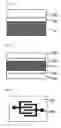
FIG. 1 shows a cross section of an adhesive tape for electronic components according to one embodiment of the invention;
FIG. 2 shows a cross section of an adhesive tape for electronic components according to another embodiment of the invention;
FIG. 3 schematically shows a specimen for testing electric reliability of an adhesive tape for electronic components according to the invention; and
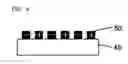
FIG. 4 shows a cross section of a specimen for testing electric reliability of an adhesive tape for electronic components according to the invention.
DETAILED DESCRIPTION OF THE PREFERRED EMBODIMENTThe adhesive tape for electronic components according to the invention to achieve the aforementioned object, having an adhesive layer 20 on at least one surface of a heat-resistant film, is characterized in that the surface hardness of the adhesive layer 20 is more than about 25 Mpa. Preferably, the surface hardness of the adhesive layer 20 is characterized in that it is more than about 80 MPa after thermosetting for one hour at 200° C.
Hereinafter, referring to the embodiments and drawings of the invention, the invention will be described in detail. It will be apparent to those skilled in the art that those embodiments are intended to illustrate the invention more specifically, but the scope of the invention should not be limited to those embodiments according to the teaching of the invention.
The inventors studied to solve the problems occurring when using conventional adhesive tapes for electronic components, then recognized that it is an important factor to increase the hardness of adhesive in order to improve electric reliability and taping capability thereof, and conceived the invention.
FIG. 1 is a cross sectional view of an adhesive tape for electronic components according to one embodiment of the invention. On one surface of a heat-resistant film 10 is formed an adhesive layer 20 and on top of the layer 20, a release film 30 is laminated, as shown in FIG. 1.
FIG. 2 is a cross sectional view of another adhesive tape for electronic components according to one embodiment of the invention, in which adhesive layers 20 are formed on both sides of a heat-resistant film 10 and a release film 30 is laminated on the surface of each adhesive layer 20. The heat-resistant film 10 may be a heat-resistant film of polyimide, polyphenylenesulfide, or polyethyleneterephthalate, but most preferably a polyimide film. If the heat-resistant film is too thick (70 μm or more) or too thin (10 μm or less), it is not easy to carry out tape punching in taping. Therefore, it is preferable that the thickness ranges 10 to 70 μm, but more preferably 40 to 60 μm.
The adhesive layer 20 has a ratio of 3 to 300 weight portions of polyfunctional epoxy resin and 3 to 300 weight portions of polyfunctional phenol resin for 100 weight of NBR containing the carboxyl radical, wherein the layer 20 contains a hardener, a rubber cross linking agent and other additives.
The release film 30 has a thickness of 20 to 100 μm, preferably 30 to 60 μm. The release film 30 may be a polyethylene, polyethylene terephthalate, or polypropylene film, to which release capability may be given with silicon resin, if required.
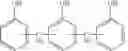
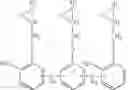
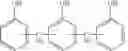
Embodiment 1To 200 weight of NBR (containing 27.1 weight % of the acrylonitrile content and 4.3 weight % of the carboxyl radical content) were added 100 weight portions of novolac epoxy resin represented in the following chemical formula 1, 100 weight portions of phenol resin represented in the following chemical formula 2, 3 weight portions of hexamethoxy methylmelamine and 3 weight portions of phthalic anhydride as a hardener, and then 10 weight portions of zinc oxide as a rubber cross linking agent. The viscosity of the resulting solution was then adjusted to 400 to 1,500 CPS, using acetone solvent. Subsequently the adhesive liquid was sufficiently agitated, and then applied onto the surface of a polyimide film whose thickness was 50 μm so that the thickness of the adhesive layer could be 20 μm after being dried. After drying the adhesive liquid (at 180° C., for 10 minutes), a polyethylene terephthalate film whose thickness was 38 μm was laminated to produce an adhesive tape.
An adhesive tape was produced with the same method and conditions as in the embodiment 1, except that the adhesive liquid was dried at 170° C. for 10 minutes.
Embodiment 3An adhesive tape was produced with the same method and conditions as in the embodiment 1, except that the adhesive liquid was dried at 160° C. for 10 minutes.
Embodiment 4An adhesive tape was produced with the same method and conditions as in the embodiment 1, except that the adhesive liquid was dried at 150° C. for 10 minutes.
Embodiment 5An adhesive tape was produced with the same method and conditions as in the embodiment 1, except that the adhesive liquid was dried at 140° C. for 10 minutes.
Embodiment 6An adhesive tape was produced with the same method and conditions as in the embodiment 1, except that the adhesive liquid was dried at 130° C. for 10 minutes.
COMPARATIVE EXAMPLE 1To 100 weight of Tetrabromo-bisphenol A(TBBA) epoxy are added 50 weight portions of cresol novolac epoxy with a low softening point, 30 weight portions of acrylonytrile-butadiene rubber, 20 weight portions of polybenzo imidazole, and 12 weight portions of diaminodiphenyl sulfone, in order to produce 1000 to 1200 CPS of the liquid viscosity, using methylethyl ketone, toluene and DMF as a solvent. After fully agitating the resultant adhesive liquid, the liquid was applied onto a polyimide film whose thickness was 50 μm to make a layer whose thickness was 20 μm after drying the liquid. After drying the liquid (at 120° C. for 3 minutes), a polyethylene terephthalate film whose thickness was 38 μm was laminated to produce an adhesive tape (the adhesive tape was produced according to the embodiment 1, using the “An adhesive composition for heat-resistant adhesive tapes” described in the published Korea patent No. 1998-0068284).
Hereinafter, the method of testing characteristics of the adhesive tapes according to the embodiments and the comparative example, and the test results will be described.
[Testing Taping Capability]
The adhesive tapes for electronic components produced according to the embodiments and the comparative example were taped on a lead frame for 216 pin QFP at 180° C., for 0.2 seconds and under 5 kgf/cm2, using the taping machine available from Poschl Co., in order to test running capability of the machine and characteristics of the tapes. The result thereof are shown in the following Table 1.
| TABLE 1 | |||||||
| Em- | Em- | Em- | Em- | Em- | Em- | Compar- | |
| bodi- | bodi- | bodi- | bodi- | bodi- | bodi- | ative | |
| Test | ment | ment | ment | ment | ment | ment | example |
| Item | 1 | 2 | 3 | 4 | 5 | 6 | 1 |
| Number | 0 | 0 | 0 | 0 | 0 | 1 | 7 |
| of | |||||||
| surface | |||||||
| tucks | |||||||
| Running | 0 | 0 | 0 | 0 | 0 | 2 | 6 |
| capability | |||||||
| (Number | |||||||
| of stops) | |||||||
| Ratio of | 0.3 | 0.7 | 0.5 | 0.6 | 1.4 | 17.8 | 53.3 |
| defective | |||||||
| lead | |||||||
| frames | |||||||
| (%) | |||||||
The adhesive tapes of 22 mm×1000 m were applied, and test items are described below.
- (1) Surface tuck: The number of tucks occurring during applying a tape of 1000 m in length.
- (2) Running capability (number of stops): the number of stops when the taping machine stops due to excessive bleeding of the adhesive.
- (3) Ratio of defective lead frames (%): a defective lead frame is decided when the adhesive drops on a place other than the places not for adhesion, so that a lead is connected to an adjacent lead.
As seen in the above Table 1, the tapes produced according to the comparative example 1 and the embodiment 6 generate tucks on their surface because of their low surface hardness (see the following Table 2). Because of excessive bleeding of the adhesive layer, the adhesive spreads on the taping machine and the adjacent lead, causing defective lead frames and problems in running capability of the taping machine. The tapes produced according to the embodiments 1 to 5, however, didn't generate tucks on their surface because of their high hardness (see the following Table 2) and didn't cause problems in running capability of the taping machine.
[Measuring Hardness of Adhesive]
With a nanoindenter, the surface hardness of the adhesive layers produced according to the embodiments and the comparative example was measured. After curing the tapes with the same method at 200° C. for one hour (general post heating condition for a tape for electronic components), the surface hardness was also measured. Test conditions are shown below and the result thereof is shown in Table 2.
-
- Loading: strain rate=0.1,
- Tip: DCM C1610,
- Method: DCM CSM Hardness.
[Testing Electric Reliability]
FIG. 3 is a schematic view of a specimen for testing electric reliability of an adhesive tape for electronic components according to the invention, which specimen was made by etching a copper film of a soft circuit board (the copper film was laminated on a polyimide film). FIG. 4 is a cross section of a specimen for testing electric reliability of an adhesive tape for electronic components according to the invention. As shown in FIGS. 3 and 4, the adhesive tapes produced according to the embodiments and the comparative example were thermocompressed on the specimen in which the distance between leads was 150 μm, at the pressure of 30 kgf/m2 for two minutes. Subsequently, the specimen was heated at 200° C. for one hour and then subject to testing electric reliability in order to measure changes in the resistance values over time for 100 hours at 135° C., under relative humidity of 85% at 5 volts. The results from the process for testing the characteristics as described above are shown in Table 2. Here, the voltage drop time means the time when the resistance value of the specimen drops by more than 102 (order) due to the influence of the adhesive composition when testing the electric reliability. “N” means the case where voltage drop does not occur for 100 hours.
| TABLE 2 | |||||||
| Em- | Em- | Em- | Em- | Em- | Em- | Compar- | |
| bodi- | bodi- | bodi- | bodi- | bodi- | bodi- | ative | |
| Test | ment | ment | ment | ment | ment | ment | example |
| item | 1 | 2 | 3 | 4 | 5 | 6 | 1 |
| Hardness | 105 | 94 | 67 | 54 | 25 | >1 | >1 |
| before | |||||||
| curing | |||||||
| (MPa) | |||||||
| Hardness | 270 | 267 | 274 | 280 | 264 | 80 | 41 |
| after | |||||||
| curing | |||||||
| (MPa) | |||||||
| Voltage | N | N | N | N | N | N | 28 |
| drop | |||||||
| time | |||||||
| (hr) | |||||||
As seen in the above Table 2, the adhesive of the tape produced according to embodiment 6 has the same compositions as for the adhesive of the tapes produced according to the embodiments 1 to 5.
Because of insufficient drying conditions thereof, however, the hardness of the adhesive layer before curing was measured less than 1 Mpa, so that taping capability was thereby also measured bad. After sufficient post heating (at 200° C. for one hour), however, it showed similar characteristics to those of the adhesive tapes produced according to other embodiments. The adhesive of the tape produced according to the comparative example 1 is a kind of adhesive tape for electronic components made of the compositions according to prior art different from those of the embodiments, and has the adhesive hardness of 1 MPa or less and 41 MPa after postheating, which is relatively low as compared to those by the embodiments of the invention. Accordingly, the result in testing taping capability and electric reliability was not so good as the adhesive tapes produced according to the embodiments of the invention.
As seen in the above results, the adhesive tape for electronic components according to the invention showed excellence in taping capability and electric reliability as compared to the tapes produced according to the conventional technology.
In this specification, only some examples among various embodiments and analysis test carried out the inventors are illustrated, but it should be noted that the technical spirit of the invention is not limited to the examples, and that modifications and variations of the invention can performed by those skilled in the art.
Claims
1. An adhesive tape for electronic components, said adhesive tape comprising an adhesive layer on at least one surface of a heat-resistant film;
wherein
the adhesive layer is made from an adhesive composition that has 3 to 300 weight portions of polyfunctional epoxy resin and 3 to 300 weight portions of polyfunctional phenol resin for 100 weight portions of NBR containing the carboxyl radical;
the adhesive composition further has at least an additive comprising at least one of a hardener and a rubber cross linking agent; and
the surface hardness of the adhesive layer is about more than 25 MPa.
2. The adhesive tape as claimed in claim 1, wherein the surface hardness of the adhesive layer is about more than 80 MPa after thermosetting at 200° C. for about one hour.
3. The adhesive tape as claimed in claim 1, wherein the adhesive composition has less than 50 weight portions of polyfunctional phenol resin for 100 weight portions of said NBR.
4. The adhesive tape as claimed in claim 1, wherein said NBR contains 27.1% by weight of acrylonitrile and 4.3% by weight of the carboxyl radical.
5. The adhesive tape as claimed in claim 1, wherein said epoxy resin is presented by the following formula
6. The adhesive tape as claimed in claim 1, wherein said phenol resin is presented by the following formula
7. The adhesive tape as claimed in claim 1, wherein said hardener comprises hexamethoxy methylmelamine and phthalic anhydride.
8. The adhesive tape as claimed in claim 1, wherein said rubber cross linking agent comprises zinc oxide.
9. An adhesive tape for electronic components, said adhesive tape comprising an adhesive layer on at least one surface of a heat-resistant film;
wherein
the adhesive layer is made from an adhesive composition that comprises 3 to 300 weight portions of polyfunctional epoxy resin and 3 to 300 weight portions of polyfunctional phenol resin for 100 weight portions of NBR containing the carboxyl radical; and
the adhesive composition further comprises at least an additive comprising at least one of a hardener and a rubber cross linking agent.
10. The adhesive tape as claimed in claim 9, wherein the adhesive composition has less than 50 weight portions of polyfunctional phenol resin for 100 weight portions of said NBR.
11. The adhesive tape as claimed in claim 9, wherein said NBR contains 27.1% by weight of acrylonitrile and 4.3% by weight of the carboxyl radical.
12. The adhesive tape as claimed in claim 9, wherein said epoxy resin is presented by the following formula
13. The adhesive tape as claimed in claim 9, wherein said phenol resin is presented by the following formula
14. The adhesive tape as claimed in claim 9, wherein said hardener comprises hexamethoxy methylmelamine and phthalic anhydride.
15. The adhesive tape as claimed in claim 9, wherein said rubber cross linking agent comprises zinc oxide.
Images & Drawings included:
Sources:
- United States Patent and Trademark Office - verify current appl. status at the USPTO↗
Similar patent applications:
- » 20250215288
PRESSURE-SENSITIVE ADHESIVE TAPE, COMPONENT, ELECTRONIC EQUIPMENT, AND VEHICLE - » 20110014443
ADHESIVE TAPE FOR ELECTRONIC COMPONENT FABRICATION - » 20200339843
Pressure-sensitive adhesive tape, pressure-sensitive adhesive tape for affixing component for electronic appliance, and transparent pressure-sensitive adhesive tape for optical use - » 20190010366
Pressure-sensitive adhesive tape, pressure-sensitive adhesive tape for affixing component for electronic appliance, and transparent pressure-sensitive adhesive tape for optical use - » 20050288437
Heat activatable adhesive tape for bonding electronic components and conductor tracks - » 20050287363
Heat-activable adhesive tape for bonding electronic components and conductor tracks - » 20090011166
ADHESIVE TAPE COMPOSITION FOR ELECTRONIC COMPONENTS - » 20060089465
Adhesive tape composition for electronic components - » 20110318580
Adhesive tape for manufacturing electronic components - » 20050288436
Heat-activable and crosslinkable adhesive tape for bonding electronic components and conductor tracks
Recent applications in this class:
- » 20250293202 2025-09-18
RESIN COMPOSITION AND METHOD OF FORMING A SEMICONDUCTOR PACKAGE WITH UNDERFILL USING THE SAME - » 20250293201 2025-09-18
POWER CHIP PACKAGE STRUCTURE AND MANUFACTURING METHOD THEREOF - » 20250273624 2025-08-28
ION IMPLANTATION WITH ANNEALING FOR SUBSTRATE CUTTING - » 20250259966 2025-08-14
Controlling Bond Line Thickness (BLT) For Metal Amalgams - » 20250259965 2025-08-14
INTERCONNECTING A PRINTED-CIRCUIT-BOARD SUBSTRATE TO ANOTHER SUBSTRATE OR TO A DIE - » 20250253287 2025-08-07
LOW TEMPERATURE SUBSTRATE BONDING METHOD - » 20250239566 2025-07-24
PRESSURELESS SINTERING METHOD FOR THE CONNECTION OF ELECTRONIC COMPONENTS - » 20250239565 2025-07-24
PRESSURE SINTERING METHOD AND CORRESPONDING PRESSURE SINTERING APPARATUS - » 20250226359 2025-07-10
WAFER BONDING METHOD AND SEMICONDUCTOR STRUCTURE MANUFACTURED USING THE SAME - » 20250219020 2025-07-03
METHOD OF MANUFACTURING SEMICONDUCTOR PACKAGE BY USING CARRIER SUBSTRATE
Recent applications for this Assignee:
- » 20230416957 2023-12-28
POLYESTER STAPLE YARN FOR WET NON-WOVEN FABRIC, WET NON-WOVEN FABRIC COMPRISING SAME, AND PREPARATION METHOD THEREFOR - » 20230347298 2023-11-02
Reverse osmosis membrane and method for manufacturing same - » 20230338905 2023-10-26
POLYAMIDE REVERSE OSMOSIS MEMBRANE HAVING EXCELLENT DURABILITY AND ANTIFOULING PROPERTIES, AND METHOD FOR MANUFACTURING SAME - » 20230313418 2023-10-05
FLAME-RETARDANT POLYESTER FIBER WITH EXCELLENT DYEABILITY AND MANUFACTURING METHOD THEREFOR - » 20230272223 2023-08-31
ORGANIC-INORGANIC ADHESIVE COMPOSITION, AND GAS BARRIER FILM COMPRISING SAME - » 20230257912 2023-08-17
HIGHLY ABSORBENT COMPOSITE FIBRE, HIGHLY ABSORBENT NON-WOVEN FABRIC, AND ARTICLE COMPRISING SAME - » 20230199947 2023-06-22
Copper clad laminate film and electronic device including same - » 20230158428 2023-05-25
COMPOSITE NON-WOVEN FABRIC AND ARTICLE COMPRISING SAME - » 20230140087 2023-05-04
COMPOSITE NONWOVEN FABRIC AND ARTICLE COMPRISING SAME - » 20230125635 2023-04-27
COPPER CLAD LAMINATE FILM AND ELECTRONIC DEVICE INCLUDING SAME