Method of manufacturing a ceramic metallization for ceramic metal transition
US20160184913A1
2016-06-30
15/064,653
2016-03-09
✅ Patent granted
US 10,549,371 B2
2020-02-04
-
-
Thiem D Phan
Leydig, Voit & Mayer, LTD.
2036-03-09
Abstract:
A method of manufacture of a ceramic metallization for ceramic metal transition, and ceramic metal transition itself, for the use in low, medium and high-voltage techniques, which may avoid a brazing foil, and/or overcome problems with the use of thin brazing foils, and/or to make the manufacture easier, but also more effective, wherein, on top of the Ni-layer will be placed an Ag-layer as a third layer, and then the metal part will be laid on top and connected by brazing or tempering.
Assignee:
- ABB SCHWEIZ AG 2,771 🇨🇭 Baden, Switzerland
Applicant:
Interested in similar patents?
Get notified when new applications in this technology area are published.
Classification:
B23K1/0016 » CPC main
Soldering, e.g. brazing, or unsoldering specially adapted for particular articles or work Brazing of electronic components
C04B37/026 » CPC further
Joining burned ceramic articles with other burned ceramic articles or other articles by heating with metallic articles characterised by the interlayer used consisting of metals or metal salts
C23C28/021 » CPC further
Coating for obtaining at least two superposed coatings either by methods not provided for in a single one of groups - or by combinations of methods provided for in subclasses and or only coatings only including layers of metallic material including at least one metal alloy layer
H01H33/66207 » CPC further
High-tension or heavy-current switches with arc-extinguishing or arc-preventing means; Switches wherein the means for extinguishing or preventing the arc do not include separate means for obtaining or increasing flow of arc-extinguishing fluid; Vacuum switches; Housings or protective screens Specific housing details, e.g. sealing, soldering or brazing
C04B2237/123 » CPC further
Aspects relating to ceramic laminates or to joining of ceramic articles with other articles by heating; Aspects relating to interlayers, e.g. used to join ceramic articles with other articles by heating; Metallic interlayers based on iron group metals, e.g. steel
C04B2237/125 » CPC further
Aspects relating to ceramic laminates or to joining of ceramic articles with other articles by heating; Aspects relating to interlayers, e.g. used to join ceramic articles with other articles by heating; Metallic interlayers based on noble metals, e.g. silver
C04B2237/343 » CPC further
Aspects relating to ceramic laminates or to joining of ceramic articles with other articles by heating; Composition of layers of ceramic laminates or of ceramic or metallic articles to be joined by heating, e.g. Si substrates; Ceramic; Oxidic Alumina or aluminates
C04B2237/74 » CPC further
Aspects relating to ceramic laminates or to joining of ceramic articles with other articles by heating; Processing aspects relating to ceramic laminates or to the joining of ceramic articles with other articles by heating Forming laminates or joined articles comprising at least two different interlayers separated by a substrate
B23K1/00 IPC
Soldering, e.g. brazing, or unsoldering
B23K1/00 IPC
Soldering, e.g. brazing, or unsoldering
C04B37/02 IPC
Joining burned ceramic articles with other burned ceramic articles or other articles by heating with metallic articles
C23C28/02 IPC
Coating for obtaining at least two superposed coatings either by methods not provided for in a single one of groups - or by combinations of methods provided for in subclasses and or only coatings only including layers of metallic material
H01H33/662 IPC
High-tension or heavy-current switches with arc-extinguishing or arc-preventing means; Switches wherein the means for extinguishing or preventing the arc do not include separate means for obtaining or increasing flow of arc-extinguishing fluid; Vacuum switches Housings or protective screens
C21D9/50 » CPC further
Heat treatment, e.g. annealing, hardening, quenching or tempering, adapted for particular articles; Furnaces therefor for welded joints
Y10T29/49105 » CPC further
Metal working; Method of mechanical manufacture; Electrical device making Switch making
H01H11/00 IPC
Apparatus or processes specially adapted for the manufacture of electric switches
Description
CROSS-REFERENCE TO RELATED APPLICATIONS
This application is a continuation of International Application No. PCT/EP2014/002539, filed on Sep. 18, 2014, claiming benefit to European Patent Application No. 13 004 596.6, filed on Sep. 20, 2013, each of which is incorporated in its entirety herein. The International Application was published in German on Mar. 26, 2015, as WO 2015/039757 Al under PCT Article 21 (2).
FIELD
The invention relates to a method of manufacture of a ceramic metallization for ceramic metal transition, and ceramic metal transition itself, for the use in low, medium and high-voltage techniques.
BACKGROUND
Methods of manufacture of a ceramic metallization for ceramic metal transition for the use for components of low-, medium- and high voltage switches or switching means, starting with a ceramic body mainly consisting Al2O3 material, which is covered with a first layer in standard application of MoMn (or Tungsten (W)) and a second layer of Ni. On the Ni-layer, usually a brazing foil will be layed on top. Then follows the metal part, which will be brazed then to the ceramic body in the region of the aforesaid layers.
Normally brazing foils are necessary to use.
In order to get a gas tight connection to the ceramic body of a vacuum interrupter in general brazing technology is used. The brazing process is done during the standard manufacturing process here the degassing process of the components and at the latest step, the brazing process. To perform the brazing an additional brazing foil has to be added, and this on both sides of the ceramic body.
SUMMARY
An aspect of the invention provides a.
BRIEF DESCRIPTION OF THE DRAWINGS
The present invention will be described in even greater detail below based on the exemplary figure. The invention is not limited to the exemplary embodiments. All features described and/or illustrated herein can be used alone or combined in different combinations in embodiments of the invention. The features and advantages of various embodiments of the present invention will become apparent by reading the following detailed description with reference to the attached drawing which illustrates the following:
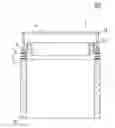
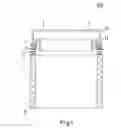
FIG. 1 shows a part of a vacuum interrupter.
DETAILED DESCRIPTION
So it is an aspect of the invention, to avoid the brazing foil, in order overcome problems with the use of thin brazing foils, to make the manufacture easier, but also much more effective.
So a solution, given by an aspect of the invention is, that on top of the Ni-layer will be placed an Ag-layer as a third layer, and then the metal part will be laid on top and being connected by brazing or tempering.
This avoids completely the use of brazing foils.
An advantage is that the separate use of brazing foils for all ceramic metal connections can be avoided. This reduces manufacture costs, by reduction of used element.
In a further embodiment, the brazing step is proceeded under a vacuum, inert or active gas (hydrogen) environment in-situ by tempering.
In a first advantageous alternative, the Ag-layer will be placed galvanically.
In a second advantageous alternative, the Ag-layer will be placed by cold gas spraying.
According to a constructional element of a switch for low-, medium- or high voltage use, the transition area consist of a layer system, with a first layer of MoMn or tungsten and a second layer of Ni and a final layer of Ag on top of the Ni-layer, which is directly connected to the metal part by brazing or tempering in situ.
A great advantage of the invention results by that the constructional element is a vacuum interrupter or device, in which the caps (12) are connected gastight to the ceramic body of the vacuum interrupter/device by the aforesaid features.
An embodiment of the invention is shown in the drawing.
FIG. 1 shows a part of a vacuum interrupter (100). The main part is a cylindrical ceramic body (10). At the edges of the cylindrical body, the edges are covered with a layer system of different metals. The ceramic body (10) is usually made of an Al2O3 (aluminum oxide) ceramic.
So the first layer (1) to deposit on the ring end surfaces of the cylindrical ceramic body is of MoMn (molybdenum manganese) alloy. The second layer (2) on top is of Ni (Nickel).
The next step is to deposit a silver (Ag) layer (3) on top of it.
Then the cap is placed on top of the upper Ag-Layer (3), and then by tempering or brazing, that means temperature proceeding at a temperature over an alloying point, resulting in an in-situ alloying process by diffusion of the metals in that region.
While the invention has been illustrated and described in detail in the drawings and foregoing description, such illustration and description are to be considered illustrative or exemplary and not restrictive. It will be understood that changes and modifications may be made by those of ordinary skill within the scope of the following claims. In particular, the present invention covers further embodiments with any combination of features from different embodiments described above and below. Additionally, statements made herein characterizing the invention refer to an embodiment of the invention and not necessarily all embodiments.
The terms used in the claims should be construed to have the broadest reasonable interpretation consistent with the foregoing description. For example, the use of the article “a” or “the” in introducing an element should not be interpreted as being exclusive of a plurality of elements. Likewise, the recitation of “or” should be interpreted as being inclusive, such that the recitation of “A or B” is not exclusive of “A and B,” unless it is clear from the context or the foregoing description that only one of A and B is intended. Further, the recitation of “at least one of A, B, and C” should be interpreted as one or more of a group of elements consisting of A, B, and C, and should not be interpreted as requiring at least one of each of the listed elements A, B, and C, regardless of whether A, B, and C are related as categories or otherwise. Moreover, the recitation of “A, B, and/or C” or “at least one of A, B, or C” should be interpreted as including any singular entity from the listed elements, e.g., A, any subset from the listed elements, e.g., A and B, or the entire list of elements A, B, and C.
Claims
1. A method of manufacturing a ceramic metallization for ceramic metal transition for the use for components of a low-, medium-, and/or high voltage device, switch or switching unit by which a ceramic body is connected to a metal part, the method comprising:
covering a ceramic body comprising a Al2O3 material at least with a first layer comprising MoMn and a second layer comprising Ni;
placing a third layer comprising Ag on top of the Ni-layer; then
laying the metal part on top of the third layer; and
connecting the metal part to one or more of the layers by brazing or tempering.
2. The method of claim 1, wherein the ceramic body mainly comprises the Al2O3 material.
3. The method of claim 1, wherein the connecting connects the metal part to the ceramic body.
4. The method of claim 1, wherein the first layer mainly comprises MoMn.
5. The method of claim 1, wherein the first layer comprises tungsten.
6. The method of claim 1, wherein the second layer mainly comprises Ni.
7. The method of claim 1, wherein the third layer mainly comprises Ag.
8. The method of claim 1, wherein the connecting comprises brazing, and the brazing is proceeded, under vacuum, in-situ by tempering.
9. The method of claim 1, wherein the connecting comprises brazing, and the brazing is proceeded, under an inert gas environment, in-situ by tempering.
10. The method of claim 1, wherein the connecting comprises brazing, and the brazing is proceeded, under an active gas environment, in-situ by tempering.
11. The method of claim 1, wherein the connecting comprises brazing, and the brazing is proceeded, under a hydrogen environment, in-situ by tempering.
12. The method of claim 1, wherein the placing of the third layer is at least partially carried out galvanically.
13. The method of claim 1, wherein the placing of the third layer is at least partially carried out by cold gas spraying.
14. A constructional element of a switch or device for low-, medium-, or high voltage use, including a ceramic metal compound element, manufactured by the the method claim 1, wherein a transition area comprising a layer system comprising a first layer comprising MoMn or tungsten, and a second layer comprising Ni, and a final layer comprising Ag on top of the second layer, which is directly connected to the metal part by brazing or tempering in situ.
15. The element of claim 14, in the form of a vacuum interrupter or device, in which caps are connected gastight to the ceramic body of the vacuum interrupter/device by the transition area.
Images & Drawings included:
Sources:
- United States Patent and Trademark Office - verify current appl. status at the USPTO↗
Recent applications in this class:
- » 20250249523 2025-08-07
METHOD FOR PRODUCING ACTIVE METAL CERAMIC SUBSTRATE - » 20250222533 2025-07-10
BONDED STRUCTURE, METHOD FOR PRODUCING SAME, CONDUCTIVE MEMBER FOR SOLDER BONDING, AND STRUCTURE FOR SOLDER BONDING - » 20250222532 2025-07-10
SOLDERING WIRES OF ELECTRODES TO TIN DOMES AND PADS IN A MULTIELECTRODE CATHETER - » 20250205797 2025-06-26
METHOD OF SOLDERING ELECTRONIC DEVICES AND METHOD OF MANUFACTURING SEMICONDUCTOR PACKAGE - » 20250083243 2025-03-13
REVERSE SOLDERING CONNECTION STRUCTURE OF MICRONEEDLE AND WIRING AND PREPARATION PROCESS THEREFOR - » 20250073799 2025-03-06
IMPROVED METHOD AND ARRANGEMENT FOR A MARTENSITE-FREE BRAZING PROCESS - » 20250050439 2025-02-13
SEMICONDUCTOR PROCESSING EQUIPMENT WITH HIGH TEMPERATURE RESISTANT NICKEL ALLOY JOINTS AND METHODS FOR MAKING SAME - » 20250010390 2025-01-09
ACTIVE METAL BRAZING SUBSTRATE MATERIAL AND METHOD FOR PRODUCING THE SAME - » 20240335896 2024-10-10
Multifunctional sintering or diffusion soldering device and pressing tool - » 20240269759 2024-08-15
Circuit board assembly soldering apparatus and circuit board assembly soldering method
Recent applications for this Assignee:
- » 20250293491 2025-09-18
Switchgear Tank - » 20250291340 2025-09-18
Generating Control Code for an Industrial Plant - » 20250291337 2025-09-18
System and a Method for Mitigating Data Drift in an Industrial Plant - » 20250291331 2025-09-18
System and Method for Anomaly Remediation in an Industrial Process - » 20250290832 2025-09-18
Fault State Detection Apparatus - » 20250290315 2025-09-18
LAYERED PANEL AND METHOD OF CONSTRUCTION THEREOF - » 20250289662 2025-09-18
Vehicle System and Vehicles Therefore - » 20250285824 2025-09-11
Tripping Mechanism - » 20250284268 2025-09-11
Automatic Control Code Generation for Industrial Assets - » 20250283943 2025-09-11
Method of Synchronization of Sensors, Computer Program Product and Computer-Readable Storage Medium