Contact securing element for bonding a contact wire and for establishing an electrical connection
US20060208038A1
2006-09-21
11/436,794
2006-05-17
✅ Patent granted
US 7,906,858 B2
2011-03-15
-
-
Victor A Mandala | Scott Stowe
2028-02-24
Abstract:
A method for establishing an electrical connection between a first contact surface and a second contact surface, with a wire-bonding tool being used to provide a contact wire between the contact surfaces by bonding the contact wire to the first contact surface and subsequently leading it to the second contact surface, bonding it to the latter, and subsequently, separating it using the wire-bonding tool. After the contact wire has been separated from the second contact surface, the wire-bonding tool is used to provide the contact point with an additional contact securing element via the contact wire.
Assignee:
- Robert Bosch GMBH 19,123 🇩🇪 Stuttgart, Germany
Interested in similar patents?
Get notified when new applications in this technology area are published.
Classification:
H01L2224/48455 » CPC further
Indexing scheme for arrangements for connecting or disconnecting semiconductor or solid-state bodies and methods related thereto as covered by; Means for bonding being attached to, or being formed on, the surface to be connected, e.g. chip-to-package, die-attach, "first-level" interconnects; Manufacturing methods related thereto; Wire connectors; Manufacturing methods related thereto; Structure, shape, material or disposition of the wire connectors after the connecting process of an individual wire connector; Connecting portions Details of wedge bonds
H01L24/85 » CPC main
Arrangements for connecting or disconnecting semiconductor or solid-state bodies; Methods or apparatus related thereto; Methods for connecting semiconductor or other solid state bodies using means for bonding being attached to, or being formed on, the surface to be connected using a wire connector
B23K20/004 » CPC further
Non-electric welding by applying impact or other pressure, with or without the application of heat, e.g. cladding or plating specially adapted for particular articles or work Wire welding
H01L24/48 » CPC further
Arrangements for connecting or disconnecting semiconductor or solid-state bodies; Methods or apparatus related thereto; Means for bonding being attached to, or being formed on, the surface to be connected, e.g. chip-to-package, die-attach, "first-level" interconnects; Manufacturing methods related thereto; Wire connectors; Manufacturing methods related thereto; Structure, shape, material or disposition of the wire connectors after the connecting process of an individual wire connector
H01R43/0207 » CPC further
Apparatus or processes specially adapted for manufacturing, assembling, maintaining, or repairing of line connectors or current collectors or for joining electric conductors for soldered or welded connections Ultrasonic-, H.F.-, cold- or impact welding
B23K2101/36 » CPC further
Articles made by soldering, welding or cutting Electric or electronic devices
H01L24/45 » CPC further
Arrangements for connecting or disconnecting semiconductor or solid-state bodies; Methods or apparatus related thereto; Means for bonding being attached to, or being formed on, the surface to be connected, e.g. chip-to-package, die-attach, "first-level" interconnects; Manufacturing methods related thereto; Wire connectors; Manufacturing methods related thereto; Structure, shape, material or disposition of the wire connectors prior to the connecting process of an individual wire connector
H01L24/78 » CPC further
Arrangements for connecting or disconnecting semiconductor or solid-state bodies; Methods or apparatus related thereto; Apparatus for manufacturing arrangements for connecting or disconnecting semiconductor or solid-state bodies Apparatus for connecting with wire connectors
H01L2224/85201 » CPC further
Indexing scheme for arrangements for connecting or disconnecting semiconductor or solid-state bodies and methods related thereto as covered by; Methods for connecting semiconductor or other solid state bodies using means for bonding being attached to, or being formed on, the surface to be connected using a wire connector; Applying energy for connecting Compression bonding
H01L2924/01005 » CPC further
Indexing scheme for arrangements or methods for connecting or disconnecting semiconductor or solid-state bodies as covered by; Chemical elements Boron [B]
H01L2924/01006 » CPC further
Indexing scheme for arrangements or methods for connecting or disconnecting semiconductor or solid-state bodies as covered by; Chemical elements Carbon [C]
H01L2924/01013 » CPC further
Indexing scheme for arrangements or methods for connecting or disconnecting semiconductor or solid-state bodies as covered by; Chemical elements Aluminum [Al]
H01L2924/01032 » CPC further
Indexing scheme for arrangements or methods for connecting or disconnecting semiconductor or solid-state bodies as covered by; Chemical elements Germanium [Ge]
H01L2924/01039 » CPC further
Indexing scheme for arrangements or methods for connecting or disconnecting semiconductor or solid-state bodies as covered by; Chemical elements Yttrium [Y]
H01L2924/01057 » CPC further
Indexing scheme for arrangements or methods for connecting or disconnecting semiconductor or solid-state bodies as covered by; Chemical elements Lanthanum [La]
H01L2924/01079 » CPC further
Indexing scheme for arrangements or methods for connecting or disconnecting semiconductor or solid-state bodies as covered by; Chemical elements Gold [Au]
Y10T29/49144 » CPC further
Metal working; Method of mechanical manufacture; Electrical device making; Conductor or circuit manufacturing; On flat or curved insulated base, e.g., printed circuit, etc.; Assembling to base an electrical component, e.g., capacitor, etc. by metal fusion
Y10T29/49149 » CPC further
Metal working; Method of mechanical manufacture; Electrical device making; Conductor or circuit manufacturing; On flat or curved insulated base, e.g., printed circuit, etc.; Assembling terminal to base by metal fusion bonding
Y10T29/49179 » CPC further
Metal working; Method of mechanical manufacture; Electrical device making; Conductor or circuit manufacturing; Assembling terminal to elongated conductor by metal fusion bonding
Y10T29/532 » CPC further
Metal working; Means to assemble or disassemble; Means to assemble electrical device Conductor
H01L2224/85986 » CPC further
Indexing scheme for arrangements for connecting or disconnecting semiconductor or solid-state bodies and methods related thereto as covered by; Methods for connecting semiconductor or other solid state bodies using means for bonding being attached to, or being formed on, the surface to be connected using a wire connector Specific sequence of steps, e.g. repetition of manufacturing steps, time sequence
H01L2224/85951 » CPC further
Indexing scheme for arrangements for connecting or disconnecting semiconductor or solid-state bodies and methods related thereto as covered by; Methods for connecting semiconductor or other solid state bodies using means for bonding being attached to, or being formed on, the surface to be connected using a wire connector; Post-treatment of the connector or wire bonding area Forming additional members, e.g. for reinforcing
H01L2224/78301 » CPC further
Indexing scheme for arrangements for connecting or disconnecting semiconductor or solid-state bodies and methods related thereto as covered by; Apparatus for manufacturing arrangements for connecting or disconnecting semiconductor or solid-state bodies and for methods related thereto; Apparatus for connecting with wire connectors; Means for applying energy, e.g. heating means by means of pressure Capillary
H01L2224/85205 » CPC further
Indexing scheme for arrangements for connecting or disconnecting semiconductor or solid-state bodies and methods related thereto as covered by; Methods for connecting semiconductor or other solid state bodies using means for bonding being attached to, or being formed on, the surface to be connected using a wire connector; Applying energy for connecting; Compression bonding Ultrasonic bonding
H01L2924/00 » CPC further
Indexing scheme for arrangements or methods for connecting or disconnecting semiconductor or solid-state bodies as covered by
H01L2924/00015 » CPC further
Indexing scheme for arrangements or methods for connecting or disconnecting semiconductor or solid-state bodies as covered by; Technical content checked by a classifier the subject-matter covered by the group, the symbol of which is combined with the symbol of this group, being disclosed as prior art
H01L2224/85399 » CPC further
Indexing scheme for arrangements for connecting or disconnecting semiconductor or solid-state bodies and methods related thereto as covered by; Methods for connecting semiconductor or other solid state bodies using means for bonding being attached to, or being formed on, the surface to be connected using a wire connector; Bonding interfaces outside the semiconductor or solid-state body Material
H01L2924/00014 » CPC further
Indexing scheme for arrangements or methods for connecting or disconnecting semiconductor or solid-state bodies as covered by; Technical content checked by a classifier the subject-matter covered by the group, the symbol of which is combined with the symbol of this group, being disclosed without further technical details
H01L2224/05599 » CPC further
Indexing scheme for arrangements for connecting or disconnecting semiconductor or solid-state bodies and methods related thereto as covered by; Means for bonding being attached to, or being formed on, the surface to be connected, e.g. chip-to-package, die-attach, "first-level" interconnects; Manufacturing methods related thereto; Bonding areas; Manufacturing methods related thereto; Structure, shape, material or disposition of the bonding areas prior to the connecting process of an individual bonding area; External layer Material
B23K31/00 IPC
Processes relevant to this subclass, specially adapted for particular articles or purposes, but not covered by only one of the preceding main groups
H01L29/41 IPC
Semiconductor devices adapted for rectifying, amplifying, oscillating or switching, or capacitors or resistors with at least one potential-jump barrier or surface barrier, e.g. PN junction depletion layer or carrier concentration layer; Details of semiconductor bodies or of electrodes thereof; Multistep manufacturing processes therefor; Electrodes ; Multistep manufacturing processes therefor characterised by their shape, relative sizes or dispositions
Description
CROSS-REFERENCE TO RELATED APPLICATIONThis application is a divisional of prior application Ser. No. 10/251,417 filed Sep. 20, 2002 which is a divisional of prior application Ser. No. 09/701,224 filed Mar. 12, 2001.
FIELD OF THE INVENTIONThe present invention relates to a method for establishing an electrical connection, features and a contact point.
BACKGROUND INFORMATIONA single-wire contacting method, called bonding, is known for establishing an electrical connection between at least two contact surfaces. In doing this, individual wires, in particular, gold or aluminum wires, are positioned between the contact surfaces to be bonded, using a wire-bonding tool. In bonding, the contact wire is bonded to the contact surfaces by applying ultrasonic pressure and heat. The free end of the bonding wire is first melted to form a ball, by applying thermal energy, and subsequently pressed onto the first contact surface, using a bonding capillary. The contact wire bonds to the contact surface as a result of atomic bonding forces (material fusion) arising at the boundary between the contact surface and the contact wire. During bonding to the first contact surface, the ball that was previously melted on is deformed into a nail head. The contact wire is then led to the second contact surface, using the wire-bonding tool. To prevent the contact wire from breaking away at the first contact point, the contact wire is formed into a loop. The contact wire is then pressed onto the second contact surface with the wire-bonding tool by again applying ultrasonic pressure and heat. This produces necking of the contact wire, causing the latter to form a rupture joint at which the contact wire breaks away from the second contact surface as the wire-bonding tool moves on. The contact wire is bonded to the second contact surface by a “stitch,” with atomic bonding forces again arising at the boundary between the contact wire and the second contact surface.
This known ball-wedge bonding method (ball bonding with the first contact surface, and stitch bonding with the second contact surface) produces a strong dependency between the materials of the contact wire and the contact surface, thus forming strong atomic bonding forces at the boundaries. Particularly when contacting the second contact surface, a relatively weak surface bonding forms between the stitch and the contact surface, resulting in contacting errors, particularly in the case of contact surfaces made of hard-to-bond materials.
SUMMARY OF THE INVENTIONThe method according to the present invention offers an advantage over the related art in that it considerably improves the contact stability of the bond between the contact wire and the second contact surface. The fact that the wire-bonding tool provides the contact point with an additional contact securing element after bonding the second contact surface increases the contact stability of the second contact point (stitch or wedge) independently of the generation of atomic bonding force between the contact wire and the second contact surface.
In one preferred embodiment of the present invention, the additional contact securing element is provided by the ball shape, applied to the contact point and subsequently deformed by the bonding tool, at the end of the contact wire that remains free after contacting the second contact surface. This makes it possible, after forming the electrical connection between the contact wire and the second contact surface, to immediately form the ball on the end of the contact wire that is now free and to position it over the contact point as an additional contact securing element. A particularly preferred feature is to deform the ball with the wire-bonding tool so that the contact point overlaps, producing at least one, preferably two, additional bonding areas between the additional contact securing element and the contact surface. The atomic bonding forces generated cause the additional bonding areas to adhere to the contact surface, forming a sort of tensile strain relief for the contact wire bonded to the second contact surface. This very reliably prevents the contact wire from breaking away from the second contact surface. The possibility of the contact wire breaking away is now determined only by the rupture strength of the contact wire itself, and no longer by the adhesion between the contact wire and the second contact surface, i.e., the contact wire itself breaks before the contact point ruptures.
According to another preferred embodiment of the present invention, the production of the additional contact securing element can be precisely reproduced through wire-bonding tool settings, in particular, by programming a corresponding controller of the wire-bonding tool. This makes it possible to create identical contact securing elements among a large number of contacts, and these identical contact securing elements can be easily tested on the basis of a predictable, reproducible result. One particularly preferred feature is that a visual, preferably automatic visual, inspection of the contact point is carried out, in which the contact securing elements that are not precisely produced, i.e., according to the specified degree of reproducibility, are reliably detected. This makes it possible to achieve a sort of zero error rate in producing bonds that result in a higher production yield.
A contact point according to the present invention advantageously ensures a high contact stability between the contact wire and contact surface. Since the contact point includes an additional contact securing element which at least partially engages over the contact wire in the area of the contact point and forms at least one additional bonding surface with the contact surface, the available overall surface is advantageously increased for contacting the contact wire with the contact surface, enabling the contact point to withstand higher mechanical stresses. Particularly when used in safety-related components, this contact point can maintain highly redundant electrical connections.
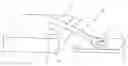
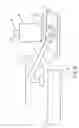
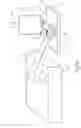
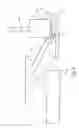
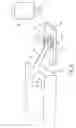
BRIEF DESCRIPTION OF THE DRAWINGSFIG. 1a shows a first schematic view of the process steps in establishing an electrical connection.
FIG. 1b shows a second schematic view of the process steps in establishing an electrical connection.
FIG. 1c shows a third schematic view of the process steps in establishing an electrical connection.
FIG. 1d shows a fourth schematic view of the process steps in establishing an electrical connection.
FIG. 1e shows a firth schematic view of the process steps in establishing an electrical connection.
FIG. 1f shows a sixth schematic view of the process steps in establishing an electrical connection.
FIG. 1g shows a seventh schematic view of the process steps in establishing an electrical connection.
FIG. 1h shows a eighth schematic view of the process steps in establishing an electrical connection.
FIG. 2 shows a first embodiment of a contact point.
FIG. 3 shows a second embodiment of a contact point.
FIG. 4 shows a third embodiment of a contact point.
FIG. 5 shows a fourth embodiment of a contact point.
FIG. 6 shows a fifth embodiment of a contact point.
DETAILED DESCRIPTIONFIG. 1a shows an electrical connection 10 between a first contact surface 12 and a second contact surface 14. Contact surface 12 is provided on a substrate 16 and contact surface 14 on a substrate 18. Electrical connection 10 is produced by bonding in the known manner (ball-wedge bonding). To do this, a wire-bonding tool (not illustrated) is used to first heat the free end of a contact wire 20, forming it into a ball 21. A capillary nozzle of the wire-bonding tool is then used to press this ball 21 onto first contact surface 12, thus producing atomic bonding forces at the boundary between what is then a plastically deformed ball 21 and contact surface 12. The wire-bonding tool is then moved toward second contact surface 14, thus forming a loop 22 in contact wire 20. Contact wire 20 is pressed with the capillary nozzle onto second contact surface 14, where it is plastically deformed, thus producing atomic bonding forces between contact wire 20 and second contact surface 14. The plastic deformation of contact wire 20 (stitch) by the capillary nozzle simultaneously creates a rupture point at which contact wire 20 breaks after the capillary nozzle is removed. The design of second contact point 24 (wedge) has a relatively small contact area between contact wire 20 and contact surface 14. As a result, contact point 24 allows contact wire 20 to pull away from contact surface 14. Enormous contact problems arise, especially if contact surface 14 is made of a hard-to-bond material.
Electrical connection 10 illustrated in FIG. 1a is produced by a known bonding method (ball-wedge method). Such electrical connections 10 are established, for example, when microhybrid components are connected to microchips.
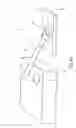
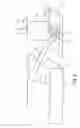
FIGS. 1b to 1h illustrate the method according to the present invention for establishing electrical connection 10, with this method being based on an electrical connection previously established according to FIG. 1a. In the following figures, identical components are always identified by the same reference numbers as in FIG. 1a and are not explained again.
FIG. 1b shows a schematic representation of a capillary nozzle 26 of a wire-bonding tool 28. Capillary nozzle 26 has a passage 30 through which contact wire 20 is fed. Suitable feed devices enable contact wire 20 to move through capillary nozzle 26. After electrical connection 10 shown in FIG. 1a has been established, contact wire 20 moves toward second contact surface 14, and its free end 32 is heated to a temperature above its melting point, using a thermal energy source. A surface tension causes the molten mass of contact wire 20 to form a ball 34. Melting a ball 34 onto end 32 takes place directly after establishing the connection between contact wire 20 and contact surface 14, as shown in FIG. 1a. As a result, it is not necessary to reposition capillary nozzle 26 in relation to contact point 24.
According to the next process step illustrated in FIG. 1c, a force and ultrasound are applied to capillary nozzle 26. This compresses ball 34, which undergoes plastic deformation. The shape of capillary nozzle 26 can influence the plastic deformation of ball 34. In the illustrated embodiment, the end of capillary nozzle 25 facing contact surface 14 has a circumferential ring-shaped ridge 36 that engages with an inner cone 38.
The plastic deformation of ball 34 follows the shape of this inner cone 38. The application of contact force F, combined with ultrasound energy, produces atomic bonding forces between ball 34 and, extending from center 40 of bonding point 24 to the wedge, causing deformed ball 34 adhere to contact point 24 during a motion away from contact surface 14, as shown in FIG. 1d.
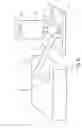
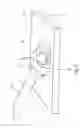
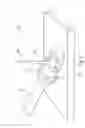
In a subsequent process step, illustrated in FIG. 1e, capillary nozzle 26 is moved laterally away from contact point 24. This movement is indicated by an arrow 40. If necessary, lateral movement 40 can be superimposed on the lifting of capillary nozzle 26 away from contact point 24 (FIG. 1d). Movement 40 is oriented so that its direction vector is more or less contrary to a longitudinal extension of contact wire 20 laid in loop 22. Direction of movement 40 is maintained until a vertex 44 of ring-shaped ridge 26 of capillary nozzle 26 has passed 10 an imaginary perpendicular running through deformed ball 34 (perpendicular that is parallel to the axis of capillary nozzle 26). As shown in FIG. 1f, capillary nozzle 26 is moved in the direction of contact surface 14 so that ring-shaped ridge 36 strikes plastically deformed ball 34. Depending on contact force F′ applied, and under the influence of ultrasound, ball 34 undergoes a further plastic deformation, due to the outer lateral surface of ring-shaped ridge 36. Ball 34 undergoes a segment-like deformation. Ball 34 continues to change shape until segment 34′ projects laterally over contact wire 20 already bonded to contact surface 14 and comes into physical contact with contact surface 14 in additional bonding areas 48. This type of deformation generates atomic bonding forces between segment 34′ formed and contact surface 14, causes the segment to permanently adhere to the surface. After capillary nozzle 26 moves away, segment 34 spans contact wire 20 in the area of contact point 24 and holds the latter in place like a strap, as shown in FIG. 1g. Segment 34 provides a kind of tensile strain relief function to secure contact point 24 for contact wire 20. The remaining wire that broke away when capillary nozzle 26 was removed is visible in center 40 of contact point 24 in the form of a pointed elevation 50. The latter forms an additional positive-lock joint with contact wire 20 in the area of contact point 24.
FIG. 1h shows an enlarged representation of contact point 24 after electrical connection 10 has been established with additional contact securing provided by segment 34′. It is clear that segment 34′ has certain shape characteristics that are derived from the size of ball 34 (FIG. 1b), the size and type of bonding parameters (FIG. 1f), and the shape of ring-shaped ridge 36 of capillary nozzle 26. Because the shape of capillary nozzle 26, the magnitude of bonding forces, and the size of ball 34 are known or can be set, segments 34′ can be achieved in reproducible shapes. After contact point 24 has been produced, segment 34′ can be measured by an optical monitoring unit (not illustrated). Comparing the measured shape of segment 34′ to a previously stored shape makes it possible to draw conclusions about the quality of contact point 24. If the shape of segment 34′ matches the expected shape, a perfect, i.e., contact-secure and additionally secured contact point 24 can be assumed, making it possible to produce contact point 24 with zero errors. Fault-free usage values can thus be predicted, particularly when using electrical connections on microchips in safety/security systems.
The present invention is, of course, not limited to the embodiment illustrated in FIG. 1. In particular, different shapes can be selected for segment 34′. FIGS. 2 through 6 show different embodiments of segment 34′. The shape of segment 34′ can be selected, for example, by choosing a different shape for capillary nozzle 26 and varying the placement of capillary nozzle 26 when shaping ball 34 into segment 34′. In addition, the design of segment 34, and the way it bonds to contact surface 14, can be influenced by setting general bonding parameters, such as force F or the frequency and intensity of the ultrasound energy. According to further exemplary embodiments, it is possible, in particular, to provide a more shallow depression between tip 50 and segment 34′. This means that the transition between segment 34′ and point 50 occurs through a relatively shallow depression, thereby improving the positive-lock joint between contact wire 20 and segment 34′ or contact point 24 in the example.
By way of example, FIG. 2 shows a segment 34′ that is designed in the shape of a ridge. In contrast to this, segment 34′ in FIG. 3 has a flatter design and merges with the material of tip 50. According to the embodiment illustrated in FIG. 4, segment 34′ has an even flatter design, so that it is almost shaped like a disk and also merges with the material of tip 50. FIG. 5 shows a further embodiment, in which segment 34′ is shaped like a shallow basin, with segment 34′ again merging with the material of tip 50. Finally, FIG. 6 shows an embodiment of segment 34′ in which segment 34′ is designed as a largely flat disk that has a ridge-shaped bulge in the direction of contact wire 20. Tip 50, in this case, is formed from the material of segment 34′ by deforming ball 34 accordingly. This can be achieved by a suitable design of capillary nozzle 26 and placement of capillary nozzle 26 while forming the ball into segment 34′.
It is also possible to modulate segment 34′ as a largely rectangular object having a defined elongation in the x-direction, y-direction, and z-direction by setting the bonding parameters and/or placement parameters of capillary nozzle 26 while shaping segment 34′. Parameters that can be set while shaping ball 34 into “rectangular” segment 34′ make it possible to set precisely reproducible dimensions in the x-, y-, and z-directions. A subsequent visual, in particular automatic visual, inspection of contact point 24 can be used to easily and effectively check contact point 24 for freedom from errors.
Claims
1-14. (canceled)
15. A contact point for bonding a contact wire to a contact surface, with the contact wire merging with a material of the contact surface, comprising:
an additional contact securing element that at least partially engages over the contact wire in an area of the contact point and forms at least one additional bonding area with the contact surface.
16. The contact point as recited in claim 15, wherein:
the additional contact securing element includes a segment that engages with a stitch of the contact wire at the contact point and is positioned on one side of a center of the contact point in a direction of a loop of the contact wire.
17. The contact point as recited in claim 16, wherein:
the segment engages with both sides of the contact wire to form the at least one bonding area with the contact surface.
18. The contact point as recited in claim 16, wherein:
the segment has a rectangular shape with dimensions in the x-, y-, and z-directions that can be reproducibly set using a wire-bonding tool.
Images & Drawings included:


Sources:
- United States Patent and Trademark Office - verify current appl. status at the USPTO↗
Recent applications in this class:
- » 20250266392 2025-08-21
Semiconductor packaging method and semiconductor packaging structure - » 20250239567 2025-07-24
METHODS OF FORMING WIRE INTERCONNECT STRUCTURES AND RELATED WIRE BONDING TOOLS - » 20250201765 2025-06-19
METHODS OF OPERATING WIRE BONDING SYSTEMS, INCLUDING METHODS OF DETECTING AND/OR PREVENTING WIRE FLY-OUT ON SUCH SYSTEMS - » 20250192098 2025-06-12
SEMICONDUCTOR APPARATUS AND METHOD FOR MANUFACTURING THE SAME, AND POWER CONVERSION APPARATUS - » 20250149502 2025-05-08
CAPILLARY FOR A WIRE BONDING MACHINE HAVING A DYNAMICALLY ADJUSTABLE CHAMFER DIAMETER - » 20250140740 2025-05-01
METHOD OF MANUFACTURING SEMICONDUCTOR DEVICE - » 20250140739 2025-05-01
LASER ENHANCED WIRE BONDING FOR SEMICONDUCTOR DEVICE PACKAGES - » 20250125305 2025-04-17
METHOD OF MANUFACTURING SEMICONDUCTOR DEVICE WITH FIXING FEATURE ON WHICH BONDING WIRE IS DISPOSED - » 20250118705 2025-04-10
PACKAGE-ON-PACKAGE ASSEMBLY WITH WIRE BOND VIAS - » 20250118704 2025-04-10
APPARATUS AND METHODS FOR TOOL MARK FREE STITCH BONDING
Recent applications for this Assignee:
- » 20250154889 2025-05-15
PRESSURE CONTROL IN AN EXHAUST AFTERTREATMENT SYSTEM - » 20250154580 2025-05-15
ENZYME TRANSLOCATORS IN NANOGAP WITH 3' -ESTERS - » 20250147582 2025-05-08
METHOD FOR DETERMINING AN EYE DISTANCE IN A PAIR OF DATA GLASSES, AND DATA GLASSES - » 20250146568 2025-05-08
DRIVE ASSEMBLY AND VEHICLE HAVING SUCH A DRIVE ASSEMBLY - » 20250146495 2025-05-08
Flexible Pump Assembly for Use in a Fan Drive - » 20250140882 2025-05-01
FUEL CELL SYSTEM HAVING ENERGY RECUPERATION - » 20250137810 2025-05-01
METHOD FOR MATCHING A DIGITAL ROAD MAP - » 20250137033 2025-05-01
DNA UNFOLDING USING A FREE-END TAG FLOW MODIFIER - » 20250119751 2025-04-10
A BLUETOOTH COMMUNICATION METHOD AND SYSTEM - » 20250118116 2025-04-10
Diagnostic Protocol Search With Improved Efficiency