METAL LAYER FORMATION METHOD FOR DIODE CHIPS/WAFERS
US20070116864A1
2007-05-24
11/534,214
2006-09-21
Abstract:
An electroless plated metal layer formation method for forming a metal layer on a diode chip/wafer for wire bonding is disclosed to include the step of forming a metal base material on a diode chip/wafer adapted for inducing a reduction system to cause a catalytic reaction at location(s) where the desired metal layer is to be formed, and the step of employing an electroless plating process to form a metal layer on the diode chip/wafer that surrounds the metal base material. An isolation layer may be formed on the metal base layer and opening(s) may be formed on the isolation layer before deposition of the metal layer.
Assignee:
- YAKI INDUSTRIES CO., LTD. 1 🇹🇼 Hsinchuang City, Taiwan
Interested in similar patents?
Get notified when new applications in this technology area are published.
Classification:
C23C18/1605 » CPC main
Chemical coating by decomposition of either liquid compounds or solutions of the coating forming compounds, without leaving reaction products of surface material in the coating; Contact plating by reduction or substitution, e.g. electroless plating; Process or apparatus coating on selected surface areas by masking
C23C18/165 » CPC further
Chemical coating by decomposition of either liquid compounds or solutions of the coating forming compounds, without leaving reaction products of surface material in the coating; Contact plating by reduction or substitution, e.g. electroless plating; Process or apparatus; Process of electroless plating; Characteristics of the product obtained Multilayered product
C23C18/1651 » CPC further
Chemical coating by decomposition of either liquid compounds or solutions of the coating forming compounds, without leaving reaction products of surface material in the coating; Contact plating by reduction or substitution, e.g. electroless plating; Process or apparatus; Process of electroless plating; Characteristics of the product obtained; Multilayered product Two or more layers only obtained by electroless plating
C23C18/1653 » CPC further
Chemical coating by decomposition of either liquid compounds or solutions of the coating forming compounds, without leaving reaction products of surface material in the coating; Contact plating by reduction or substitution, e.g. electroless plating; Process or apparatus; Process of electroless plating; Characteristics of the product obtained; Multilayered product Two or more layers with at least one layer obtained by electroless plating and one layer obtained by electroplating
C23C18/31 » CPC further
Chemical coating by decomposition of either liquid compounds or solutions of the coating forming compounds, without leaving reaction products of surface material in the coating; Contact plating by reduction or substitution, e.g. electroless plating Coating with metals
C23C18/42 » CPC further
Chemical coating by decomposition of either liquid compounds or solutions of the coating forming compounds, without leaving reaction products of surface material in the coating; Contact plating by reduction or substitution, e.g. electroless plating; Coating with metals Coating with noble metals
H01L24/05 » CPC further
Arrangements for connecting or disconnecting semiconductor or solid-state bodies; Methods or apparatus related thereto; Means for bonding being attached to, or being formed on, the surface to be connected, e.g. chip-to-package, die-attach, "first-level" interconnects; Manufacturing methods related thereto; Bonding areas ; Manufacturing methods related thereto; Structure, shape, material or disposition of the bonding areas prior to the connecting process of an individual bonding area
H01L24/06 » CPC further
Arrangements for connecting or disconnecting semiconductor or solid-state bodies; Methods or apparatus related thereto; Means for bonding being attached to, or being formed on, the surface to be connected, e.g. chip-to-package, die-attach, "first-level" interconnects; Manufacturing methods related thereto; Bonding areas ; Manufacturing methods related thereto; Structure, shape, material or disposition of the bonding areas prior to the connecting process of a plurality of bonding areas
H01L24/11 » CPC further
Arrangements for connecting or disconnecting semiconductor or solid-state bodies; Methods or apparatus related thereto; Means for bonding being attached to, or being formed on, the surface to be connected, e.g. chip-to-package, die-attach, "first-level" interconnects; Manufacturing methods related thereto; Bump connectors ; Manufacturing methods related thereto Manufacturing methods
H01L24/45 » CPC further
Arrangements for connecting or disconnecting semiconductor or solid-state bodies; Methods or apparatus related thereto; Means for bonding being attached to, or being formed on, the surface to be connected, e.g. chip-to-package, die-attach, "first-level" interconnects; Manufacturing methods related thereto; Wire connectors; Manufacturing methods related thereto; Structure, shape, material or disposition of the wire connectors prior to the connecting process of an individual wire connector
H01L24/48 » CPC further
Arrangements for connecting or disconnecting semiconductor or solid-state bodies; Methods or apparatus related thereto; Means for bonding being attached to, or being formed on, the surface to be connected, e.g. chip-to-package, die-attach, "first-level" interconnects; Manufacturing methods related thereto; Wire connectors; Manufacturing methods related thereto; Structure, shape, material or disposition of the wire connectors after the connecting process of an individual wire connector
H01L24/49 » CPC further
Arrangements for connecting or disconnecting semiconductor or solid-state bodies; Methods or apparatus related thereto; Means for bonding being attached to, or being formed on, the surface to be connected, e.g. chip-to-package, die-attach, "first-level" interconnects; Manufacturing methods related thereto; Wire connectors; Manufacturing methods related thereto; Structure, shape, material or disposition of the wire connectors after the connecting process of a plurality of wire connectors
H01L24/83 » CPC further
Arrangements for connecting or disconnecting semiconductor or solid-state bodies; Methods or apparatus related thereto; Methods for connecting semiconductor or other solid state bodies using means for bonding being attached to, or being formed on, the surface to be connected using a layer connector
H01L24/85 » CPC further
Arrangements for connecting or disconnecting semiconductor or solid-state bodies; Methods or apparatus related thereto; Methods for connecting semiconductor or other solid state bodies using means for bonding being attached to, or being formed on, the surface to be connected using a wire connector
H01L2224/0401 » CPC further
Indexing scheme for arrangements for connecting or disconnecting semiconductor or solid-state bodies and methods related thereto as covered by; Means for bonding being attached to, or being formed on, the surface to be connected, e.g. chip-to-package, die-attach, "first-level" interconnects; Manufacturing methods related thereto; Bonding areas; Manufacturing methods related thereto; Structure, shape, material or disposition of the bonding areas prior to the connecting process Bonding areas specifically adapted for bump connectors, e.g. under bump metallisation [UBM]
H01L2224/04073 » CPC further
Indexing scheme for arrangements for connecting or disconnecting semiconductor or solid-state bodies and methods related thereto as covered by; Means for bonding being attached to, or being formed on, the surface to be connected, e.g. chip-to-package, die-attach, "first-level" interconnects; Manufacturing methods related thereto; Bonding areas; Manufacturing methods related thereto; Structure, shape, material or disposition of the bonding areas prior to the connecting process Bonding areas specifically adapted for connectors of different types
H01L2224/05073 » CPC further
Indexing scheme for arrangements for connecting or disconnecting semiconductor or solid-state bodies and methods related thereto as covered by; Means for bonding being attached to, or being formed on, the surface to be connected, e.g. chip-to-package, die-attach, "first-level" interconnects; Manufacturing methods related thereto; Bonding areas; Manufacturing methods related thereto; Structure, shape, material or disposition of the bonding areas prior to the connecting process of an individual bonding area; Internal layers Single internal layer
H01L2224/1147 » CPC further
Indexing scheme for arrangements for connecting or disconnecting semiconductor or solid-state bodies and methods related thereto as covered by; Means for bonding being attached to, or being formed on, the surface to be connected, e.g. chip-to-package, die-attach, "first-level" interconnects; Manufacturing methods related thereto; Bump connectors; Manufacturing methods related thereto; Manufacturing methods using a lift-off mask
H01L2224/13099 » CPC further
Indexing scheme for arrangements for connecting or disconnecting semiconductor or solid-state bodies and methods related thereto as covered by; Means for bonding being attached to, or being formed on, the surface to be connected, e.g. chip-to-package, die-attach, "first-level" interconnects; Manufacturing methods related thereto; Bump connectors; Manufacturing methods related thereto; Structure, shape, material or disposition of the bump connectors prior to the connecting process of an individual bump connector; Core members of the bump connector Material
H01L2224/2518 » CPC further
Indexing scheme for arrangements for connecting or disconnecting semiconductor or solid-state bodies and methods related thereto as covered by; Means for bonding being attached to, or being formed on, the surface to be connected, e.g. chip-to-package, die-attach, "first-level" interconnects; Manufacturing methods related thereto; High density interconnect [HDI] connectors; Manufacturing methods related thereto; Structure, shape, material or disposition of the high density interconnect connectors after the connecting process of a plurality of high density interconnect connectors; Disposition being disposed on at least two different sides of the body, e.g. dual array
H01L2224/83801 » CPC further
Indexing scheme for arrangements for connecting or disconnecting semiconductor or solid-state bodies and methods related thereto as covered by; Methods for connecting semiconductor or other solid state bodies using means for bonding being attached to, or being formed on, the surface to be connected using a layer connector; Bonding techniques Soldering or alloying
H01L2224/85 » CPC further
Indexing scheme for arrangements for connecting or disconnecting semiconductor or solid-state bodies and methods related thereto as covered by; Methods for connecting semiconductor or other solid state bodies using means for bonding being attached to, or being formed on, the surface to be connected using a wire connector
H01L2924/01004 » CPC further
Indexing scheme for arrangements or methods for connecting or disconnecting semiconductor or solid-state bodies as covered by; Chemical elements Beryllium [Be]
H01L2924/01005 » CPC further
Indexing scheme for arrangements or methods for connecting or disconnecting semiconductor or solid-state bodies as covered by; Chemical elements Boron [B]
H01L2924/01006 » CPC further
Indexing scheme for arrangements or methods for connecting or disconnecting semiconductor or solid-state bodies as covered by; Chemical elements Carbon [C]
H01L2924/01014 » CPC further
Indexing scheme for arrangements or methods for connecting or disconnecting semiconductor or solid-state bodies as covered by; Chemical elements Silicon [Si]
H01L2924/01024 » CPC further
Indexing scheme for arrangements or methods for connecting or disconnecting semiconductor or solid-state bodies as covered by; Chemical elements Chromium [Cr]
H01L2924/01028 » CPC further
Indexing scheme for arrangements or methods for connecting or disconnecting semiconductor or solid-state bodies as covered by; Chemical elements Nickel [Ni]
H01L2924/01029 » CPC further
Indexing scheme for arrangements or methods for connecting or disconnecting semiconductor or solid-state bodies as covered by; Chemical elements Copper [Cu]
H01L2924/0103 » CPC further
Indexing scheme for arrangements or methods for connecting or disconnecting semiconductor or solid-state bodies as covered by; Chemical elements Zinc [Zn]
H01L2924/01033 » CPC further
Indexing scheme for arrangements or methods for connecting or disconnecting semiconductor or solid-state bodies as covered by; Chemical elements Arsenic [As]
H01L2924/01046 » CPC further
Indexing scheme for arrangements or methods for connecting or disconnecting semiconductor or solid-state bodies as covered by; Chemical elements Palladium [Pd]
H01L2924/01047 » CPC further
Indexing scheme for arrangements or methods for connecting or disconnecting semiconductor or solid-state bodies as covered by; Chemical elements Silver [Ag]
H01L2924/0105 » CPC further
Indexing scheme for arrangements or methods for connecting or disconnecting semiconductor or solid-state bodies as covered by; Chemical elements Tin [Sn]
H01L2924/01078 » CPC further
Indexing scheme for arrangements or methods for connecting or disconnecting semiconductor or solid-state bodies as covered by; Chemical elements Platinum [Pt]
H01L2924/01079 » CPC further
Indexing scheme for arrangements or methods for connecting or disconnecting semiconductor or solid-state bodies as covered by; Chemical elements Gold [Au]
H01L2924/014 » CPC further
Indexing scheme for arrangements or methods for connecting or disconnecting semiconductor or solid-state bodies as covered by; Alloys Solder alloys
H01L2224/04042 » CPC further
Indexing scheme for arrangements for connecting or disconnecting semiconductor or solid-state bodies and methods related thereto as covered by; Means for bonding being attached to, or being formed on, the surface to be connected, e.g. chip-to-package, die-attach, "first-level" interconnects; Manufacturing methods related thereto; Bonding areas; Manufacturing methods related thereto; Structure, shape, material or disposition of the bonding areas prior to the connecting process Bonding areas specifically adapted for wire connectors, e.g. wirebond pads
H01L2924/00 » CPC further
Indexing scheme for arrangements or methods for connecting or disconnecting semiconductor or solid-state bodies as covered by
H01L2924/00014 » CPC further
Indexing scheme for arrangements or methods for connecting or disconnecting semiconductor or solid-state bodies as covered by; Technical content checked by a classifier the subject-matter covered by the group, the symbol of which is combined with the symbol of this group, being disclosed without further technical details
B05D5/12 IPC
Processes for applying liquids or other fluent materials to surfaces to obtain special surface effects, finishes or structures to obtain a coating with specific electrical properties
B05D3/04 IPC
Pretreatment of surfaces to which liquids or other fluent materials are to be applied; After-treatment of applied coatings, e.g. intermediate treating of an applied coating preparatory to subsequent applications of liquids or other fluent materials by exposure to gases
B05D1/18 IPC
Processes for applying liquids or other fluent materials performed by dipping
Description
This application claims the priority benefit of Taiwan patent application number 094140951 filed on Nov. 22, 2005.
BACKGROUND OF THE INVENTION1. Field of the Invention
The present invention relates to a method of forming a metal layer in a diode structure and more particularly, to an electroless plated metal layer formation method for diode chips/wafers.
2. Description of the Related Art
In light emitting diodes and laser diodes, light is a form of energy that can be released by an atom. It is made up of many photons that are the most basic units of light. Photons are released as a result of moving electrons. In an atom, electrons move in orbitals around the nucleus. Light emitting diodes and laser diodes are found in all kinds of devices in our daily life for the advantages of small size, long life, low driving voltage, low power consumption, and fast reactive speed.
According to conventional manufacturing technology, vapor deposition and sputtering deposition are commonly employed to the fabrication of light emitting diodes and laser diodes. These deposition methods cause deposition of the applied metal target material on the workpiece as well as the inside surface of the peripheral wall of the vacuum chamber, i.e., these deposition methods result in waste of the metal target material and contamination of the vacuum chamber, thereby affecting the quality of the deposited metal layer. In case the so-called double-sided treatment is necessary, the vacuum status of the vacuum chamber must be destroyed and then the wafer must be turned upside down for further deposition, prolonging the manufacturing time.
Therefore, it is desirable to provide an electroless plated metal layer formation method for diode chips/wafers that eliminates the aforesaid drawbacks.
SUMMARY OF THE INVENTIONThe present invention has been accomplished under the circumstances in view. It is one object of the present invention to provide an electroless plated metal layer formation method, which is practical to form a uniform metal layer on each of two opposite sides of a diode chip or wafer, thereby shortening the manufacturing process and significantly lowering the manufacturing cost.
It is another object of the present invention to provide an electroless plated metal layer formation method, which employs an electroless plating process to selectively form a metal layer on or around the metal base material instead of whole surface vapor or sputtering deposition, thereby saving consumption of metal material and electric power and lowering operating and manufacturing cost.
It is still another object of the present invention to provide an electroless plated metal layer formation method, which requires an expense on equipment much lower than vapor deposition or sputtering deposition, thereby saving equipment investment and lower the manufacturing cost.
It is still another object of the present invention to provide an electroless plated metal layer formation method, which is practical to form a metal layer that has a rough surface suitable for wiring bonding or soldering, thereby improving the reliability of the product quality and enhancing the market competivity of the product.
It is still another object of the present invention to provide an electroless plated metal layer formation method, which is practical to form a metal layer suitable for forming metal bumps, metal pads, metal wires or heat plate, or for the purposes of wire bonding, soldering, or flip-chip package.
To achieve these and other objects of the present invention, the electroless plated metal layer formation method includes the steps of: (a): providing a diode chip/wafer; (b): forming on the diode chip/wafer at least one predetermined location a patterned metal base material; and (c): employing an electroless metal reduction wet process to form a metal layer on the diode chip/wafer that surrounds the border of the patterned metal base material on the diode chip/wafer at each of the at least one predetermined location.
According to an alternate form of the present invention, the electroless metal layer formation method includes the steps of: (a): providing a diode chip/wafer; (b): forming on the diode chip/wafer at predetermined locations a patterned metal base material; (c): forming on the diode chip/wafer an isolation layer over the patterned metal base material; (d): forming openings on the isolation layer subject to a predetermined pattern to have the patterned metal base material be exposed to the outside; and (e): employing an electroless plating process to deposit a metal layer on the patterned metal base material corresponding to the openings.
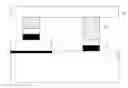
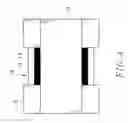
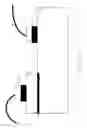
BRIEF DESCRIPTION OF THE DRAWINGSFIG. 1 is a schematic drawing of a finished product obtained according to one embodiment of the present invention.
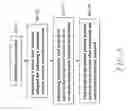
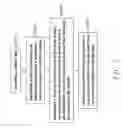
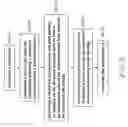
FIG. 2 is a flow chart showing the fabrication of the finished product shown in FIG. 1.
FIG. 3 is a schematic drawing of a finished product obtained according to another embodiment of the present invention.
FIG. 4 is a schematic drawing of a finished product obtained according to still another embodiment of the present invention.
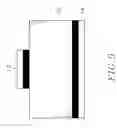
FIG. 5 is a flow chart showing the fabrication of the finished product shown in FIG. 4.
FIG. 6 is a schematic drawing of a finished product obtained according to still another embodiment of the present invention.
FIG. 7 is a schematic drawing of a finished product obtained according to still another embodiment of the present invention.
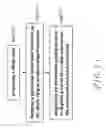
FIG. 8 is a flow chart showing the fabrication of the finished product shown in FIG. 7.
FIG. 9 is a schematic drawing of a finished product obtained according to still another embodiment of the present invention.
FIG. 10 is a schematic drawing of a finished product obtained according to still another embodiment of the present invention.
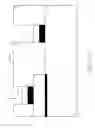
FIG. 11 is a flow chart showing the fabrication of the finished product shown in FIG. 10.
FIG. 12 is a schematic drawing of a finished product obtained according to still another embodiment of the present invention.
FIG. 13 is a flow chart showing the fabrication of the finished product shown in FIG. 12.
FIG. 14 is a schematic drawing of a finished product obtained according to still another embodiment of the present invention.
FIG. 15 is a schematic drawing of a finished product obtained according to still another embodiment of the present invention.
FIG. 16 is a schematic drawing of a finished product according to still another embodiment of the present invention.
FIG. 17 is a schematic drawing of a finished product obtained according to still another embodiment of the present invention.
DETAILED DESCRIPTION OF THE PREFERRED EMBODIMENTThe invention relates to an electroless plated metal layer formation method for diode chips/wafers. The metal layer indicated herein can be metal bumps, metal pads, or a heat plate for wire bonding, solder bonding, conducting, flip-chip package, and many other purposes. Any products using the electroless plated metal layer formation method for diode chips/wafers should be included in the scope of the present invention.
First of all, the invention uses an electroless plating process to match with a metal base material for inducing a reduction system to cause a catalytic reaction, thereby forming a uniform metal layer having the desired thickness. A metal layer made according to the present invention can be thicker than 0.1 um. The material for the metal layer can be gold, nickel, copper, platinum, palladium, zinc, tin, silver or chrome, or their bimetal. The material for the metal base layer can also be gold, nickel, copper, platinum, palladium, zinc, tin, silver or chrome, or their bimetal. The metal base material can be formed by means of vapor deposition, electroplating, sputtering deposition, or electroless plating. In case gold is used for the metal layer, the electroless plating process is employed with a reacting solution containing a metal salt obtained from gold cyanide, sulfite gold, or gold trichloride.
The metal layer formed by means of the application of an electroless plating process according to the present invention may surround the metal base material. When wishing to limit the metal layer to specific locations on the metal base layer, an isolation layer is formed by means of the application of an dielectric material such as SiO2, photoresist, or PI, and then openings are formed on the isolation layer subject to the desired locations, and then an electroless plating process is employed to deposit the desired metal layer on the metal base layer in the openings of the isolation layer. After formation of the metal layer, the isolation layer is removed.
Referring to FIGS. 1 and 2, an electroless plated metal layer formation method for diode chips/wafers in accordance with a first embodiment of the present invention includes the steps of:
S1: providing a diode chip 10;
S2: forming on one each of two opposite sides of the diode chip 10 a metal base material adapted for inducing a reduction system to cause a catalytic reaction;
S3: employing lithography and etching to pattern the metal base material on each of the two opposite sides of the diode chip, so as to obtain a patterned metal base material 12; and
S4: employing an electroless plating process to form a metal layer 14 that surrounds the border of the patterned metal base material 12 on each of the two opposite sides of the diode chip.
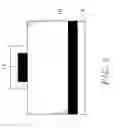
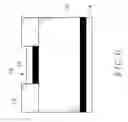
FIG. 3 is a schematic drawing of a finished product obtained according to a second embodiment of the present invention. This second embodiment is substantially similar to the aforesaid first embodiment with the exception that this second embodiment has only patterned the metal base material 12 on one side of the diode chip.
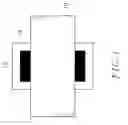
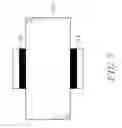
FIG. 4 is a schematic drawing of a finished product obtained according to a third embodiment of the present invention. FIG. 5 is a flow chart of the third embodiment shown in FIG. 4. According to this third embodiment, the electroless plated metal layer formation method includes the steps of:
S5: providing a diode chip 10;
S6: forming on one each of two opposite sides of the diode chip 10 a patterned metal base material 12 adapted for inducing a reduction system to cause a catalytic reaction;
S7: depositing on the patterned metal base material 12 on each of the two opposite sides of the diode chip 10 an isolation layer 16 by means of the application of an dielectric material such as SiO2, photoresist, or PI, and then making an opening 18 on the isolation layer 16 on the patterned metal base material 12 on each of the two opposite sides of the diode chip 10 to have a predetermined area of the patterned metal base material 12 be exposed to the outside; and
S8: employing an electroless plating process to form a metal layer 14 on the exposed predetermined area of the patterned metal base material 12 in the associating opening 18 on each of the two opposite sides of the diode chip.
FIG. 6 is a schematic drawing of a finished product obtained according to a fourth embodiment of the present invention. This fourth embodiment is substantially similar to the aforesaid third embodiment with the exception that this fifth embodiment only deposits an isolation layer 16 on the patterned metal base material 12 on one side of the diode chip 10.
FIG. 7 is a schematic drawing of a finished product obtained according to a fifth embodiment of the present invention. FIG. 8 is a flow chart of the fifth embodiment of the present invention. This fifth embodiment includes the steps of:
S5: providing a diode chip 10;
S6: forming on one each of two opposite sides of the diode chip 10 a patterned metal base material 12 adapted for inducing a reduction system to cause a catalytic reaction;
S7: depositing on the patterned metal base material 12 on each of the two opposite sides of the diode chip 10 an isolation layer 16 by means of the application of an dielectric material such as SiO2, photoresist, or PI, and then making an opening 18 on the isolation layer 16 on the patterned metal base material 12 on each of the two opposite sides of the diode chip 10 to have a predetermined area of the patterned metal base material 12 be exposed to the outside;
S8: employing an electroless plating process to form a metal layer 14 on the exposed predetermined area of the patterned metal base material 12 in the associating opening 18 on each of the two opposite sides of the diode chip; and
S9: removing the isolation layer 16 from each of the two opposite sides of the diode chip.
FIG. 9 is a schematic drawing of a finished product obtained according to a sixth embodiment of the present invention, which is a structure obtained after removal of the isolation layer 16 from the aforesaid fourth embodiment shown in FIG. 6.
FIG. 10 is a schematic drawing of a finished product obtained according to a finished product obtained according to a seventh embodiment of the present invention. FIG. 11 is a flow chart of the seventh embodiment shown in FIG. 10. According to this seventh embodiment, the electroless plated metal layer formation method includes the steps of:
S10: preparing a diode chip 10 having electrodes arranged on the same side at different elevations;
S11: forming a patterned metal base material 12 on the diode chip 10 at predetermined locations;
S12: employing an electroless plating process to form a metal layer 14 that surrounds the border of the patterned metal base material 12 at each of the predetermined locations on the diode chip 10.
FIG. 12 is a schematic drawing of a finished product obtained according to an eighth embodiment of the present invention. This embodiment employs to a diode chip having electrodes arranged on the same side at different elevations the concept of using an isolation layer to limit the deposition location of the metal layer on the metal base material as see in the aforesaid third embodiment of the present invention. FIG. 11 is a flow chart of the seventh embodiment shown in FIG. 10. According to this eighth embodiment, the electroless plated metal layer formation method includes the steps of:
S13: preparing a diode chip 10 having electrodes arranged on the same side at different elevations;
S14: forming a patterned metal base material 12 on the diode chip 10 at predetermined locations;
S15: depositing on the patterned metal base material 12 on the diode chip 10 an isolation layer 16 by means of the application of an dielectric material such as SiO2, photoresist, or PI, and then making an opening 18 on the isolation layer 16 to have a predetermined area of the patterned metal base material 12 be exposed to the outside; and
S16: employing an electroless plating process to form a metal layer 14 on the exposed predetermined area of the patterned metal base material 12 corresponding to the opening 18.
FIG. 14 is a schematic drawing of a finished product obtained according to a ninth embodiment of the present invention. This embodiment is obtained from the structure of the aforesaid eighth embodiment by removing the isolation layer 16 after formation of the metal layer 14. Thereafter, metal wires 22 may be bonded to the metal layer 14 as shown in FIG. 15. Alternatively, a bonding layer 24 may be formed on the metal layer 14 for the bonding of a carrier plate 26 as shown in FIG. 16.
FIG. 17 is a schematic drawing of a finished product obtained according to a tenth embodiment of the present invention. This embodiment has a diode chip that has a metal layer formed by means of the application of an electroless plating process according to the present invention be mounted with a chip or carrier plate and bonded with metal wires. The exemplar shown in FIG. 17 is based on the sixth embodiment of the present invention. As illustrated, one metal layer 14 at one side of the finished product of the aforesaid sixth embodiment of the present invention is bonded to a chip or carrier plate 26 with a bonding layer 24, and a metal wire 22 is bonded to the other metal layer 14.
As indicated above, the invention provides an electroless plated metal layer formation method for diode chips/wafers. The invention sues an electroless plating process to match with a metal base material for inducing a reduction system (reacting solution added with a metal substance) to cause a catalytic reaction, thereby forming a uniform metal layer having the desired thickness. This method is practical to deposit a metal layer on one or both sides of the diode chip/wafer, eliminating the step of turning the diode/chip/wafer to the other side as used in the prior art methods. The manufacturing process of the present invention is practical to form a metal layer of high uniformity. The operation of the present invention is easy, therefore the invention greatly shortens the manufacturing time, and lowers the manufacturing cost. A metal layer made according to the present invention has a surface rougher than a metal layer made by vapor deposition or sputtering deposition, and is practical for wire bonding or soldering, thereby improving the reliability of the product quality and enhancing the market competivity of the product.
A prototype of electroless plated metal layer formation method for diode chips/wafers has been constructed with the features of FIGS. 1˜17. The electroless plated metal layer formation method for diode chips/wafers functions smoothly to provide all of the features disclosed earlier.
Although particular embodiment of the invention have been described in detail for purposes of illustration, various modifications and enhancements may be made without departing from the spirit and scope of the invention. Accordingly, the invention is not to be limited except as by the appended claims.
Claims
What the invention claimed is:1. An electroless plated metal layer formation method comprising the steps of:
(a): providing a diode chip/wafer;
(b): forming on said diode chip/wafer at predetermined locations a patterned metal base material;
(c): forming on said diode chip/wafer an isolation layer over said patterned metal base material;
(d): forming openings on said isolation layer subject to a predetermined pattern to have said patterned metal base material be exposed to the outside; and
(e): employing an electroless plating process to deposit a metal layer on said patterned metal base material corresponding to said openings.
2. The electroless plated metal layer formation method as claimed in claim 1, further comprising the step of removing said isolation layer after deposition of said metal layer.
3. The electroless plated metal layer formation method as claimed in claim 1, wherein said metal base material is obtained from one of the metal materials including gold, nickel, copper, platinum, palladium, zinc, tin, silver, and chrome.
4. The electroless plated metal layer formation method as claimed in claim 1, wherein said metal layer is obtained from one of the metal materials including gold, nickel, copper, platinum, palladium, zinc, tin, silver, and chrome.
5. The electroless plated metal layer formation method as claimed in claim 1, wherein said metal base material is formed by means of the application of one of the methods including vapor deposition, electroplating, sputtering deposition, and electroless plating.
6. The electroless plated metal layer formation method as claimed in claim 1, wherein said metal layer is adapted for forming metal bumps, metal pads, or metal wires.
7. The electroless plated metal layer formation method as claimed in claim 1, further comprising the step of bonding metal wires to said metal layer.
8. The electroless plated metal layer formation method as claimed in claim 1, further comprising the step of forming a conducting bonding layer on said metal layer for flip-chip package.
9. The electroless plated metal layer formation method as claimed in claim 1, wherein said metal layer is obtained from gold, and said electroless plating process is employed with a reacting solution containing a metal salt obtained from gold cyanide, sulfite gold, gold trichloride.
Images & Drawings included:





Sources:
- United States Patent and Trademark Office - verify current appl. status at the USPTO↗
Similar patent applications:
- » 20120122311
METAL LAYER FORMATION METHOD FOR DIODE CHIPS/WAFERS
Recent applications in this class:
- » 20220056586 2022-02-24
Pattern plate for plating and method for manufacturing wiring board - » 20210340675 2021-11-04
PLATING METHOD AND PLATED METAL - » 20190017173 2019-01-17
Plating method - » 20180237917 2018-08-23
ELECTROLESS PLATING METHOD AND PRODUCT OBTAINED - » 20180030599 2018-02-01
Method and device for producing metal patterns on a substrate for decorative and/or functional purposes, manufacture of objects incorporating said production and set of consumables used - » 20160138165 2016-05-19
STOP OFF WRAP - » 20150315708 2015-11-05
Method of fabricating substrate structure and substrate structure fabricated by the same method - » 20120088653 2012-04-12
METHOD OF PROVIDING SOLAR CELL ELECTROLESS PLATTING AND AN ACTIVATOR USED THEREIN - » 20110254151 2011-10-20
Method for fabricating bump structure without UBM undercut - » 20110195542 2011-08-11
METHOD OF PROVIDING SOLAR CELL ELECTRODE BY ELECTROLESS PLATING AND AN ACTIVATOR USED THEREIN