Semiconductor device and method of manufacture thereof, circuit board and electronic instrument
US20070132099A1
2007-06-14
11/675,561
2007-02-15
✅ Patent granted
US 7,560,819 B2
2009-07-14
-
-
Jasmine J Clark
2027-02-15
Abstract:
A semiconductor device, including a semiconductor chip having electrodes, a substrate having an interconnect pattern, and an adhesive, the adhesive having a first portion and a second portion, the first portion interposed between a surface of the substrate on which the interconnect pattern is formed and a surface of the semiconductor chip on which the electrodes are formed, the second portion not overlapping with the semiconductor chip. Further disclosed is the semiconductor device mounted on the circuit board and an electronic instrument having the semiconductor device.
Assignee:
- SEIKO EPSON CORPORATION 27,224 🇯🇵 Tokyo, Japan
Interested in similar patents?
Get notified when new applications in this technology area are published.
Classification:
H01L2224/16 » CPC further
Indexing scheme for arrangements for connecting or disconnecting semiconductor or solid-state bodies and methods related thereto as covered by; Means for bonding being attached to, or being formed on, the surface to be connected, e.g. chip-to-package, die-attach, "first-level" interconnects; Manufacturing methods related thereto; Bump connectors; Manufacturing methods related thereto; Structure, shape, material or disposition of the bump connectors after the connecting process of an individual bump connector
H01L2924/0665 » CPC further
Indexing scheme for arrangements or methods for connecting or disconnecting semiconductor or solid-state bodies as covered by; Polymers Epoxy resin
H01L2224/83192 » CPC further
Indexing scheme for arrangements for connecting or disconnecting semiconductor or solid-state bodies and methods related thereto as covered by; Methods for connecting semiconductor or other solid state bodies using means for bonding being attached to, or being formed on, the surface to be connected using a layer connector; Arrangement of the layer connectors prior to mounting wherein the layer connectors are disposed only on another item or body to be connected to the semiconductor or solid-state body
H01L2224/73204 » CPC further
Indexing scheme for arrangements for connecting or disconnecting semiconductor or solid-state bodies and methods related thereto as covered by; Means for bonding being of different types provided for in two or more of groups; Location after the connecting process on the same surface; Bump and layer connectors the bump connector being embedded into the layer connector
H01L2924/15311 » CPC further
Indexing scheme for arrangements or methods for connecting or disconnecting semiconductor or solid-state bodies as covered by; Details of package parts other than the semiconductor or other solid state devices to be connected; Die mounting substrate; Connection portion the connection portion being formed only on the surface of the substrate opposite to the die mounting surface being a ball array, e.g. BGA
H01L24/29 » CPC main
Arrangements for connecting or disconnecting semiconductor or solid-state bodies; Methods or apparatus related thereto; Means for bonding being attached to, or being formed on, the surface to be connected, e.g. chip-to-package, die-attach, "first-level" interconnects; Manufacturing methods related thereto; Layer connectors, e.g. plate connectors, solder or adhesive layers; Manufacturing methods related thereto; Structure, shape, material or disposition of the layer connectors prior to the connecting process of an individual layer connector
H01L21/4853 » CPC further
Processes or apparatus adapted for the manufacture or treatment of semiconductor or solid state devices or of parts thereof; Manufacture or treatment of semiconductor devices or of parts thereof the devices having at least one potential-jump barrier or surface barrier, e.g. PN junction, depletion layer or carrier concentration layer; Manufacture or treatment of parts, e.g. containers, prior to assembly of the devices, using processes not provided for in a single one of the subgroups -; Conductive parts; Leads on or in insulating or insulated substrates, e.g. metallisation Connection or disconnection of other leads to or from a metallisation, e.g. pins, wires, bumps
H01L21/563 » CPC further
Processes or apparatus adapted for the manufacture or treatment of semiconductor or solid state devices or of parts thereof; Manufacture or treatment of semiconductor devices or of parts thereof the devices having at least one potential-jump barrier or surface barrier, e.g. PN junction, depletion layer or carrier concentration layer; Assembly of semiconductor devices using processes or apparatus not provided for in a single one of the subgroups - , e.g. sealing of a cap to a base of a container; Encapsulations, e.g. encapsulation layers, coatings Encapsulation of active face of flip-chip device, e.g. underfilling or underencapsulation of flip-chip, encapsulation preform on chip or mounting substrate
H01L23/3114 » CPC further
Details of semiconductor or other solid state devices; Encapsulations, e.g. encapsulating layers, coatings, e.g. for protection characterised by the arrangement or shape the device being completely enclosed the device being a chip scale package, e.g. CSP
H01L23/49816 » CPC further
Details of semiconductor or other solid state devices; Arrangements for conducting electric current to or from the solid state body in operation, e.g. leads, terminal arrangements ; Selection of materials therefor consisting of soldered constructions; Leads, on insulating substrates,; Additional leads joined to the metallisation on the insulating substrate, e.g. pins, bumps, wires, flat leads Spherical bumps on the substrate for external connection, e.g. ball grid arrays [BGA]
H01L23/4985 » CPC further
Details of semiconductor or other solid state devices; Arrangements for conducting electric current to or from the solid state body in operation, e.g. leads, terminal arrangements ; Selection of materials therefor consisting of soldered constructions; Leads, on insulating substrates, Flexible insulating substrates
H01L23/552 » CPC further
Details of semiconductor or other solid state devices Protection against radiation, e.g. light or electromagnetic waves
H01L24/75 » CPC further
Arrangements for connecting or disconnecting semiconductor or solid-state bodies; Methods or apparatus related thereto; Apparatus for manufacturing arrangements for connecting or disconnecting semiconductor or solid-state bodies Apparatus for connecting with bump connectors or layer connectors
H01L24/83 » CPC further
Arrangements for connecting or disconnecting semiconductor or solid-state bodies; Methods or apparatus related thereto; Methods for connecting semiconductor or other solid state bodies using means for bonding being attached to, or being formed on, the surface to be connected using a layer connector
H05K3/323 » CPC further
Apparatus or processes for manufacturing printed circuits; Assembling printed circuits with electric components, e.g. with resistor electrically connecting electric components or wires to printed circuits by conductive adhesives by applying an anisotropic conductive adhesive layer over an array of pads
H05K3/323 » CPC further
Apparatus or processes for manufacturing printed circuits; Assembling printed circuits with electric components, e.g. with resistor electrically connecting electric components or wires to printed circuits by conductive adhesives by applying an anisotropic conductive adhesive layer over an array of pads
H01L24/13 » CPC further
Arrangements for connecting or disconnecting semiconductor or solid-state bodies; Methods or apparatus related thereto; Means for bonding being attached to, or being formed on, the surface to be connected, e.g. chip-to-package, die-attach, "first-level" interconnects; Manufacturing methods related thereto; Bump connectors ; Manufacturing methods related thereto; Structure, shape, material or disposition of the bump connectors prior to the connecting process of an individual bump connector
H01L24/16 » CPC further
Arrangements for connecting or disconnecting semiconductor or solid-state bodies; Methods or apparatus related thereto; Means for bonding being attached to, or being formed on, the surface to be connected, e.g. chip-to-package, die-attach, "first-level" interconnects; Manufacturing methods related thereto; Bump connectors ; Manufacturing methods related thereto; Structure, shape, material or disposition of the bump connectors after the connecting process of an individual bump connector
H01L24/90 » CPC further
Arrangements for connecting or disconnecting semiconductor or solid-state bodies; Methods or apparatus related thereto Methods for connecting semiconductor or solid state bodies using means for bonding not being attached to, or not being formed on, the body surface to be connected, e.g. pressure contacts using springs or clips
H01L2224/05573 » CPC further
Indexing scheme for arrangements for connecting or disconnecting semiconductor or solid-state bodies and methods related thereto as covered by; Means for bonding being attached to, or being formed on, the surface to be connected, e.g. chip-to-package, die-attach, "first-level" interconnects; Manufacturing methods related thereto; Bonding areas; Manufacturing methods related thereto; Structure, shape, material or disposition of the bonding areas prior to the connecting process of an individual bonding area; External layer Single external layer
H01L2224/73203 » CPC further
Indexing scheme for arrangements for connecting or disconnecting semiconductor or solid-state bodies and methods related thereto as covered by; Means for bonding being of different types provided for in two or more of groups; Location after the connecting process on the same surface Bump and layer connectors
H01L2224/75252 » CPC further
Indexing scheme for arrangements for connecting or disconnecting semiconductor or solid-state bodies and methods related thereto as covered by; Apparatus for manufacturing arrangements for connecting or disconnecting semiconductor or solid-state bodies and for methods related thereto; Apparatus for connecting with bump connectors or layer connectors; Means for applying energy, e.g. heating means in the upper part of the bonding apparatus, e.g. in the bonding head
H01L2224/81191 » CPC further
Indexing scheme for arrangements for connecting or disconnecting semiconductor or solid-state bodies and methods related thereto as covered by; Methods for connecting semiconductor or other solid state bodies using means for bonding being attached to, or being formed on, the surface to be connected using a bump connector; Arrangement of the bump connectors prior to mounting wherein the bump connectors are disposed only on the semiconductor or solid-state body
H01L2224/83095 » CPC further
Indexing scheme for arrangements for connecting or disconnecting semiconductor or solid-state bodies and methods related thereto as covered by; Methods for connecting semiconductor or other solid state bodies using means for bonding being attached to, or being formed on, the surface to be connected using a layer connector; Bonding environment Temperature settings
H01L2224/83191 » CPC further
Indexing scheme for arrangements for connecting or disconnecting semiconductor or solid-state bodies and methods related thereto as covered by; Methods for connecting semiconductor or other solid state bodies using means for bonding being attached to, or being formed on, the surface to be connected using a layer connector; Arrangement of the layer connectors prior to mounting wherein the layer connectors are disposed only on the semiconductor or solid-state body
H01L2224/83851 » CPC further
Indexing scheme for arrangements for connecting or disconnecting semiconductor or solid-state bodies and methods related thereto as covered by; Methods for connecting semiconductor or other solid state bodies using means for bonding being attached to, or being formed on, the surface to be connected using a layer connector; Bonding techniques using a polymer adhesive, e.g. an adhesive based on silicone, epoxy, polyimide, polyester being an anisotropic conductive adhesive
H01L2224/83859 » CPC further
Indexing scheme for arrangements for connecting or disconnecting semiconductor or solid-state bodies and methods related thereto as covered by; Methods for connecting semiconductor or other solid state bodies using means for bonding being attached to, or being formed on, the surface to be connected using a layer connector; Bonding techniques using a polymer adhesive, e.g. an adhesive based on silicone, epoxy, polyimide, polyester; Hardening the adhesive by curing, i.e. thermosetting Localised curing of parts of the layer connector
H01L2224/83862 » CPC further
Indexing scheme for arrangements for connecting or disconnecting semiconductor or solid-state bodies and methods related thereto as covered by; Methods for connecting semiconductor or other solid state bodies using means for bonding being attached to, or being formed on, the surface to be connected using a layer connector; Bonding techniques using a polymer adhesive, e.g. an adhesive based on silicone, epoxy, polyimide, polyester; Hardening the adhesive by curing, i.e. thermosetting Heat curing
H01L2224/83874 » CPC further
Indexing scheme for arrangements for connecting or disconnecting semiconductor or solid-state bodies and methods related thereto as covered by; Methods for connecting semiconductor or other solid state bodies using means for bonding being attached to, or being formed on, the surface to be connected using a layer connector; Bonding techniques using a polymer adhesive, e.g. an adhesive based on silicone, epoxy, polyimide, polyester; Hardening the adhesive by curing, i.e. thermosetting Ultraviolet [UV] curing
H01L2224/90 » CPC further
Indexing scheme for arrangements for connecting or disconnecting semiconductor or solid-state bodies and methods related thereto as covered by Methods for connecting semiconductor or solid state bodies using means for bonding not being attached to, or not being formed on, the body surface to be connected, e.g. pressure contacts using springs or clips
H01L2924/01005 » CPC further
Indexing scheme for arrangements or methods for connecting or disconnecting semiconductor or solid-state bodies as covered by; Chemical elements Boron [B]
H01L2924/01006 » CPC further
Indexing scheme for arrangements or methods for connecting or disconnecting semiconductor or solid-state bodies as covered by; Chemical elements Carbon [C]
H01L2924/01013 » CPC further
Indexing scheme for arrangements or methods for connecting or disconnecting semiconductor or solid-state bodies as covered by; Chemical elements Aluminum [Al]
H01L2924/01029 » CPC further
Indexing scheme for arrangements or methods for connecting or disconnecting semiconductor or solid-state bodies as covered by; Chemical elements Copper [Cu]
H01L2924/01033 » CPC further
Indexing scheme for arrangements or methods for connecting or disconnecting semiconductor or solid-state bodies as covered by; Chemical elements Arsenic [As]
H01L2924/0105 » CPC further
Indexing scheme for arrangements or methods for connecting or disconnecting semiconductor or solid-state bodies as covered by; Chemical elements Tin [Sn]
H01L2924/01078 » CPC further
Indexing scheme for arrangements or methods for connecting or disconnecting semiconductor or solid-state bodies as covered by; Chemical elements Platinum [Pt]
H01L2924/01079 » CPC further
Indexing scheme for arrangements or methods for connecting or disconnecting semiconductor or solid-state bodies as covered by; Chemical elements Gold [Au]
H01L2924/01082 » CPC further
Indexing scheme for arrangements or methods for connecting or disconnecting semiconductor or solid-state bodies as covered by; Chemical elements Lead [Pb]
H01L2924/014 » CPC further
Indexing scheme for arrangements or methods for connecting or disconnecting semiconductor or solid-state bodies as covered by; Alloys Solder alloys
H01L2924/0781 » CPC further
Indexing scheme for arrangements or methods for connecting or disconnecting semiconductor or solid-state bodies as covered by; Polymers; Adhesive characteristics other than chemical being an ohmic electrical conductor
H01L2924/15183 » CPC further
Indexing scheme for arrangements or methods for connecting or disconnecting semiconductor or solid-state bodies as covered by; Details of package parts other than the semiconductor or other solid state devices to be connected; Die mounting substrate; Multilayer substrate; Fan-in arrangement of the internal vias in a single layer of the multilayer substrate
H01L2924/18161 » CPC further
Indexing scheme for arrangements or methods for connecting or disconnecting semiconductor or solid-state bodies as covered by; Details of package parts other than the semiconductor or other solid state devices to be connected; Encapsulation; Shape; Exposing the passive side of the semiconductor or solid-state body of a flip chip
H01L2924/19041 » CPC further
Indexing scheme for arrangements or methods for connecting or disconnecting semiconductor or solid-state bodies as covered by; Details of hybrid assemblies other than the semiconductor or other solid state devices to be connected; Structure; Component type being a capacitor
H01L2924/19043 » CPC further
Indexing scheme for arrangements or methods for connecting or disconnecting semiconductor or solid-state bodies as covered by; Details of hybrid assemblies other than the semiconductor or other solid state devices to be connected; Structure; Component type being a resistor
H01L2924/19105 » CPC further
Indexing scheme for arrangements or methods for connecting or disconnecting semiconductor or solid-state bodies as covered by; Details of hybrid assemblies other than the semiconductor or other solid state devices to be connected; Disposition of discrete passive components in a side-by-side arrangement on a common die mounting substrate
H01L2924/3025 » CPC further
Indexing scheme for arrangements or methods for connecting or disconnecting semiconductor or solid-state bodies as covered by; Technical effects; Electrical effects Electromagnetic shielding
H05K1/112 » CPC further
Printed circuits; Details; Printed elements for providing electric connections to or between printed circuits; Pads for surface mounting, e.g. lay-out directly combined with via connections
H05K1/112 » CPC further
Printed circuits; Details; Printed elements for providing electric connections to or between printed circuits; Pads for surface mounting, e.g. lay-out directly combined with via connections
H05K1/189 » CPC further
Printed circuits; Printed circuits structurally associated with non-printed electric components characterised by the use of a flexible or folded printed circuit
H05K1/189 » CPC further
Printed circuits; Printed circuits structurally associated with non-printed electric components characterised by the use of a flexible or folded printed circuit
H05K3/28 » CPC further
Apparatus or processes for manufacturing printed circuits; Secondary treatment of printed circuits Applying non-metallic protective coatings
H05K3/28 » CPC further
Apparatus or processes for manufacturing printed circuits; Secondary treatment of printed circuits Applying non-metallic protective coatings
H05K3/284 » CPC further
Apparatus or processes for manufacturing printed circuits; Secondary treatment of printed circuits; Applying non-metallic protective coatings for encapsulating mounted components
H05K3/284 » CPC further
Apparatus or processes for manufacturing printed circuits; Secondary treatment of printed circuits; Applying non-metallic protective coatings for encapsulating mounted components
H05K2201/0394 » CPC further
Indexing scheme relating to printed circuits covered by; Conductive materials; Structure of the conductor; Other aspects of conductors Conductor crossing over a hole in the substrate or a gap between two separate substrate parts
H05K2201/0394 » CPC further
Indexing scheme relating to printed circuits covered by; Conductive materials; Structure of the conductor; Other aspects of conductors Conductor crossing over a hole in the substrate or a gap between two separate substrate parts
H05K2201/09472 » CPC further
Indexing scheme relating to printed circuits covered by; Shape and layout; Shape and layout details of conductors; Pads and lands Recessed pad for surface mounting ; Recessed electrode of component
H05K2201/09472 » CPC further
Indexing scheme relating to printed circuits covered by; Shape and layout; Shape and layout details of conductors; Pads and lands Recessed pad for surface mounting ; Recessed electrode of component
H05K2201/10674 » CPC further
Indexing scheme relating to printed circuits covered by; Details of components or other objects attached to or integrated in a printed circuit board; Details of electrical connections of non-printed components, e.g. special leads; Components characterised by their electrical contacts Flip chip
H05K2201/10674 » CPC further
Indexing scheme relating to printed circuits covered by; Details of components or other objects attached to or integrated in a printed circuit board; Details of electrical connections of non-printed components, e.g. special leads; Components characterised by their electrical contacts Flip chip
H05K2203/0278 » CPC further
Indexing scheme relating to apparatus or processes for manufacturing printed circuits covered by; Details related to mechanical or acoustic processing, e.g. drilling, punching, cutting, using ultrasound Flat pressure, e.g. for connecting terminals with anisotropic conductive adhesive
H05K2203/0278 » CPC further
Indexing scheme relating to apparatus or processes for manufacturing printed circuits covered by; Details related to mechanical or acoustic processing, e.g. drilling, punching, cutting, using ultrasound Flat pressure, e.g. for connecting terminals with anisotropic conductive adhesive
Y10T29/49117 » CPC further
Metal working; Method of mechanical manufacture; Electrical device making Conductor or circuit manufacturing
Y10T29/4913 » CPC further
Metal working; Method of mechanical manufacture; Electrical device making; Conductor or circuit manufacturing; On flat or curved insulated base, e.g., printed circuit, etc. Assembling to base an electrical component, e.g., capacitor, etc.
H01L2224/13 » CPC further
Indexing scheme for arrangements for connecting or disconnecting semiconductor or solid-state bodies and methods related thereto as covered by; Means for bonding being attached to, or being formed on, the surface to be connected, e.g. chip-to-package, die-attach, "first-level" interconnects; Manufacturing methods related thereto; Bump connectors; Manufacturing methods related thereto; Structure, shape, material or disposition of the bump connectors prior to the connecting process of an individual bump connector
Y10T29/49144 » CPC further
Metal working; Method of mechanical manufacture; Electrical device making; Conductor or circuit manufacturing; On flat or curved insulated base, e.g., printed circuit, etc.; Assembling to base an electrical component, e.g., capacitor, etc. by metal fusion
H01L2924/00014 » CPC further
Indexing scheme for arrangements or methods for connecting or disconnecting semiconductor or solid-state bodies as covered by; Technical content checked by a classifier the subject-matter covered by the group, the symbol of which is combined with the symbol of this group, being disclosed without further technical details
H01L2924/00 » CPC further
Indexing scheme for arrangements or methods for connecting or disconnecting semiconductor or solid-state bodies as covered by
H01L23/48 IPC
Details of semiconductor or other solid state devices Arrangements for conducting electric current to or from the solid state body in operation, e.g. leads, terminal arrangements ; Selection of materials therefor
Description
CROSS-REFERENCE TO RELATED APPLICATIONThis application is a divisional application of application Ser. No. 11/272,698, filed Nov. 15, 2005, which is a divisional application of application Ser. No. 09/486,561, filed Feb. 29, 2000, which is a U.S. national stage of PCT/JP99/03418 filed Jun. 25, 1999, the entire disclosures of which are incorporated herein by reference.
BACKGROUNDThe present invention relates to a semiconductor device and method of manufacture thereof, and to a circuit board and an electronic instrument.
In recent years, with the increasing compactness of electronic instruments, semiconductor device packages adapted to high density mounting are in demand. In response to this, surface mounting packages such as a ball grid array (BGA) and a chip scale/size package (CSP) have been developed. In a surface mounting package, a substrate may be used which has formed thereon an interconnect pattern for connection to a semiconductor chip.
In a surface mounting package, there is a requirement to prevent the formation of a gap between the semiconductor chip and substrate, and subsequent ingress of moisture.
The present invention solves these problems, and has as its objective the provision of a method of manufacturing a semiconductor device and a semiconductor device manufactured by said method, of a circuit board and of an electronic instrument, having excellent reliability and productivity.
SUMMARYIn embodiments, disclosed is a semiconductor device, comprising a semiconductor chip having electrodes; a substrate having an interconnect pattern; and an adhesive, the adhesive having a first portion and a second portion, the first portion interposed between a surface of the substrate on which the interconnect pattern is formed and a surface of the semiconductor chip on which the electrodes are formed, the second portion not overlapping with the semiconductor chip; wherein the electrodes and the interconnect pattern are electrically connected; and wherein the second portion of the adhesive covers at least a part of lateral surfaces of the semiconductor chip that is substantially perpendicular to the surface of the semiconductor chip on which the electrodes are formed, and a thickness of any part of the second portion of the adhesive is thicker than an interval between the surface of the semiconductor chip on which the electrodes are formed and the interconnect pattern on the substrate.
Since a portion of the adhesive covers at least a part of the lateral surface of the semiconductor chip, not only is the semiconductor chip protected from mechanical damage, but also water can be prevented from reaching the electrodes, and corrosion can be prevented.
Further, since the adhesive may include a shading material, light can be prevented from reaching the surface of the semiconductor ship having the electrodes, and so malfunction of the semiconductor chip can be prevented.
In further embodiments, disclosed is a circuit board having a semiconductor device mounted thereon, the semiconductor device comprising a semiconductor chip having electrodes; a substrate having an interconnect pattern; and an adhesive, the adhesive having a first portion and a second portion, the first portion interposed between a surface of the substrate on which the interconnect pattern is formed and a surface of the semiconductor chip on which the electrodes are formed, the second portion not overlapping with the semiconductor chip; wherein the electrodes and the interconnect pattern are electrically connected via at least part of the conductive particles; and wherein the second portion of the adhesive covers at least a part of lateral surfaces of the semiconductor chip that is substantially perpendicular to the surface of the semiconductor chip on which the electrodes are formed, and a thickness of any part of the second portion of the adhesive is thicker than an interval between the surface of the semiconductor chip on which the electrodes are formed and the interconnect pattern on the substrate.
Since the interconnect pattern and the electrodes are electrically connected by the conductive particles, a semiconductor device can be manufactured by a method having excellent reliability and productivity.
In yet further embodiments, disclosed is an electronic instrument having a semiconductor device, the semiconductor device comprising a semiconductor chip having electrodes; a substrate having an interconnect pattern; and an adhesive, the adhesive having a first portion and a second portion, the first portion interposed between a surface of the substrate on which the interconnect pattern is formed and a surface of the semiconductor chip on which the electrodes are formed, the second portion not overlapping with the semiconductor chip; wherein the electrodes and the interconnect pattern are electrically connected via at least part of the conductive particles; and wherein the second portion of the adhesive covers at least a part of lateral surfaces of the semiconductor chip that is substantially perpendicular to the surface of the semiconductor chip on which the electrodes are formed, and a thickness of any part of the second portion of the adhesive is thicker than an interval between the surface of the semiconductor chip on which the electrodes are formed and the interconnect pattern on the substrate.
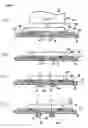
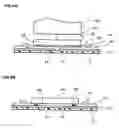
BRIEF DESCRIPTION OF THE DRAWINGSFIGS. 1A to 1D show a method of manufacturing a semiconductor device in accordance with a first reference technique relating to the present invention.
FIGS. 2A and 2B show a modification of the first reference technique.
FIGS. 3A and 3B show a method of manufacturing a semiconductor device in accordance with a second reference technique relating to the present invention.
FIGS. 4A and 4B show a method of manufacturing a semiconductor device in accordance with a third reference technique relating to the present invention.
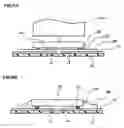
FIGS. 5A and 5B show a method of manufacturing a semiconductor device in accordance with an embodiment of the present invention.
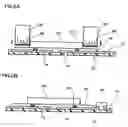
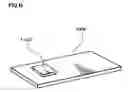
FIG. 6 shows a circuit board on which is mounted a semiconductor device in accordance with the embodiment of the present invention.
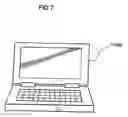
FIG. 7 shows an electronic instrument having a circuit board on which is mounted a semiconductor device in accordance with the embodiment of the present invention.
DETAILED DESCRIPTION OF EMBODIMENTSA preferred embodiment of the present invention will be described, with reference to the drawings. An embodiment of the present invention is shown in FIGS. 5A and 5B. There are also some reference techniques that can be applied to the embodiment of the present invention.
First Reference Technique
A method of manufacturing a semiconductor device in accordance with the first reference technique is shown in FIGS. 1A to 1D. In this reference technique, a substrate 12 is used which has an interconnect pattern 10 formed on at least one surface 18, as shown in FIG. 1A.
The substrate 12 may be a flexible substrate formed of an organic material, a metal substrate formed of an inorganic material, or a combination of these. As a flexible substrate may be used a tape carrier. If the electric conductivity of the substrate 12 is high, an insulating film is formed between the substrate 12 and the interconnect pattern 10 and on inner surfaces of through holes 14. In addition, the insulating film may also be formed on a surface of the substrate opposite to the surface on which the interconnect pattern 10 is formed.
The through holes 14 are formed in the substrate 12, and the interconnect pattern 10 is formed on the substrate, covering the through holes 14. Lands 17 for external electrodes are formed over the through holes 14, as part of the interconnect pattern 10. An anisotropic conductive material 16, as one example of an adhesive, is provided on a thus obtained substrate 12. In the description that follows, an anisotropic conductive material is given as an example of an adhesive. The anisotropic conductive material 16 comprises an adhesive (binder) in which are dispersed conductive particles (conductive filler), and in some cases a dispersant is added. The anisotropic conductive material 16 could be previously formed as a sheet that is affixed to the substrate 12, or it could equally well be provided as a liquid on the substrate 12. The anisotropic conductive material 16 may be provided to be larger than a surface 24 of a semiconductor chip 20 on which electrodes 22 are provided, or may be provided in a quantity to be smaller than the surface 24, then compressed so as to spread out beyond the surface 24.
Alternatively, the anisotropic conductive material 16 may be provided on the surface 24 of the semiconductor chip 20, in a quantity to be compressed so as to spread out beyond the surface 24. It should be noted that even if an adhesive not including conductive particles is used, the electrodes 22 and interconnect pattern 10 can be electrically connected. In this reference technique, a thermosetting adhesive is used as the anisotropic conductive material, and the anisotropic conductive material 16 may further include a shading material.
As a shading material can be used, for example, a black dye or black pigment dispersed in an adhesive resin.
As the adhesive may be used a thermosetting adhesive as typified by an epoxy type, or a photocurable adhesive as typified by an epoxy or acrylate type. Further, the type of adhesive cured by electron beam, or a thermoplastic (thermal adhesion) type of adhesive may equally be used. In the following description, if an adhesive other than thermosetting is used, the provision of energy should be substituted in place of the application of heat or pressure.
Next, the semiconductor chip 20 is mounted on the anisotropic conductive material 16, for example. In more detail, the semiconductor chip 20 is mounted such that the surface 24 of the semiconductor chip 20 on which the electrodes 22 are formed faces the anisotropic conductive material 16. Moreover, the semiconductor chip 20 is disposed so that the each electrode 22 is positioned over a land (not shown in the figures) for connection of the electrodes to the interconnect pattern 10. It should be noted that the semiconductor chip 20 may have the electrodes 22 formed on two edges only, or may have the electrodes 22 formed on four edges. The electrodes 22 are commonly in the form of projections made of gold, solder or the like provided on aluminum pads. The electrodes 22 may be formed on the interconnect pattern 10 side in the form of such projections or projections formed by etching the interconnect pattern 10.
By means of the above process, the anisotropic conductive material 16 is positioned between the surface 24 of the semiconductor chip 20 on which the electrodes 22 are formed and the surface 18 of the substrate 12 on which the interconnect pattern 10 is formed. A jig 30 is then used to press a surface 26 of the semiconductor chip 20 that is opposite to the surface 24 on which the electrodes 22 are formed such that the semiconductor chip 20 is subjected to pressure in the direction of the substrate 12. Alternatively, pressure may be applied between the semiconductor chip 20 and the substrate 12. Even if the anisotropic conductive material 16 as an adhesive is provided within the area of the surface 24 of the semiconductor chip 20, the applied pressure causes it to spread out beyond the surface 24. The jig 30 has an internal heater 32, and applies heat to the semiconductor chip 20. It should be noted that considering the requirement as far as possible to apply heat also to the spread out portion of the anisotropic conductive material 16, the jig 30 used preferably has a greater plan area than the plan area of the semiconductor chip 20. In this way, heat can easily be applied to the periphery of the semiconductor chip 20.
Thus, as shown in FIG. 1B, the electrodes 22 of the semiconductor chip 20 and the interconnect pattern 10 are electrically connected through the conductive particles of the anisotropic conductive material 16. According to this reference technique, since the interconnect pattern 10 and electrodes 22 are electrically connected through the anisotropic conductive material 16, a semiconductor device can be manufactured by a method of excellent reliability and productivity.
Since heat is applied to the semiconductor chip 20 by the jig 30, the anisotropic conductive material 16 is cured in the region of contact with the semiconductor chip 20. In the region not contacting the semiconductor chip 20 or the region apart from the semiconductor chip 20, heat does not reach the anisotropic conductive material 16, so that the curing is incomplete. The curing of these regions is carried out in the following step.
As shown in FIG. 1C, solder 34 is provided within and around the periphery of the through holes 14 in the substrate 12. A cream solder or the like may be used to form the solder 34 by printing. Alternatively, pre-formed solder balls may be mounted in the above-described position.
The solder 34 is then heated in a reflow step, and solder balls 36 are formed as shown in FIG. 1D. The solder balls 36 function as external electrodes. In this reflow step, not only the solder 34 but also the anisotropic conductive material 16 is heated. This heat cures the regions of the anisotropic conductive material 16 which are not yet cured. That is to say, of the anisotropic conductive material 16, the region not contacting the semiconductor chip 20 or the region apart from the semiconductor chip 20, is cured in the reflow step of forming the solder balls 36.
In the thus obtained semiconductor device 1, since the whole of the anisotropic conductive material 16 is cured, the possibility of the anisotropic conductive material 16 around the semiconductor chip 20 coming apart from the substrate 12 and allowing the ingress of water, leading to migration of the interconnect pattern 10 is prevented. Since the whole of the anisotropic conductive material 16 is cured, the inclusion of water within the anisotropic conductive material 16 can also be prevented.
Further in the semiconductor device 1, since the electrodes 22 provided on the surface 24 of the semiconductor chip 20 are covered by the anisotropic conductive material 16 which includes a shading material, light can be prevented from reaching this surface 24. Therefore, malfunction of the semiconductor chip 20 can be prevented.
FIGS. 2A and 2B show modifications of the first reference technique. In these modifications, the structure that is the same as in the first reference technique is indicated by the same reference numerals, and description of this structure and the effect of this structure is omitted. The same is true for the following.
The step shown in FIG. 2A can be carried out after the step of FIG. 1B and before the step of FIG. 1C. In more detail, of the anisotropic conductive material 16, the region not contacting the semiconductor chip 20 and the region apart from the semiconductor chip 20, are heated by a heating jig 38. The heating jig 38 is preferably provided with a nonadhesive layer 39 formed of Teflon or the like having high nonadhesive properties to the anisotropic conductive material 16 that is an example of an adhesive, so that uncured anisotropic conductive material 16 does not adhere thereto. Alternatively, the nonadhesive layer 39 may be provided on the anisotropic conductive material 16 that is an example of an adhesive. Further, the anisotropic conductive material 16 as an example of an adhesive may be heated by a non-contact method. By this means, of the anisotropic conductive material 16, the region not contacting the semiconductor chip 20 and the region apart from the semiconductor chip 20 can be cured. In place of a jig, a hot air blower or optical heater capable of localized heating may be used.
Alternatively, as shown in FIG. 2B, after the step of FIG. 1B and before the step of FIG. 1C, a reflow step may be carried out to electrically connect an electronic component 40 distinct from the semiconductor chip 20 to the interconnect pattern 10. By means of this reflow step, of the anisotropic conductive material 16, the region not contacting the semiconductor chip 20 and the region apart from the semiconductor chip 20 is heated and cured. It should be noted that as the electronic component 40 may be cited for example a resistor, capacitor, coil, oscillator, filter, temperature sensor, thermistor, varistor, variable resistor, or a fuse.
According to these modifications, all of the anisotropic conductive material 16 can be cured, and the possibility of the anisotropic conductive material 16 coming apart from the substrate 12 and allowing the ingress of water, leading to migration of the interconnect pattern 10 can be prevented. Since the whole of the anisotropic conductive material 16 is cured, the inclusion of water can also be prevented.
After the above described steps, the substrate 12 may be cut in the region in which the anisotropic conductive material 16 being an example of an adhesive spreads beyond the semiconductor chip 20.
This reference technique has been described with a substrate with interconnects on one surface only as the substrate 12, but is not limited to this, and a double-sided interconnect substrate or multi-layer interconnect may be used. In this case, in stead of disposing solder in the through holes, solder balls may be formed on lands provided on the surface opposite to that on which the semiconductor chip is mounted. In place of solder balls other conductive projections may be used. The connection between the semiconductor chip and the substrate may be carried out by wire bonding. These observations apply equally to the following.
In this reference technique, not only a thermosetting adhesive, but also an anisotropic conductive material 16 being an example of a thermoplastic adhesive may be used. A thermoplastic adhesive can be hardened by cooling. Alternatively, an adhesive that can be hardened by radiation such as ultraviolet may be used. This applies equally to the following.
Second Reference Technique
A method of manufacturing a semiconductor device in accordance with the second reference technique is shown in FIG. 3A and 3B. This reference technique is carried out following on from the first reference technique.
More specifically, in this reference technique, following on from the step of FIG. 1D, the anisotropic conductive material 16 and substrate 12 are held by a fixed blade 41, and cut by a movable blade 42 to a size slightly larger than the semiconductor chip 20, as shown in FIG. 3A, yielding a semiconductor device 2 shown in FIG. 3B. The cutting means is not limited thereto, and any other available cutting means and holding means can be applied. Since the substrate 12 is cut together with the anisotropic conductive material 16, the cut through the two is coplanar, and the entire surface of the substrate 12 is covered by the anisotropic conductive material 16. Therefore, the interconnect pattern 10 is not exposed, and moisture is prevented from reaching the interconnect pattern 10 and causing migration.
According to this reference technique, since the anisotropic conductive material 16 is cut, it does not require to be previously cut to the same size as the semiconductor chip 20 or slightly larger, and accurate positioning with respect to the semiconductor chip 20 is not required.
It should be noted that this reference technique is an example of the anisotropic conductive material 16 and substrate 12 being cut after the solder balls 36 are formed, but the timing of the cut is independent of the formation of the solder balls 36, as long as it is at least after the semiconductor chip 20 has been mounted on the anisotropic conductive material 16. However, the anisotropic conductive material 16 is preferably cured at least in the region of contact with the semiconductor chip 20. In this case, mispositioning of the semiconductor chip 20 and interconnect pattern 10 can be prevented. If the anisotropic conductive material 16 is cured rather than uncured in the location of the cut, the cutting operation will be easier.
It should be noted that when the substrate 12 is cut, the whole of the anisotropic conductive material 16 being an example of an adhesive may be cured in a single operation. For example, when the electrodes 22 of the semiconductor chip 20 and the interconnect pattern 10 are electrically connected, heat may be applied or cooling applied to the whole of the anisotropic conductive material 16 being an example of an adhesive. When a thermosetting adhesive is used, a jig may be used which contacts both of the semiconductor chip 20 and the adhesive spreading out beyond the semiconductor chip 20. Alternatively, heating may be applied by means of an oven.
Third Reference Technique
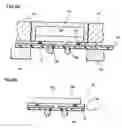
A method of manufacturing a semiconductor device in accordance with the third reference technique is shown in FIGS. 4A and 4B. In this reference technique, the substrate 12 of the first reference technique is used, and on the substrate 12 is formed a protective layer 50. The protective layer 50 is such as to cover the interconnect pattern 10, preventing contact with water, and for example solder resist may be used.
The protective layer 50 is formed around a region 52 that is larger in extent than the region in which the semiconductor chip 20 is mounted on the substrate 12. That is to say, the region 52 is larger than the surface 24 of the semiconductor chip 20 having the electrodes 22, and within this region 52 the lands (not shown in the drawings) for connection to the electrodes 22 of the semiconductor chip 20 are formed on the interconnect pattern 10. Alternatively, the protective layer 50 may be formed to avoid at least portions for electrical connection to the electrodes 20 of the semiconductor chip 20.
On such a substrate 12 an anisotropic conductive material 54 (adhesive) of a material that can be selected as the anisotropic conductive material 16 of the first reference technique is provided. It should be noted that the anisotropic conductive material 54 does not necessarily contain a shading material, but if it does contain a shading material then the same effect as in the first reference technique is obtained.
In this reference technique, the anisotropic conductive material 54 is provided from the region of mounting of the semiconductor chip 20 to the protective layer 50. That is to say, the anisotropic conductive material 54 covers the interconnect pattern 10 and substrate 12 in the region 52 in which the protective layer 50 is not formed, and is also formed to overlap the edge of the protective layer 50 surrounding the region 52. Alternatively, the anisotropic conductive material 54 being an example of an adhesive may be provided on the semiconductor chip 20 side. In more detail, the description in the first reference technique applies.
The semiconductor chip 20 is then pressed toward the substrate 12 and heat is applied by the jig 30, as shown in FIG. 4A. Alternatively, pressure is applied at least between the semiconductor chip 20 and the substrate 12. In this way, the electrodes 22 of the semiconductor chip 20 and the interconnect pattern 10 are electrically connected, as shown in FIG. 4B. Thereafter, in the same way as in the steps shown in FIGS. 1C and 1D, solder balls are formed, and the semiconductor device is obtained.
According to this reference technique, the anisotropic conductive material 54 is not only formed in the region 52 in which the protective layer 50 is not formed, but also formed to overlap the edge of the protective layer 50 surrounding the region 52. Consequently, there is no gap between the anisotropic conductive material 54 and the protective layer 50, and the interconnect pattern 10 is not exposed, so that migration can be prevented.
It should be noted that in this reference technique, it is preferable that the anisotropic conductive material 54 is cured also in the region spreading beyond the semiconductor chip 20. This curing step can be carried out in the same way as in the first reference technique.
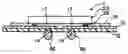
EmbodimentA method of manufacturing a semiconductor device in accordance with one embodiment of the present invention is shown in FIGS. 5A and 5B. In this embodiment, the substrate 12 of the first reference technique is used, and an anisotropic conductive material 56 (adhesive) is provided on the substrate 12. The difference between this embodiment and the first reference technique is in that the thickness of the anisotropic conductive material 56 may be different. That is to say, as shown in FIG. 5A, in this embodiment the thickness of the anisotropic conductive material 56 is greater than the thickness of the anisotropic conductive material 16 shown in FIG. 1A. More specifically, the anisotropic conductive material 56 is thicker than the interval between the surface 24 of the semiconductor chip 20 having the electrodes 22 and the interconnect pattern 10 formed on the substrate 12. The anisotropic conductive material 56 is at least slightly larger than the semiconductor chip 20. It should be noted that it is sufficient for either of these thickness and size conditions to be satisfied.
As shown in FIG. 5A, the semiconductor chip 20 is then pressed toward the substrate 12 and heat is applied by the jig 30, for example. By doing this, the anisotropic conductive material 56 surrounds a part or all of a lateral surface 28 of the semiconductor chip 20, as shown in FIG. 5B. Thereafter, solder balls are formed in the same way as in the steps shown in FIGS. 1C and 1D, and the semiconductor device is obtained.
According to this embodiment, since at least part of the lateral surface 28 of the semiconductor chip 20 are covered by the anisotropic conductive material 56, the semiconductor chip 20 is protected from mechanical damage. Moreover, since the anisotropic conductive material 56 covers as far as a position removed from the electrodes 22, corrosion of the electrodes 22 and so on can be prevented.
Although the above embodiment has been described principally in terms of a chip size/scale package (CSP) of face-down bonding (FDB), the present invention can be applied to any semiconductor device to which FDB is applied, such as a semiconductor device to which Chip on Film (COF) or Chip on Board (COB) is applied, or the like.
A circuit board 1000 on which is mounted a semiconductor device 1100 fabricated by the method of the above described embodiment is shown in FIG. 6. An organic substrate such as a glass epoxy substrate or the like is generally used for the circuit board 1000. On the circuit board 1000, an interconnect pattern of for example copper is formed to provide a desired circuit. Then electrical connection is achieved by mechanical connection of the interconnect pattern and external electrodes of the semiconductor device 1100.
It should be noted that the semiconductor device 1100 has a mounting area that can be made as small as the area for mounting a bare chip, and therefore when this circuit board 1000 is used in an electronic instrument, the electronic instrument itself can be made more compact. Moreover, a larger mounting space can be obtained within the same area, and therefore higher functionality is possible.
Then as an example of an electronic instrument equipped with this circuit board 1000, a notebook personal computer 1200 is shown in FIG. 7.
It should be noted that, whether active components or passive components, the present invention can be applied to various surface-mounted electronic components. As electronic components, for example, may be cited resistors, capacitors, coils, oscillators, filters, temperature sensors, thermistors, varistors, variable resistors, and fuses.
Claims
What is claimed is:1. A semiconductor device, comprising:
a semiconductor chip having electrodes;
a substrate having an interconnect pattern; and
an adhesive, the adhesive having a first portion and a second portion, the first portion interposed between a surface of the substrate on which the interconnect pattern is formed and a surface of the semiconductor chip on which the electrodes are formed, the second portion not overlapping with the semiconductor chip;
wherein the electrodes and the interconnect pattern are electrically connected; and
wherein the second portion of the adhesive covers at least a part of lateral surfaces of the semiconductor chip that is substantially perpendicular to the surface of the semiconductor chip on which the electrodes are formed, and a thickness of any part of the second portion of the adhesive is thicker than an interval between the surface of the semiconductor chip on which the electrodes are formed and the interconnect pattern on the substrate.
2. The semiconductor device as defined in claim 1, wherein the adhesive is provided to cover the interconnect pattern in its entirety.
3. The semiconductor device as defined in claim 1, wherein the adhesive includes a shading material.
4. The semiconductor device as defined in claim 1,
wherein at least a part of the adhesive has a thickness substantially the same as the semiconductor chip.
5. The semiconductor device as defined in claim 1,
wherein the adhesive includes conductive particles.
6. The semiconductor device as defined in claim 5,
wherein the second portion of the adhesive includes the conductive particles dispersed therein.
7. A circuit board having a semiconductor device mounted thereon, the semiconductor device comprising:
a semiconductor chip having electrodes;
a substrate having an interconnect pattern; and
an adhesive, the adhesive having a first portion and a second portion, the first portion interposed between a surface of the substrate on which the interconnect pattern is formed and a surface of the semiconductor chip on which the electrodes are formed, the second portion not overlapping with the semiconductor chip;
wherein the electrodes and the interconnect pattern are electrically connected via at least part of the conductive particles; and
wherein the second portion of the adhesive covers at least a part of lateral surfaces of the semiconductor chip that is substantially perpendicular to the surface of the semiconductor chip on which the electrodes are formed, and a thickness of any part of the second portion of the adhesive is thicker than an interval between the surface of the semiconductor chip on which the electrodes are formed and the interconnect pattern on the substrate.
8. The circuit board as defined in claim 7,
wherein at least a part of the adhesive has a thickness substantially the same as the semiconductor chip.
9. The circuit board as defined in claim 7,
wherein the adhesive includes conductive particles.
10. The circuit board as defined in claim 9,
wherein the second portion of the adhesive includes the conductive particles dispersed therein.
11. An electronic instrument having a semiconductor device, the semiconductor device comprising:
a semiconductor chip having electrodes;
a substrate having an interconnect pattern; and
an adhesive, the adhesive having a first portion and a second portion, the first portion interposed between a surface of the substrate on which the interconnect pattern is formed and a surface of the semiconductor chip on which the electrodes are formed, the second portion not overlapping with the semiconductor chip;
wherein the electrodes and the interconnect pattern are electrically connected via at least part of the conductive particles; and
wherein the second portion of the adhesive covers at least a part of lateral surfaces of the semiconductor chip that is substantially perpendicular to the surface of the semiconductor chip on which the electrodes are formed, and a thickness of any part of the second portion of the adhesive is thicker than an interval between the surface of the semiconductor chip on which the electrodes are formed and the interconnect pattern on the substrate.
12. The electronic instrument as defined in claim 11,
wherein at least a part of the adhesive has a thickness substantially the same as the semiconductor chip.
13. The electronic instrument as defined in claim 11,
wherein the adhesive includes conductive particles.
14. The electronic instrument as defined in claim 13,
wherein the second portion of the adhesive includes the conductive particles dispersed therein.
Images & Drawings included:
Sources:
- United States Patent and Trademark Office - verify current appl. status at the USPTO↗
Similar patent applications:
- » 9582351
Semiconductor device and method of manufacture thereof, circuit board, and electronic instrument - » 9700464
Semiconductor device and method of manufacture thereof, circuit board, and electronic instrument - » 9987409
Semiconductor device and method of manufacture thereof, circuit board, and electronic instrument - » 10190515
Semiconductor device and method of manufacture thereof, circuit board and electronic instrument - » 10361566
Semiconductor device and method of manufacture thereof, circuit board, and electronic instrument - » 10895386
Semiconductor device and method of manufacture thereof, circuit board, and electronic instrument - » 20060090931
Semiconductor device and method for manufacture thereof, circuit board, and electronic instrument - » 20060099739
Semiconductor device and method of manufacture thereof, circuit board and electronic instrument - » 20060172460
Semiconductor device and method of manufacture thereof, circuit board and electronic instrument - » 20080128921
Semiconductor device and method of manufacture thereof, circuit board and electronic instrument
Recent applications in this class:
- » 20250293193 2025-09-18
COMPONENT CARRIER ASSEMBLY AND METHOD FOR MANUFACTURING A COMPONENT CARRIER ASSEMBLY - » 20250293192 2025-09-18
FILM-FORM ADHESIVE, ADHESIVE FILM, INTEGRATED DICING/DIE BONDING FILM, AND METHOD FOR MANUFACTURING SEMICONDUCTOR DEVICE - » 20250279386 2025-09-04
SEMICONDUCTOR PACKAGE AND METHOD FOR MANUFACTURING THE SAME - » 20250279385 2025-09-04
NON-CONDUCTIVE FILM, SEMICONDUCTOR DEVICE AND MANUFACTURING METHOD OF THE SAME - » 20250279384 2025-09-04
METHODS AND APPARATUS USING POLYMER MATERIAL TO FILL GAPS BETWEEN SEMICONDUCTOR DIES - » 20250273617 2025-08-28
POWER MODULE PACKAGING STRUCTURE BASED ON LIQUID METAL - » 20250273616 2025-08-28
SEMICONDUCTOR DEVICE AND METHOD FOR MANUFACTURING SEMICONDUCTOR DEVICE - » 20250266386 2025-08-21
Conductive Paste And Sintering Methods - » 20250266385 2025-08-21
FILM ADHESIVE, DICING/DIE BONDING INTEGRATED FILM, AND SEMICONDUCTOR DEVICE AND METHOD FOR PRODUCING SAME - » 20250259958 2025-08-14
Bonding Layers Formed of High Thermal Conductivity Materials
Recent applications for this Assignee:
- » 20250292049 2025-09-18
TAPE PRINTING APPARATUS AND CONTROL METHOD OF TAPE PRINTING APPARATUS - » 20250291216 2025-09-18
DISPLAY DEVICE AND CONTROL METHOD FOR DISPLAY DEVICE - » 20250291192 2025-09-18
VIRTUAL IMAGE DISPLAY DEVICE AND OPTICAL UNIT - » 20250291190 2025-09-18
VIRTUAL IMAGE DISPLAY DEVICE AND OPTICAL UNIT - » 20250291161 2025-09-18
FIXED-FOCUS LENS AND PROJECTOR - » 20250291096 2025-09-18
VIRTUAL IMAGE DISPLAY DEVICE - » 20250284165 2025-09-11
ELECTRO-OPTICAL DEVICE AND ELECTRONIC APPARATUS - » 20250284164 2025-09-11
ELECTRO-OPTICAL DEVICE AND ELECTRONIC APPARATUS - » 20250281798 2025-09-11
INFORMATION PROCESSING DEVICE AND INFORMATION PROCESSING METHOD - » 20250280099 2025-09-04
CALCULATION METHOD, NON-TRANSITORY COMPUTER-READABLE STORAGE MEDIUM STORING PROGRAM, AND INFORMATION PROCESSING DEVICE