Low fabrication cost, high performance, high reliability chip scale package
US20050189650A1
2005-09-01
11/120,234
2005-05-02
✅ Patent granted
US 7,355,288 B2
2008-04-08
-
-
Phat X Cao
2025-05-02
Abstract:
The invention provides a new method and chip scale package is provided. The inventions starts with a substrate over which a contact point is provided, the contact point is exposed through an opening created in the layer of passivation and a layer of polymer or elastomer. A barrier/seed layer is deposited, a first photoresist mask is created exposing the barrier/seed layer where this layer overlies the contact pad and, contiguous therewith, over a surface area that is adjacent to the contact pad and emanating in one direction from the contact pad. The exposed surface of the barrier/seed layer is electroplated for the creation of interconnect traces. The first photoresist mask is removed from the surface of the barrier/seed layer. A second photoresist mask, defining the solder bump, is created exposing the surface area of the barrier/seed layer that is adjacent to the contact pad and emanating in one direction from the contact pad. The solder bump is created in accordance with the second photoresist mask, the second photoresist mask is removed from the surface of the barrier/seed layer, exposing the electroplating and the barrier/seed layer with the metal plating overlying the barrier/seed layer. The exposed barrier/seed layer is etched in accordance with the pattern formed by the electroplating, reflow of the solder bump is optionally performed.
Inventors:
- Ming-ta Lei 45 🇹🇼 Hsin-Chu, Taiwan
- Jin-Yuan Lee 118 🇹🇼 Hsin-Chu, Taiwan
- Ching-Cheng Huang 50 🇹🇼 Hsinchu, Taiwan
- Jin-Yuan Lee 15 🇹🇼 Hsin-Chu City, Taiwan
- Chuen-Jye Lin 2 🇹🇼 Ta-Tu Hsiang Taichung, Taiwan
Assignee:
- Megica Corporation 75 🇹🇼 Hsin-Chu, Taiwan
Interested in similar patents?
Get notified when new applications in this technology area are published.
Classification:
H01L23/48 IPC
Details of semiconductor or other solid state devices Arrangements for conducting electric current to or from the solid state body in operation, e.g. leads, terminal arrangements ; Selection of materials therefor
H01L23/52 IPC
Details of semiconductor or other solid state devices Arrangements for conducting electric current within the device in operation from one component to another, i.e. interconnections, e.g. wires, lead frames
H01L29/40 IPC
Semiconductor devices adapted for rectifying, amplifying, oscillating or switching, or capacitors or resistors with at least one potential-jump barrier or surface barrier, e.g. PN junction depletion layer or carrier concentration layer; Details of semiconductor bodies or of electrodes thereof; Multistep manufacturing processes therefor Electrodes ; Multistep manufacturing processes therefor
H01L24/12 » CPC main
Arrangements for connecting or disconnecting semiconductor or solid-state bodies; Methods or apparatus related thereto; Means for bonding being attached to, or being formed on, the surface to be connected, e.g. chip-to-package, die-attach, "first-level" interconnects; Manufacturing methods related thereto; Bump connectors ; Manufacturing methods related thereto Structure, shape, material or disposition of the bump connectors prior to the connecting process
H01L21/563 » CPC further
Processes or apparatus adapted for the manufacture or treatment of semiconductor or solid state devices or of parts thereof; Manufacture or treatment of semiconductor devices or of parts thereof the devices having at least one potential-jump barrier or surface barrier, e.g. PN junction, depletion layer or carrier concentration layer; Assembly of semiconductor devices using processes or apparatus not provided for in a single one of the subgroups - , e.g. sealing of a cap to a base of a container; Encapsulations, e.g. encapsulation layers, coatings Encapsulation of active face of flip-chip device, e.g. underfilling or underencapsulation of flip-chip, encapsulation preform on chip or mounting substrate
H01L21/565 » CPC further
Processes or apparatus adapted for the manufacture or treatment of semiconductor or solid state devices or of parts thereof; Manufacture or treatment of semiconductor devices or of parts thereof the devices having at least one potential-jump barrier or surface barrier, e.g. PN junction, depletion layer or carrier concentration layer; Assembly of semiconductor devices using processes or apparatus not provided for in a single one of the subgroups - , e.g. sealing of a cap to a base of a container; Encapsulations, e.g. encapsulation layers, coatings Moulds
H01L23/3114 » CPC further
Details of semiconductor or other solid state devices; Encapsulations, e.g. encapsulating layers, coatings, e.g. for protection characterised by the arrangement or shape the device being completely enclosed the device being a chip scale package, e.g. CSP
H01L23/3128 » CPC further
Details of semiconductor or other solid state devices; Encapsulations, e.g. encapsulating layers, coatings, e.g. for protection characterised by the arrangement or shape the device being completely enclosed a substrate forming part of the encapsulation the substrate having spherical bumps for external connection
H01L23/525 » CPC further
Details of semiconductor or other solid state devices; Arrangements for conducting electric current within the device in operation from one component to another, i.e. interconnections, e.g. wires, lead frames including external interconnections consisting of a multilayer structure of conductive and insulating layers inseparably formed on the semiconductor body with adaptable interconnections
H01L24/11 » CPC further
Arrangements for connecting or disconnecting semiconductor or solid-state bodies; Methods or apparatus related thereto; Means for bonding being attached to, or being formed on, the surface to be connected, e.g. chip-to-package, die-attach, "first-level" interconnects; Manufacturing methods related thereto; Bump connectors ; Manufacturing methods related thereto Manufacturing methods
H01L24/16 » CPC further
Arrangements for connecting or disconnecting semiconductor or solid-state bodies; Methods or apparatus related thereto; Means for bonding being attached to, or being formed on, the surface to be connected, e.g. chip-to-package, die-attach, "first-level" interconnects; Manufacturing methods related thereto; Bump connectors ; Manufacturing methods related thereto; Structure, shape, material or disposition of the bump connectors after the connecting process of an individual bump connector
H05K3/3473 » CPC further
Apparatus or processes for manufacturing printed circuits; Assembling printed circuits with electric components, e.g. with resistor electrically connecting electric components or wires to printed circuits by soldering; Solder materials or compositions; Methods of application thereof Plating of solder
H05K3/3473 » CPC further
Apparatus or processes for manufacturing printed circuits; Assembling printed circuits with electric components, e.g. with resistor electrically connecting electric components or wires to printed circuits by soldering; Solder materials or compositions; Methods of application thereof Plating of solder
H01L24/48 » CPC further
Arrangements for connecting or disconnecting semiconductor or solid-state bodies; Methods or apparatus related thereto; Means for bonding being attached to, or being formed on, the surface to be connected, e.g. chip-to-package, die-attach, "first-level" interconnects; Manufacturing methods related thereto; Wire connectors; Manufacturing methods related thereto; Structure, shape, material or disposition of the wire connectors after the connecting process of an individual wire connector
H01L2224/0231 » CPC further
Indexing scheme for arrangements for connecting or disconnecting semiconductor or solid-state bodies and methods related thereto as covered by; Means for bonding being attached to, or being formed on, the surface to be connected, e.g. chip-to-package, die-attach, "first-level" interconnects; Manufacturing methods related thereto; Bonding areas; Manufacturing methods related thereto; Redistribution layers [RDL] for bonding areas Manufacturing methods of the redistribution layers
H01L2224/02311 » CPC further
Indexing scheme for arrangements for connecting or disconnecting semiconductor or solid-state bodies and methods related thereto as covered by; Means for bonding being attached to, or being formed on, the surface to be connected, e.g. chip-to-package, die-attach, "first-level" interconnects; Manufacturing methods related thereto; Bonding areas; Manufacturing methods related thereto; Redistribution layers [RDL] for bonding areas; Manufacturing methods of the redistribution layers Additive methods
H01L2224/03912 » CPC further
Indexing scheme for arrangements for connecting or disconnecting semiconductor or solid-state bodies and methods related thereto as covered by; Means for bonding being attached to, or being formed on, the surface to be connected, e.g. chip-to-package, die-attach, "first-level" interconnects; Manufacturing methods related thereto; Bonding areas; Manufacturing methods related thereto; Manufacturing methods; Methods of manufacturing bonding areas involving a specific sequence of method steps the bump being used as a mask for patterning the bonding area
H01L2224/0401 » CPC further
Indexing scheme for arrangements for connecting or disconnecting semiconductor or solid-state bodies and methods related thereto as covered by; Means for bonding being attached to, or being formed on, the surface to be connected, e.g. chip-to-package, die-attach, "first-level" interconnects; Manufacturing methods related thereto; Bonding areas; Manufacturing methods related thereto; Structure, shape, material or disposition of the bonding areas prior to the connecting process Bonding areas specifically adapted for bump connectors, e.g. under bump metallisation [UBM]
H01L2224/11462 » CPC further
Indexing scheme for arrangements for connecting or disconnecting semiconductor or solid-state bodies and methods related thereto as covered by; Means for bonding being attached to, or being formed on, the surface to be connected, e.g. chip-to-package, die-attach, "first-level" interconnects; Manufacturing methods related thereto; Bump connectors; Manufacturing methods related thereto; Manufacturing methods by blanket deposition of the material of the bump connector; Plating Electroplating
H01L2224/1147 » CPC further
Indexing scheme for arrangements for connecting or disconnecting semiconductor or solid-state bodies and methods related thereto as covered by; Means for bonding being attached to, or being formed on, the surface to be connected, e.g. chip-to-package, die-attach, "first-level" interconnects; Manufacturing methods related thereto; Bump connectors; Manufacturing methods related thereto; Manufacturing methods using a lift-off mask
H01L2224/11831 » CPC further
Indexing scheme for arrangements for connecting or disconnecting semiconductor or solid-state bodies and methods related thereto as covered by; Means for bonding being attached to, or being formed on, the surface to be connected, e.g. chip-to-package, die-attach, "first-level" interconnects; Manufacturing methods related thereto; Bump connectors; Manufacturing methods related thereto; Manufacturing methods; Post-treatment of the bump connector; Reworking, e.g. shaping involving a chemical process, e.g. etching the bump connector
H01L2224/11849 » CPC further
Indexing scheme for arrangements for connecting or disconnecting semiconductor or solid-state bodies and methods related thereto as covered by; Means for bonding being attached to, or being formed on, the surface to be connected, e.g. chip-to-package, die-attach, "first-level" interconnects; Manufacturing methods related thereto; Bump connectors; Manufacturing methods related thereto; Manufacturing methods; Post-treatment of the bump connector; Thermal treatments, e.g. annealing, controlled cooling Reflowing
H01L2224/11901 » CPC further
Indexing scheme for arrangements for connecting or disconnecting semiconductor or solid-state bodies and methods related thereto as covered by; Means for bonding being attached to, or being formed on, the surface to be connected, e.g. chip-to-package, die-attach, "first-level" interconnects; Manufacturing methods related thereto; Bump connectors; Manufacturing methods related thereto; Manufacturing methods; Methods of manufacturing bump connectors involving a specific sequence of method steps with repetition of the same manufacturing step
H01L2224/73203 » CPC further
Indexing scheme for arrangements for connecting or disconnecting semiconductor or solid-state bodies and methods related thereto as covered by; Means for bonding being of different types provided for in two or more of groups; Location after the connecting process on the same surface Bump and layer connectors
H01L2924/01005 » CPC further
Indexing scheme for arrangements or methods for connecting or disconnecting semiconductor or solid-state bodies as covered by; Chemical elements Boron [B]
H01L2924/01006 » CPC further
Indexing scheme for arrangements or methods for connecting or disconnecting semiconductor or solid-state bodies as covered by; Chemical elements Carbon [C]
H01L2924/01013 » CPC further
Indexing scheme for arrangements or methods for connecting or disconnecting semiconductor or solid-state bodies as covered by; Chemical elements Aluminum [Al]
H01L2924/01018 » CPC further
Indexing scheme for arrangements or methods for connecting or disconnecting semiconductor or solid-state bodies as covered by; Chemical elements Argon [Ar]
H01L2924/01022 » CPC further
Indexing scheme for arrangements or methods for connecting or disconnecting semiconductor or solid-state bodies as covered by; Chemical elements Titanium [Ti]
H01L2924/01024 » CPC further
Indexing scheme for arrangements or methods for connecting or disconnecting semiconductor or solid-state bodies as covered by; Chemical elements Chromium [Cr]
H01L2924/01029 » CPC further
Indexing scheme for arrangements or methods for connecting or disconnecting semiconductor or solid-state bodies as covered by; Chemical elements Copper [Cu]
H01L2924/01033 » CPC further
Indexing scheme for arrangements or methods for connecting or disconnecting semiconductor or solid-state bodies as covered by; Chemical elements Arsenic [As]
H01L2924/01041 » CPC further
Indexing scheme for arrangements or methods for connecting or disconnecting semiconductor or solid-state bodies as covered by; Chemical elements Niobium [Nb]
H01L2924/01042 » CPC further
Indexing scheme for arrangements or methods for connecting or disconnecting semiconductor or solid-state bodies as covered by; Chemical elements Molybdenum [Mo]
H01L2924/01073 » CPC further
Indexing scheme for arrangements or methods for connecting or disconnecting semiconductor or solid-state bodies as covered by; Chemical elements Tantalum [Ta]
H01L2924/01074 » CPC further
Indexing scheme for arrangements or methods for connecting or disconnecting semiconductor or solid-state bodies as covered by; Chemical elements Tungsten [W]
H01L2924/01075 » CPC further
Indexing scheme for arrangements or methods for connecting or disconnecting semiconductor or solid-state bodies as covered by; Chemical elements Rhenium [Re]
H01L2924/01078 » CPC further
Indexing scheme for arrangements or methods for connecting or disconnecting semiconductor or solid-state bodies as covered by; Chemical elements Platinum [Pt]
H01L2924/01079 » CPC further
Indexing scheme for arrangements or methods for connecting or disconnecting semiconductor or solid-state bodies as covered by; Chemical elements Gold [Au]
H01L2924/01084 » CPC further
Indexing scheme for arrangements or methods for connecting or disconnecting semiconductor or solid-state bodies as covered by; Chemical elements Polonium [Po]
H01L2924/04941 » CPC further
Indexing scheme for arrangements or methods for connecting or disconnecting semiconductor or solid-state bodies as covered by; Nitrides composed of metals from groups of the periodic table 4th Group TiN
H01L2924/09701 » CPC further
Indexing scheme for arrangements or methods for connecting or disconnecting semiconductor or solid-state bodies as covered by with a principal constituent of the material being a combination of two or more materials provided in the groups - ; Glass-ceramics, e.g. devitrified glass Low temperature co-fired ceramic [LTCC]
H01L2924/14 » CPC further
Indexing scheme for arrangements or methods for connecting or disconnecting semiconductor or solid-state bodies as covered by; Details of semiconductor or other solid state devices to be connected; Device type Integrated circuits
H01L2924/15311 » CPC further
Indexing scheme for arrangements or methods for connecting or disconnecting semiconductor or solid-state bodies as covered by; Details of package parts other than the semiconductor or other solid state devices to be connected; Die mounting substrate; Connection portion the connection portion being formed only on the surface of the substrate opposite to the die mounting surface being a ball array, e.g. BGA
H01L2924/30105 » CPC further
Indexing scheme for arrangements or methods for connecting or disconnecting semiconductor or solid-state bodies as covered by; Technical effects; Electrical effects Capacitance
H01L2924/30107 » CPC further
Indexing scheme for arrangements or methods for connecting or disconnecting semiconductor or solid-state bodies as covered by; Technical effects; Electrical effects Inductance
H04B1/712 » CPC further
Details of transmission systems, not covered by a single one of groups - ; Details of transmission systems not characterised by the medium used for transmission; Spread spectrum techniques using direct sequence modulation; Interference-related aspects the interference being multi-path interference; Constructive combining of multi-path signals, i.e. RAKE receivers Weighting of fingers for combining, e.g. amplitude control or phase rotation using an inner loop
H05K3/108 » CPC further
Apparatus or processes for manufacturing printed circuits in which conductive material is applied to the insulating support in such a manner as to form the desired conductive pattern by semi-additive methods; masks therefor
H05K3/108 » CPC further
Apparatus or processes for manufacturing printed circuits in which conductive material is applied to the insulating support in such a manner as to form the desired conductive pattern by semi-additive methods; masks therefor
H05K3/243 » CPC further
Apparatus or processes for manufacturing printed circuits; Secondary treatment of printed circuits; Reinforcing the conductive pattern characterised by selective plating, e.g. for finish plating of pads
H05K3/243 » CPC further
Apparatus or processes for manufacturing printed circuits; Secondary treatment of printed circuits; Reinforcing the conductive pattern characterised by selective plating, e.g. for finish plating of pads
H05K2201/0367 » CPC further
Indexing scheme relating to printed circuits covered by; Conductive materials; Structure of the conductor; Conductor shape Metallic bump or raised conductor not used as solder bump
H05K2201/0367 » CPC further
Indexing scheme relating to printed circuits covered by; Conductive materials; Structure of the conductor; Conductor shape Metallic bump or raised conductor not used as solder bump
H05K2201/09436 » CPC further
Indexing scheme relating to printed circuits covered by; Shape and layout; Shape and layout details of conductors; Pads and lands Pads or lands on permanent coating which covers the other conductors
H05K2201/09436 » CPC further
Indexing scheme relating to printed circuits covered by; Shape and layout; Shape and layout details of conductors; Pads and lands Pads or lands on permanent coating which covers the other conductors
H05K2201/0949 » CPC further
Indexing scheme relating to printed circuits covered by; Shape and layout; Shape and layout details of conductors; Pads and lands Pad close to a hole, not surrounding the hole
H05K2201/0949 » CPC further
Indexing scheme relating to printed circuits covered by; Shape and layout; Shape and layout details of conductors; Pads and lands Pad close to a hole, not surrounding the hole
H05K2203/043 » CPC further
Indexing scheme relating to apparatus or processes for manufacturing printed circuits covered by; Soldering or other types of metallurgic bonding Reflowing of solder coated conductors, not during connection of components, e.g. reflowing solder paste
H05K2203/043 » CPC further
Indexing scheme relating to apparatus or processes for manufacturing printed circuits covered by; Soldering or other types of metallurgic bonding Reflowing of solder coated conductors, not during connection of components, e.g. reflowing solder paste
H05K2203/054 » CPC further
Indexing scheme relating to apparatus or processes for manufacturing printed circuits covered by; Patterning and lithography; Masks; Details of resist; Patterning and lithography Continuous temporary metal layer over resist, e.g. for selective electroplating
H05K2203/054 » CPC further
Indexing scheme relating to apparatus or processes for manufacturing printed circuits covered by; Patterning and lithography; Masks; Details of resist; Patterning and lithography Continuous temporary metal layer over resist, e.g. for selective electroplating
H01L2924/014 » CPC further
Indexing scheme for arrangements or methods for connecting or disconnecting semiconductor or solid-state bodies as covered by; Alloys Solder alloys
H01L2924/00013 » CPC further
Indexing scheme for arrangements or methods for connecting or disconnecting semiconductor or solid-state bodies as covered by; Technical content checked by a classifier Fully indexed content
H01L2224/13099 » CPC further
Indexing scheme for arrangements for connecting or disconnecting semiconductor or solid-state bodies and methods related thereto as covered by; Means for bonding being attached to, or being formed on, the surface to be connected, e.g. chip-to-package, die-attach, "first-level" interconnects; Manufacturing methods related thereto; Bump connectors; Manufacturing methods related thereto; Structure, shape, material or disposition of the bump connectors prior to the connecting process of an individual bump connector; Core members of the bump connector Material
H01L2924/351 » CPC further
Indexing scheme for arrangements or methods for connecting or disconnecting semiconductor or solid-state bodies as covered by; Technical effects; Mechanical effects Thermal stress
H01L2924/00 » CPC further
Indexing scheme for arrangements or methods for connecting or disconnecting semiconductor or solid-state bodies as covered by
H01L2224/85399 » CPC further
Indexing scheme for arrangements for connecting or disconnecting semiconductor or solid-state bodies and methods related thereto as covered by; Methods for connecting semiconductor or other solid state bodies using means for bonding being attached to, or being formed on, the surface to be connected using a wire connector; Bonding interfaces outside the semiconductor or solid-state body Material
H01L2224/05599 » CPC further
Indexing scheme for arrangements for connecting or disconnecting semiconductor or solid-state bodies and methods related thereto as covered by; Means for bonding being attached to, or being formed on, the surface to be connected, e.g. chip-to-package, die-attach, "first-level" interconnects; Manufacturing methods related thereto; Bonding areas; Manufacturing methods related thereto; Structure, shape, material or disposition of the bonding areas prior to the connecting process of an individual bonding area; External layer Material
H01L2924/207 » CPC further
Indexing scheme for arrangements or methods for connecting or disconnecting semiconductor or solid-state bodies as covered by; Parameters Diameter ranges
H01L2924/00014 » CPC further
Indexing scheme for arrangements or methods for connecting or disconnecting semiconductor or solid-state bodies as covered by; Technical content checked by a classifier the subject-matter covered by the group, the symbol of which is combined with the symbol of this group, being disclosed without further technical details
H01L2224/45099 » CPC further
Indexing scheme for arrangements for connecting or disconnecting semiconductor or solid-state bodies and methods related thereto as covered by; Means for bonding being attached to, or being formed on, the surface to be connected, e.g. chip-to-package, die-attach, "first-level" interconnects; Manufacturing methods related thereto; Wire connectors; Manufacturing methods related thereto; Structure, shape, material or disposition of the wire connectors prior to the connecting process of an individual wire connector; Core members of the connector Material
H01L2924/181 » CPC further
Indexing scheme for arrangements or methods for connecting or disconnecting semiconductor or solid-state bodies as covered by; Details of package parts other than the semiconductor or other solid state devices to be connected Encapsulation
H01L2924/00012 » CPC further
Indexing scheme for arrangements or methods for connecting or disconnecting semiconductor or solid-state bodies as covered by; Technical content checked by a classifier Relevant to the scope of the group, the symbol of which is combined with the symbol of this group
Description
BACKGROUND OF THE INVENTION(1) Field of the Invention
The invention relates to the fabrication of integrated circuit devices, and more particularly, to a method and package for semiconductor devices.
(2) Description of the Prior Art
The creation of semiconductor devices, also referred to as Integrated Circuits (IC) has been made possible by the rapid development of supporting technologies such as photolithography and methods of etching. Most of these technologies have over the years had to address concerns created by a continued decrease in device dimensions and increase in device densities. This effort of creating improved performance devices does is not limited in its impact on the device itself but extends in to the methods and packages that are used to further interconnect semiconductor devices and to protect these devices from environmental damage. This latter issue has created a packaging technology that is also driven by continuing demands of device miniaturization and denser packaging of devices, this at no penalty to device performance and in a cost-effective manner.
Semiconductor device packaging typically mounts a device on a substrate, such as semiconductor substrates, printed circuit boards, flex circuits, metallized substrates, glass substrates and semiconductor device mounting support. Such a substrate can be a relative complex structure, having multiple payers of interconnect metal distributed throughout the height of the substrate in addition to having interconnect traces created on one or both surfaces of the substrate. In addition, in order to enable the mounting of semiconductor over the surface of the substrate, contact pads such as bond pads are typically provided over at least one of the surfaces of a substrate. For more complex packages, several levels of packaging may be applied whereby a semiconductor device is mounted on a substrate and connected to interconnect metal that is part of the substrate, the first level substrate may be further mounted over the surface of a larger substrate from which the device is interconnected to surrounding circuitry or electrical components. Limitations that are imposed on this method of packaging are typically limitations of electrical performance that is imposed on the device by the packaging interface. For instance, of key concerns are RC delays in the transmission of signals over the various interconnect traces. This places a restraint of size and therefore packaging density on the package. Also of concern are considerations of parasitic capacitance and inductance that are introduced by the package since these parameters have a negative impact on device performance, a more serious impact on high frequency device performance. These parasitic components must therefore be minimized or suppressed to the maximum extent possible.
One or the more conventional methods of connecting a semiconductor device to surrounding points of interconnect is the use of a solder bump. Typically a semiconductor device will be provided on the active surface of the device with points of electrical interconnect which electrically access the device. To connect these points of interconnect to for instance a printer circuit board, solder bumps are provided on the surface of the circuit board that align with the points of electrical contact of the device. The creation of this interface is also subject to requirements imposed by electrical performance of the completed package, by requirements of package miniaturization, reliability, cost performance and the like. The invention provides a package that addresses these packaging concerns in addition to others.
U.S. Pat. No. 6,181,569 (Charkravorty) shows a solder bump process and structure that includes trace formation and bump plating.
U.S. Pat. No. 6,107,180 (Munroe et al.) shows a bump process using UBM and solder bumps.
U.S. Pat. No. 5,879,964 (Paik et al.) shows a related bump and interconnect process.
SUMMARY OF THE INVENTIONA principle objective of the invention is to provide a high-pillar solder bump that sustains a high stand-off of the complete solder bump while maintaining high bump reliability and minimizing damage caused by mismatching of thermal stress factors between the interfacing surfaces.
Another objective of the invention is to provide a method that further improves bump reliability by reducing mechanical and thermal stress.
Yet another objective of the invention is to provide re-distribution bumps which enable the creation of a flip-chip package without requiring a change in the design of the Integrated Circuit and without modifying the pad pitch, the performance of the package is improved and the package size does not need to be modified.
A still further objective of the invention is to provide a chip scale package using one UBM layer of metal, significantly reducing costs of fabrication and materials.
A still further objective of the invention is to provide a chip scale package whereby the solder ball is removed from the semiconductor device, eliminating the need for low-alpha solder, thus reducing fabrication cost and concerns of soft-error occurrence.
In accordance with the objectives of the invention a new method and chip scale package is provided. The inventions starts with a substrate over which a contact point is provided, the contact point and the surface of the substrate are protected by a layer of passivation, the contact point is exposed through an opening created in the layer of passivation. A layer of polymer or elastomer is deposited over the layer of passivation, an opening is created through the layer of polymer or elastomer that aligns with the contact point (contact pad), exposing the contact pad. A barrier/seed layer is deposited over the surface of the layer of polymer or elastomer, including the inside surfaces of the opening created through the layer of polymer or elastomer and the exposed surface of the contact pad. A first photoresist mask is created over the surface of the barrier/seed layer, the first photoresist mask exposes the barrier/seed layer where this layer overlies the contact pad and, contiguous therewith, over a surface area that is adjacent to the contact pad and emanating in one direction from the contact pad. The exposed surface of the barrier/seed layer is electroplated for the creation of interconnect traces. The first photoresist mask is removed from the surface of the barrier/seed layer, a second photoresist mask is created exposing the surface area of the barrier/seed layer that is adjacent to the contact pad and emanating in one direction from the contact pad. The second photoresist mask defines that solder bump. The solder bump is created in accordance with the second photoresist mask, the second photoresist mask is removed from the surface of the barrier/seed layer, exposing the electroplating and the barrier/seed layer with the metal plating overlying the barrier/seed layer. The exposed barrier/seed layer is etched in accordance with the pattern formed by the electroplating, reflow of the solder bump is optionally performed.
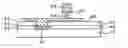
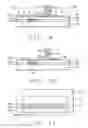
BRIEF DESCRIPTION OF THE DRAWINGSFIG. 1 shows a cross section of a conventional mini-BGA package.
FIG. 2 shows a cross section of a conventional re-routing bump.
FIGS. 3 through 8 detail the process flow of the invention, as follows:
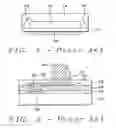
FIG. 3 shows a cross section of a silicon substrate, a top metal contact pad has been provided, a layer of passivation and a layer of polymer or elastomer have been deposited and patterned over the surface of the BGA substrate.
FIG. 4 shows a cross section after a barrier/seed layer has been deposited.
FIG. 5 shows a cross section after a first photoresist mask has been created over the surface of the barrier/seed layer, electroplating has been applied for the deposition of metal for the formation of interconnect traces.
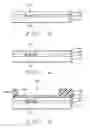
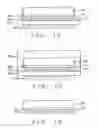
FIG. 6 shows a cross section after the first photoresist mask has been removed from the surface of the barrier/seed layer.
FIG. 7 shows a cross section after a second photoresist mask has been created over the surface of the barrier/seed layer, including the surface of the electroplated interconnect metal; the second photoresist mask defines the solder bump.
FIG. 8 shows a cross section after the solder bump has been electroplated in accordance with the second photoresist mask.
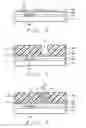
FIG. 9 shows a cross section after removal of the second photoresist mask, exposing the surface of the barrier/seed layer and the electroplated interconnect metal.
FIG. 10 shows a cross section after the barrier/seed layer has been etched in accordance with the layer of interconnect metal.
FIG. 11 shows a cross section of the package of the invention with a molding compound as encapsulant.
FIG. 12 shows a cross section of the package of the invention with underfill as encapsulant.
FIG. 13 shows a cross section of the package of the invention using both molding and an underfill.
FIG. 14 shows a cross section of the package of the invention as a bare die that can be directly attached to a next level substrate.
DESCRIPTION OF THE PREFERRED EMBODIMENTSTwo prior art applications are shown in the cross sections of FIGS. 1 and 2, specifically in the cross section of FIG. 1 are shown:
-
- 11, a BGA substrate such as a printed circuit board and the like
- 12, a semiconductor device or die
- 14, a molding compound that is used to encapsulate the die 12-16,
- 16, solder balls that form the electrical interface between the package shown in cross section in FIG. 1 and surrounding circuitry; these solder balls can for instance be further connected to contact pads on the surface of a Printed Circuit Board (PCB)
- 18, bond wires used to connect points of electrical contact (not shown) on the active surface of die 12 with contact pads (not shown) on the second or upper surface of BGA substrate 11.
FIG. 2 shows a cross section of a conventional re-routing bump, the re-routing applies since the solder bump that is shown in cross section in FIG. 2 does not align with the contact pad with which the solder bump is connected. The elements that are highlighted in the cross section of FIG. 2 are the following:
-
- 10, a device supporting silicon substrate
- 20, a solder ball
- 22, top metal contact point.
- 24, a layer of passivation, applied for the protection of the underlying surface and the surface of the layer 22 of top metal
- 26, a layer of dielectric material
- 28, a layer of passivation, applied for the protection of the underlying layer 26 of dielectric and the surface of the layer 32 of re-routing metal
- 30, a seed and/or barrier layer
- 32, a patterned layer of re-routing metal
- 33, a seed layer, and
- 34, a layer of UBM metal.
FIGS. 3 through 9 will now be used to describe the invention. Referring specifically to the cross section that is shown in FIG. 3, there is shown:
-
- 10, a semiconductor supporting surface such as the surface of a silicon substrate
- 40, a contact pad or top metal pad that has been provided in or on the surface of the substrate layer 10-42,
- 42, a layer of passivation deposited over the surface of layer 10; the layer 42 of passivation has been patterned and etched, creating on opening 41 through the layer 42 of passivation that aligns with the contact pad 40-44,
- 44, a layer of polymer or elastomer that has been deposited over the surface of the layer 42 of passivation; the layer 44 of polymer or elastomer has been patterned and etched, creating on opening 41 through the layer 42 of polymer or elastomer that aligns with the contact pad 40. Contact pad 40 can comprise aluminum or copper or a compound thereof.
As materials that can be used as a polymer for the deposition of layer 44 can be cited polyimide, parylene or teflon, electron resist, solid organics or inorganics, BCB (bisbenzocyclobutene), PMMA (poly-methyl-methacrylate), teflon which is a polymer made from PTFE (polytetrafluoroethylene), also polycarbonate (PC), polysterene (PS), polyoxide (PO) and poly polooxide (PPO).
The semiconductor supporting surface 10 can be semiconductor substrates, printed circuit boards, flex circuits, metallized substrates, glass substrates and semiconductor device mounting support, whereby the semiconductor substrate can selected from the group of substrates consisting of semiconductor substrates, ceramic substrates, glass substrates, gallium arsenide substrates, silicon on insulator (SOI) substrates and silicon on sapphire (SOS) substrates.
FIG. 4 shows a cross section of the semiconductor substrate after a layer 46 of barrier/seed material has been deposited over the surface of layer 44 of polymer or elastomer; inside surface of opening 41 have also been covered with the layer 46 of barrier/seed material.
A typical barrier layer 46 is deposited using rf. sputtering of titanium nitride, tantalum, tungsten, niobium, molybdenum, Ti/TiN or Ti/W and is more preferably formed from TiN. The barrier layer 46 can also be used to improve the adhesion of a subsequent overlying metal layers. A barrier layer is preferably about 100 and 1000 angstrom thick.
To further enhance the adhesion of a copper interconnect line to the surrounding layer of dielectric or insulation, a seed layer is deposited over the barrier layer. A seed layer can be deposited using a sputter chamber or an Ion Metal Plasma (IMP) chamber at a temperature of between about 0 and 30.0 degrees C. and a pressure of between about 1 and 100 mTorr, using copper or a copper alloy as the source at a flow rate of between about 10 and 400 sccm and using argon as an ambient gas. The minimum thickness of a seed layer is about 5,000 Angstrom, this thickness is required achieve a reliable gap fill.
FIG. 5 shows a cross section after:
-
- 48, a first photoresist mask has been formed over the surface of barrier/seed. layer 46, exposing the surface of the barrier/seed layer 46, and
- 50, a layer 50 of metal has been over the exposed surface of the barrier/seed layer 46 in accordance with the opening 43 created in the first photoresist mask.
The process of deposition and patterning a layer of photoresist uses conventional methods of photolithography and masking. Layer 48 of photoresist can be etched by applying O2 plasma and then wet stripping by using H2SO4, H2O2 and NH4OH solution. Sulfuric acid (H2SO4) and mixtures of H2SO4 with other oxidizing agents such as hydrogen peroxide (H2O2) are widely used in stripping photoresist after the photoresist has been stripped by other means. Wafers to be stripped can be immersed in the mixture at a temperature between about 100 degrees C. and about 150 degrees C. for 5 to 10 minutes and then subjected to a thorough cleaning with deionized water and dried by dry nitrogen. Inorganic resist strippers, such as the sulfuric acid mixtures, are very effective in the residual free removal of highly postbaked resist. They are more effective than organic strippers and the longer the immersion time, the cleaner and more residue free wafer surface can be obtained. The opening 43 that is in this manner created in the layer. 48 of photoresist exposes the surface of the layer 44 of barrier/seed material over a surface area where re-routing metal has to be created.
Removal of the first photoresist mask 48 from the surface of the barrier/seed layer 46 results in the cross section that is shown in FIG. 6.
The invention continues with the cross section that is shown in FIG. 7, shown are:
-
- 52, a second photoresist mask is created over the surface of the barrier/seed layer 46, including the surface of the interconnect metal layer 50, and
- 51 opening created in the second layer 52 of photoresist, exposing the surface of layer 50 of interconnect metal; opening 51 defined the location and size (diameter) of the to be created solder bump.
The cross section that is shown in FIG. 8 is after the opening 51 created in the second layer of dielectric has been filled with solder bump material. These materials can be selected as:
-
- layer 54 being a first layer of metal, typically comprising copper, deposited to a thickness between about 10 and 100 μm, and more preferably to a thickness of about 50 μm
- layer 56 being an UBM layer, typically comprising nickel, deposited to a thickness between about 1 and 10 μm, and more preferably to a thickness of about 5 μm, forming an integral part of the pedestal of the to be created interconnect bump, and
- layer 58 is a layer of solder compound, deposited to a thickness between about 10 and 100 μm, and more preferably to a thickness of about 50 μm.
With the completion of the electroplating of these three layers, the solder bump is essentially complete. The second solder mask 52, FIG. 8, is therefore removed from the surface of the barrier/seed layer 46 and the surface of the interconnect metal 50, see FIG. 9, exposing the barrier/seed layer 46 and the interconnect metal 50, a pattern of barrier/seed material overlying the barrier/seed layer 46.
It is good practice and can be of benefit in the creation of the layers 54, 56 and 58 of metal to perform, prior to the electroplating of these layers of metal, an in-situ sputter clean of the exposed surface (exposed through opening 51) of the layer 50 of re-routing metal.
The barrier/seed layer 46 can now be etched using the patterned layer 50 of interconnect metal as a mask, which leads to the cross section that is shown in FIG. 10.
It is further good practice to oxidize the surface of the UBM and pillar metal by chemical or thermal oxidation. The chemical oxidation could be an H2O2 oxidation process, at a temperature in excess of about 150 degrees C. These processing steps can further help prevent wetting of the solder bump to the metal traces.
Reflow can optionally be applied the layer 58 of solder compound, creating a spherical layer 58 of solder which forms the solder bump (not shown). It must be noted in the cross section that is shown in FIG. 10 that the diameter of the UBM layer 54 is, during and as a consequence of the etching of the barrier/seed layer 46, reduced in diameter. This allows the solder ball 58 to be removed from the surface of the substrate by a relatively large distance. From this follows the advantage that it is no longer required that low-alpha solder is used for the solder compound of solder ball 58 reducing manufacturing cost in addition to reducing concerns of memory soft-error conditions.
Layer 56 of UBM may contain multiple layers of metal such as a layer of chrome, followed by a layer of copper, followed by a layer of gold. From the latter it is apparent that layer 56 of UBM may comprise several layers of metal that are successively deposited.
Examples of the application of the package of the invention are shown in cross section in FIGS. 11 and 12. Highlighted in FIG. 11 are:
-
- 60, a polymer or elastomer layer provided by the invention, similar to layer 44 of FIG. 3 e.a.
- 62, a BGA substrate over which a semiconductor device is to be mounted
- 64, a semiconductor device
- 66, a molding compound applied to encapsulate the device 64
- 68, contact balls to the package of the invention
- 70, pillar metal, similar to layers 54 and 56 of FIG. 8 e.a., and
- 72, a solder bump, similar to layer 58 of FIG. 8 after thermal reflow has been applied to this layer.
Shown in cross section in FIG. 12 is another application of the invention. The elements that have been applied above under FIG. 11 are valid for the cross section shown in FIG. 12 with the exception of element 74, which in the cross section of FIG. 12 is an underfill that has been applied under semiconductor device 64 and that replaces layer 66 of molding compound in FIG. 11 as the means for encapsulating the device 64.
FIGS. 13 and 14 show additional applications of the invention with FIG. 13 showing a cross section of the package of the invention using both molding and an underfill while FIG. 14 shows a cross section of the package of the invention as a bare die that can be directly attached to a next level substrate. All elements of the cross sections that are shown in FIGS. 13 and 14 have previously been described and need therefore not been further highlighted at this time.
In order to better highlight the differences between the prior art solder bump, as shown in cross section in FIG. 2, and the solder bump of the invention, as shown in the cross section of FIG. 10, the processing steps to create these two solder bumps are listed below. These steps are easier to follow if it is realized that both methods require and apply two metal fill plating steps, the first of these two step is to create a patterned layer of re-routing metal, the second is to create the solder bump. The processing sequences are as follows:
- 1. the prior art starts with a device support substrate, a contact pad has been created over the surface of the substrate, layers of passivation and dielectric have been deposited over the surface of the substrate and patterned to expose the contact pad; the invention starts with the same structure
- 2. the prior art deposits a first seed layer over the surface of the layer of dielectric; the invention does the same
- 3. the prior art performs a first metal fill over the first seed layer by creating a layer of metal that serves as re-routing metal; the invention does the same
- 4. the prior art etches the first seed layer; the instant invention does not perform this step at this time
- 5. the prior art deposits and patterns a layer of passivation, exposing the surface of the layer of re-routing metal, the patterned second layer of passivation serves as a mask for the reflow of the solder bump; the instant invention does not perform this step because the solder bump structure will not wet to the re-routing metal
- 6. the prior art deposits a second seed layer over the surface of the layer of passivation; the instant invention does not deposit a second seed layer
- 7. the prior art plates a layer of UBM over which a layer of solder compound is plated; the instant invention deposits a layer of UBM and two metal plating steps, the first metal plating step plating a layer of metal, such as copper or nickel that forms an integral part of the pedestal of the to be created interconnect bump, the second metal plating step depositing a solder compound
- 8. the prior art performs reflow of the solder compound; the instant invention does the same
- 9. the prior art etches the second seed layer using the solder ball as a mask; the instant invention etches the first seed layer using the patterned re-routing metal as a mask.
The essential differences between the prior art and the instant invention is provided by the two plating steps and can, for easy reference be summarized as follows:
| First plating step |
| Prior Art | Instant Invention | |
| 1st seed layer dep. | 1st seed layer dep. | |
| plate re-routing metal | plate re-routing metal | |
| etch 1st seed layer | (no equivalent step) | |
| Second plating step |
| Prior Art | Instant Invention | |
| 2st seed layer dep. | (no equivalent step) | |
| plate UBM + solder | plate UBM + metal + solder | |
| etch 2st seed layer | etch 1st seed layer | |
The advantages of the instant invention can be summarized as follows:
- 1. the height of the metal pillar (layers 54 and 56, FIG. 10) allows for high stand-off between the surface of substrate 10, thereby reducing impact of mismatching of thermal fatigue between interfacing surfaces such as the surface of the substrate 10 and the layers of metal that are part of the solder bump
- 2. the layer 44 has been highlighted as being a layer of or polymer or elastomer and is selected for its ability to provide stress release between overlying surfaces and thus to enhance solder bump reliability
- 3. the re-distribution solder bump of the invention allows for creating a flip-chip package without the need for semiconductor device redesign or changes in the pitch of the contact points of the package (the pitch of contact balls 72 and 68, FIGS. 11 and 12); the package size can also remain constant while still being able to package die of different dimensions (due to the flexibility of the routing of the re-routing metal layer 50, FIG. 50, FIG. 10)
- 4. the method of creating the solder pillar and the solder bump, that is plating a layer of UBM over which metal is plated twice, contributes a significant cost saving in both materials used and in the manufacturing cost; the need for separate UBM plating and etching, for separate plating and etching the pillar metal and for separate plating and etching the solder compound is reduced to using one photoresist mask that is applied for all three steps
- 5. by creating a relatively high layer of pillar metal, the solder ball is removed from the surface of the substrate; from this follows that low-alpha solder is no longer required as a solder compound for the solder bump, reducing manufacturing costs; from this further follows that soft-error concerns that typically apply to memory chip designs are less valid using the solder bump of the invention
- 6. by creating a relatively high layer of pillar metal, the solder ball of the instant invention will not wet to the re-routing metal trace. Thus, the second layer of passivation material, which typically serves as a solder mask, is no longer required and, consequently, processing cost is reduced.
In sum: the invention provides a method to create a solder bump having a high metal pillar and a solder ball. Seed/barrier layer deposition is limited to one deposition, a first metal plating step defines the re-routing metal, a second metal plating step creates the solder bump. The need for additional layers of passivation or solder mask has been removed.
Although the invention has been described and illustrated with reference to specific illustrative embodiments thereof, it is not intended that the invention be limited to those illustrative embodiments. Those skilled in the art will recognize that variations and modifications can be made without departing from the spirit of the invention. It is therefore intended to include within the invention all such variations and modifications which fall within the scope of the appended claims and equivalents thereof.
Claims
1-29. (canceled)
30. A Chip Scale package using re-routed bump metal on a semiconductor surface, comprising:
a contact pad overlying a semiconductor substrate;
a passivation layer overlying said contact pad and said semiconductor substrate while exposing a part of said contact pad;
a dielectric layer overlying said passivation layer and said contact pad while exposing a part of said contact pad;
a layer of conductive material overlying said layer of dielectric and said exposed part of said contact pad;
a re-routing metal layer overlying said layer of conductive material; and
a solder bump overlying said re-routing metal layer wherein said solder bump comprises a stack of a solder layer overlying a pillar metal layer with a UBM layer therebetween and wherein said UBM layer overhangs the entire vertical edges of said pillar metal layer and wherein an oxide layer overlies the surfaces of said pillar metal layer and said UBM layer.
31-46. (canceled)
47. An electric component, comprising:
a semiconductor substrate;
a first pad over said semiconductor substrate;
a passivation layer over said semiconductor substrate, an opening being in said passivation layer and exposing said first pad;
a circuit line over said passivation layer, said circuit layer comprising a second pad having a layout different from that of said first pad, said second pad connected to said first pad, wherein said circuit layer has a top surface exposed to the outside;
a pillar over said second pad; and
a cap over said pillar, wherein said cap comprises solder.
48. The electric component of claim 47 further comprising a polymer layer between said passivation layer and said circuit line.
49. The electric component of claim 48, wherein said polymer layer comprises polyimide.
50. The electric component of claim 48, wherein said polymer layer comprises bisbenzocyclobutene (BCB).
51. The electric component of claim 48, wherein said polymer layer comprises parylene.
52. The electric component of claim 47, wherein said pillar comprises copper.
53. The electric component of claim 47, wherein said pillar has a height between 10 μm and 100 μm.
54. The electric component of claim 47 further comprising a metal layer between said pillar and said cap, wherein said metal layer having a thickness less than that of said piller.
55. The electric component of claim 54, wherein said metal layer comprises nickel.
56. The electric component of claim 54, wherein said metal layer comprises gold.
57. The electric component of claim 54, wherein said metal layer comprises chromium.
58. The electric component of claim 54, wherein said metal layer has a lower surface comprising an peripheral region exposed to the outside.
59. The electric component of claim 54, wherein said metal layer has a height between 1 μm and 10 μm.
60. The electric component of claim 47, wherein said cap has a height between 10 μm and 100 μm.
61. The electric component of claim 47, wherein said first pad comprises aluminum.
62. The electric component of claim 47, wherein said first pad comprises copper.
63. The electric component of claim 47, wherein said substrate comprises silicon.
64. The electric component of claim 47, wherein said electric component is a chip.
65. The electric component of claim 47, wherein said electric component is a wafer.
Images & Drawings included:
Sources:
- United States Patent and Trademark Office - verify current appl. status at the USPTO↗
Similar patent applications:
- » 10638454
Low fabrication cost, high performance, high reliability chip scale package - » 20050215043
Low fabrication cost, high performance, high reliability chip scale package - » 20080099928
Low fabrication cost, high performance, high reliability chip scale package - » 20080111236
Low fabrication cost, high performance, high reliability chip scale package - » 20080113503
Low fabrication cost, high performance, high reliability chip scale package - » 20080113504
LOW FABRICATION COST, HIGH PERFORMANCE, HIGH RELIABILITY CHIP SCALE PACKAGE - » 20090137110
Low fabrication cost, high performance, high reliability chip scale package - » 20100038803
LOW FABRICATION COST, HIGH PERFORMANCE, HIGH RELIABILITY CHIP SCALE PACKAGE
Recent applications in this class:
- » 20220216171 2022-07-07
CHIP PACKAGE STRUCTURE, PREPARATION METHOD, AND ELECTRONIC DEVICE - » 20200365542 2020-11-19
Devices with three-dimensional structures and support elements to increase adhesion to substrates - » 20190393176 2019-12-26
Methods for enhancing adhesion of three-dimensional structures to substrates - » 20150145130 2015-05-28
Semiconductor packaging and manufacturing method thereof - » 20150076691 2015-03-19
Semiconductor package - » 20140252602 2014-09-11
Structure of a semiconductor chip with substrate via holes and metal bumps and a fabrication method thereof - » 20140145327 2014-05-29
SEMICONDUCTOR DEVICE AND METHOD FOR FABRICATING THE SAME - » 20130320551 2013-12-05
Discrete semiconductor device package and manufacturing method - » 20130313707 2013-11-28
Electrical interconnections of semiconductor devices and methods for fabricating the same - » 20130307139 2013-11-21
Bonding of substrates including metal-dielectric patterns with metal raised above dielectric and structures so formed
Recent applications for this Assignee:
- » 20140021522 2014-01-23
Chip packages having dual DMOS devices with power management integrated circuits - » 20130309812 2013-11-21
Integrated chip package structure using ceramic substrate and method of manufacturing the same - » 20130242500 2013-09-19
Integrated circuit chip using top post-passivation technology and bottom structure technology - » 20110309473 2011-12-22
Semiconductor package with interconnect layers - » 20110304008 2011-12-15
Wafer level processing method and structure to manufacture semiconductor chip - » 20110285022 2011-11-24
Integrated circuit and method for fabricating the same - » 20110241183 2011-10-06
Stacked chip package with redistribution lines - » 20110233776 2011-09-29
Semiconductor chip with coil element over passivation layer - » 20110215476 2011-09-08
Method for fabricating circuit component - » 20110215469 2011-09-08
METHOD FOR FORMING A DOUBLE EMBOSSING STRUCTURE